
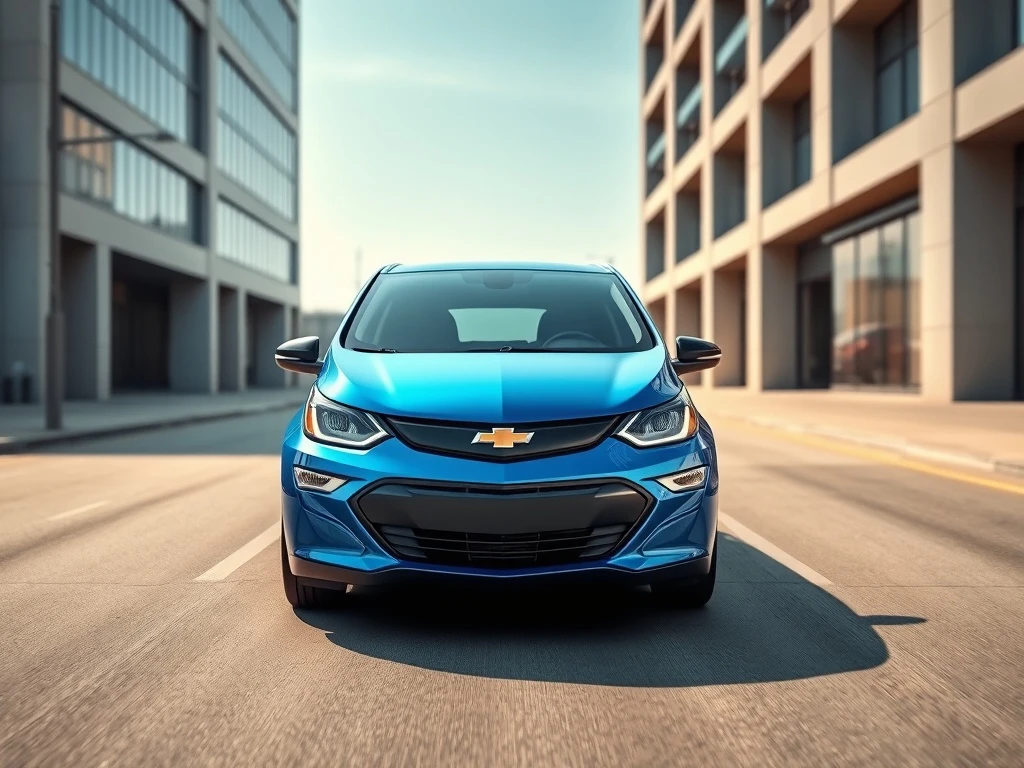
LOS ANGELES, June 9, 2026 — General Motors has resurrected its most popular electric vehicle for a limited production run, bringing back the 2027 Chevy Bolt with significant upgrades that address previous shortcomings while maintaining its affordable price point. The surprise revival follows an 18-month production gap at GM’s Fairfax, Kansas factory, where executives approved what many industry observers call the “McRib of the automotive world” — a cult favorite returning for a limited time. TechCrunch obtained exclusive access to the new Bolt during a recent press event, testing its redesigned powertrain, faster charging capabilities, and controversial infotainment changes that eliminate Apple CarPlay and Android Auto.
2027 Chevy Bolt Revives Cult Favorite with Strategic Updates
GM engineers started with the Bolt EUV chassis and body panels as their foundation, then redesigned the front and rear sections while tweaking the suspension and front chassis components. The company retained enough familiar elements to please existing Bolt enthusiasts while implementing cost-saving measures that make the vehicle financially viable. Prices begin at $28,995 including destination fees, maintaining the Bolt’s position as the cheapest EV available in the United States. However, fully loaded configurations exceed $40,000, placing them in competition with more premium electric vehicles.
The decision to revive the Bolt stems from multiple factors, including GM’s expanded EV parts bin since the original 2016 model debuted and passionate advocacy from Bolt owners within the company. Kris Keary, chief engineer for EV propulsion systems, explained the engineering approach during the press drive. “We had an opportunity to address the pain points while keeping what owners loved,” Keary told TechCrunch. “The new battery chemistry and motor combination deliver more range with less cost, which was crucial for making this project work.”
LFP Battery Breakthrough Transforms Charging Experience
The most significant technical advancement arrives in the form of GM’s first lithium-iron-phosphate (LFP) battery, a 65-kilowatt-hour pack that eliminates critical minerals like cobalt and nickel while improving durability. Previous Bolt owners faced charging limitations and recall-related restrictions, but the LFP chemistry allows for 100% daily charging without degradation concerns. The new battery management system pairs with a 200-horsepower electric motor from the front-wheel-drive Chevy Equinox, creating a more efficient powertrain that delivers 262 miles of range for base LT models.
- Faster Charging: The 400-volt pack accepts up to 150 kW, reducing 10-90% charging to approximately 24 minutes compared to the previous model’s hour-long sessions for similar range.
- Consistent Performance: LFP cells maintain full power closer to 0% state of charge, addressing range anxiety during longer trips.
- Cost Reduction: Eliminating expensive minerals significantly lowers production costs while improving supply chain stability.
Engineering Insights from GM’s EV Propulsion Team
Kris Keary provided specific technical details about the motor improvements during testing. “The new motor spins faster and more efficiently, allowing us to spec shorter gearing,” Keary explained. “While torque numbers appear lower on paper, wheel torque actually increases slightly, and we expect zero-to-60 mph times to improve marginally over the previous generation.” The engineering team focused on thermal management and power electronics optimization, achieving 15 additional miles of range despite using a smaller battery pack than some competitors. Keary emphasized that real-world testing in varied conditions would provide more accurate range figures than EPA estimates alone.
Super Cruise Makes Affordable Hands-Free Driving Reality
Chevrolet now offers its hands-free Advanced Driver Assistance System on the most affordable vehicle in its lineup, though specific configuration requirements apply. The $35,655 “LT + Comfort + Evotex + Tech + Super Cruise” package represents a $6,660 premium over the base model, adding 20% to the purchase price. During testing on California’s Highway 101 northwest of Los Angeles, the Level 2 system handled moderate afternoon traffic competently, automatically changing lanes when approaching slower vehicles without requiring mirror checks like some competitor systems.
The Bolt’s Super Cruise implementation uses the same mapped routes as other GM vehicles, covering freeways and select two-lane highways. When approaching necessary exits or interchanges, the system attempts to position the vehicle appropriately before requesting driver takeover. During testing, the system occasionally hesitated when vehicles approached rapidly in adjacent lanes, aborting lane changes until conditions improved. The haptic feedback system alerts drivers through seat vibrations rather than visual or auditory signals alone.
| Feature | 2027 Chevy Bolt | Previous Generation | Key Improvement |
|---|---|---|---|
| Battery Chemistry | Lithium-Iron-Phosphate | Lithium-Ion | No cobalt/nickel, 100% charging safe |
| Maximum Charge Rate | 150 kW | 50 kW | 200% faster |
| Range (LT Model) | 262 miles | 247 miles | 15 additional miles |
| Infotainment | Android Automotive | CarPlay/Android Auto | Integrated navigation |
| Base Price | $28,995 | $26,500 | 9.4% increase |
Controversial Infotainment Shift Eliminates Screen Casting
Following GM’s corporate strategy, the new Bolt removes Apple CarPlay and Android Auto entirely, relying instead on built-in Spotify and Apple Music applications within its Android Automotive-based system. This decision proves particularly controversial since the previous Bolt represented one of GM’s only EVs with screen-casting capabilities. During testing, the native applications demonstrated slightly slower response times compared to their CarPlay counterparts, though integration with vehicle systems provides some compensatory benefits.
GM defends this approach by highlighting how the integrated navigation communicates directly with the battery management system, preconditioning the battery before fast charging sessions. The system also coordinates with Super Cruise for optimized lane changes approaching exits. Tim De Chant, TechCrunch’s senior climate reporter who tested the vehicle, noted: “The apps help, but only a bit — they were less responsive to my inputs than their CarPlay cousins. For existing Bolt owners accustomed to seamless smartphone integration, this represents a significant adjustment.”
Market Positioning and Production Timeline
Chevrolet anticipates selling through approximately two years of Bolt production before reevaluating the model’s future. The company won’t commit to additional production runs beyond this limited revival, creating what marketing executives describe as “collector appeal” for the vehicle. Industry analysts suggest the Bolt’s return serves multiple purposes: filling factory capacity gaps, satisfying loyal customers, and providing an affordable EV entry point as GM transitions its entire lineup to electric propulsion. The Bolt’s cult following, similar to McDonald’s limited-time McRib sandwich enthusiasts, ensures initial demand will likely exceed supply during the early production months.
Conclusion
The 2027 Chevy Bolt revival represents a calculated gamble by General Motors, addressing previous generation shortcomings while maintaining the affordability that made the original model popular. The switch to LFP battery chemistry delivers faster charging and reduced costs, while Super Cruise brings hands-free capability to the budget EV segment. However, the elimination of CarPlay and Android Auto may alienate existing Bolt owners, and the $40,000+ fully loaded configurations push into competitive territory. For consumers seeking an affordable electric vehicle with improved range and charging capabilities, the Bolt’s limited production run creates urgency. As with the McRib’s sporadic availability, absence may indeed make the heart grow fonder for this particular automotive offering.
Frequently Asked Questions
Q1: When will the 2027 Chevy Bolt be available for purchase?
Production begins in late 2026 with deliveries expected in early 2027. Chevrolet anticipates approximately two years of production before reevaluating the model’s future.
Q2: How does the new LFP battery improve over previous Bolt batteries?
The lithium-iron-phosphate chemistry eliminates cobalt and nickel, reduces costs, allows 100% daily charging without degradation, and maintains consistent power delivery at lower charge states.
Q3: Why did GM remove Apple CarPlay and Android Auto from the new Bolt?
GM’s corporate strategy shifts to integrated Android Automotive systems that communicate directly with vehicle functions like battery preconditioning and Super Cruise navigation.
Q4: What is the actual charging time improvement with the new 150 kW capability?
GM claims 10-90% charging in approximately 24 minutes, though real-world testing showed 24-80% charging in 24 minutes under ideal conditions.
Q5: How much does Super Cruise cost on the 2027 Chevy Bolt?
The hands-free system requires a specific $35,655 package configuration, representing a $6,660 premium over the base $28,995 model.
Q6: Will the Bolt work with Tesla Superchargers?
Yes, the Bolt now features the North American Charging Standard (NACS) connector, though plug-and-charge functionality on Tesla’s network arrives later in 2027.



