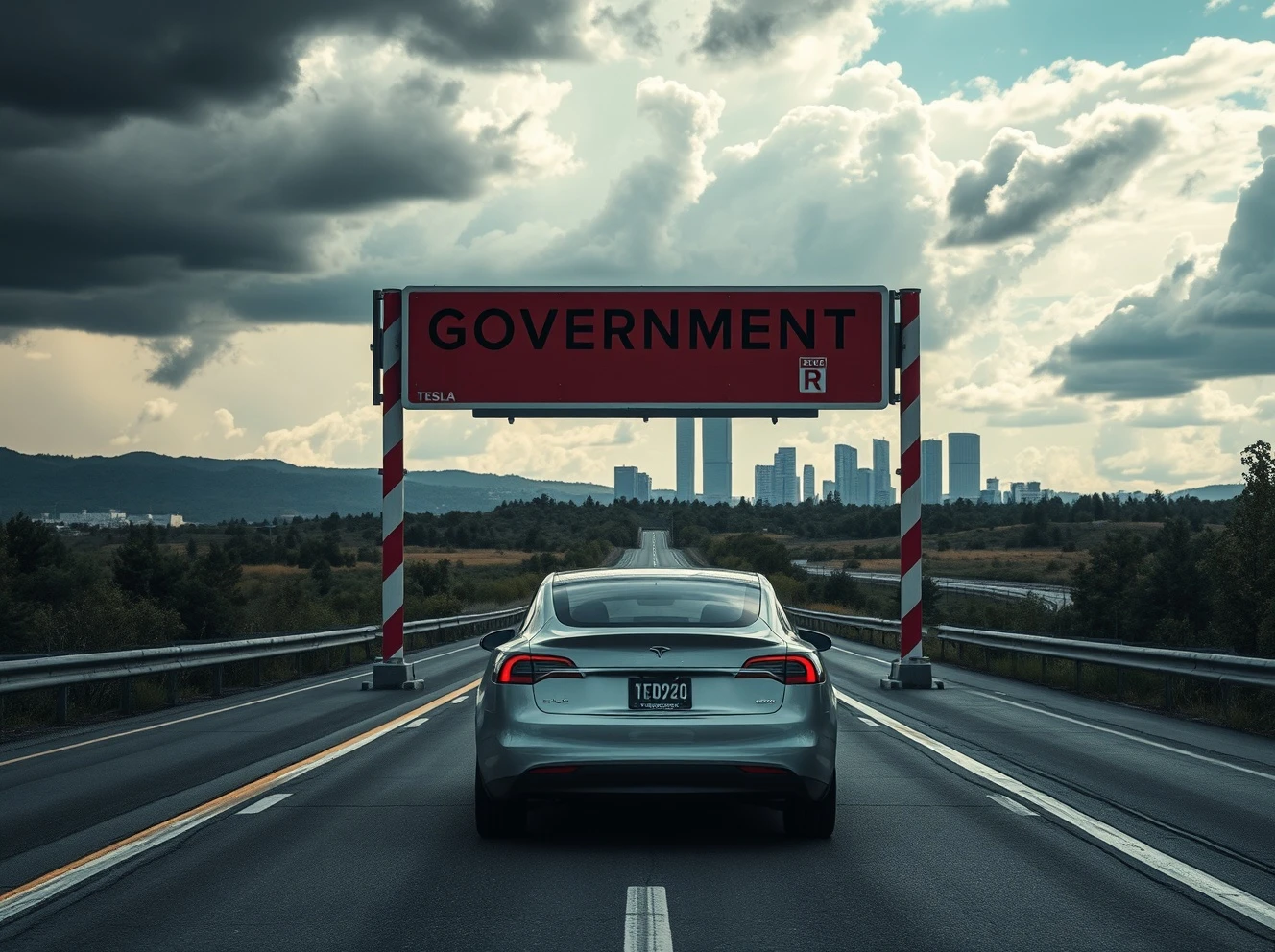
Elon Musk’s Tesla faces rare government regulatory challenges that could derail its path to maintaining trillion-dollar status. Consequently, investors and industry watchers closely monitor these developments. Meanwhile, the electric vehicle pioneer confronts multiple regulatory hurdles across global markets. Therefore, understanding these Tesla regulatory challenges becomes significant for stakeholders.
Tesla Regulatory Challenges in Key Markets
Tesla encounters significant regulatory obstacles in major markets. Specifically, the company faces scrutiny from multiple government agencies. Furthermore, these Tesla regulatory challenges span safety standards and environmental compliance. Additionally, international trade regulations create additional complications. However, Tesla continues addressing these complex requirements.
Also read: WTI crude oil climbs to near two-week high on US-Iran tensions and EIA stockpile draw
Government Investigations Intensify
Federal agencies recently launched multiple investigations into Tesla operations. For instance, the NHTSA examines Autopilot safety features. Similarly, the SEC reviews corporate governance practices. Moreover, international regulators join these probes. Consequently, Tesla must allocate substantial resources to address these concerns.
Impact on Business Operations
These regulatory pressures directly affect Tesla’s business strategy. Production schedules face potential delays due to compliance requirements. Furthermore, expansion plans encounter unexpected obstacles. Meanwhile, legal costs continue rising significantly. Therefore, investors watch these developments carefully.
Also read: UOB projects slower 2Q26 growth for China amid headwinds
Market Response and Analysis
Financial markets react strongly to regulatory announcements. Stock prices fluctuate based on regulatory news. Additionally, analyst reports highlight regulatory risks. Moreover, competitor companies monitor the situation closely. Thus, Tesla must manage both operations and perceptions.
Future Regulatory Environment
The regulatory environment continues evolving rapidly. New legislation targets electric vehicle manufacturers specifically. Furthermore, international standards become more stringent. Additionally, consumer protection laws expand coverage. However, Tesla maintains its commitment to compliance.
Key Regulatory Areas Facing Scrutiny
- Autonomous driving technology – Safety validation requirements
- Battery manufacturing – Environmental compliance standards
- Data privacy – Vehicle information collection policies
- Workplace safety – Factory condition regulations
- Financial reporting – SEC disclosure requirements
Strategic Responses and Solutions
Tesla implements comprehensive strategies to address regulatory concerns. The company enhances its compliance programs significantly. Moreover, Tesla engages proactively with regulators. Additionally, the automaker invests in legal expertise. Therefore, the company demonstrates commitment to regulatory adherence.
Industry-Wide Implications
These regulatory developments affect the entire electric vehicle sector. Competitors face similar scrutiny from authorities. Furthermore, industry standards evolve based on Tesla’s experiences. Meanwhile, consumer expectations change accordingly. Thus, the regulatory arena transforms completely.
Financial Impact Assessment
Regulatory challenges create substantial financial implications. Legal expenses increase operational costs significantly. Moreover, potential fines threaten profitability. Additionally, stock valuation faces downward pressure. However, Tesla maintains strong financial reserves.
Conclusion: Dealing with Complex Regulations
Tesla confronts an increasingly complex regulatory environment. Government agencies intensify their scrutiny across multiple jurisdictions. Meanwhile, the company develops sophisticated compliance strategies. Furthermore, industry observers monitor these developments closely. Ultimately, Tesla’s ability to work through these Tesla regulatory challenges will determine its future trajectory.
Frequently Asked Questions
What specific government agencies are investigating Tesla?
The National Highway Traffic Safety Administration examines Autopilot safety features. Additionally, the Securities and Exchange Commission reviews corporate governance practices. State regulators also conduct separate investigations.
How do Tesla regulatory challenges affect stock performance?
Regulatory announcements typically cause stock price volatility. Negative regulatory news often triggers temporary declines. However, long-term performance depends on resolution outcomes.
Which countries present the most significant regulatory hurdles?
United States regulators maintain active investigations. European authorities implement strict data privacy rules. Chinese regulators enforce comprehensive manufacturing standards.
How does Tesla respond to regulatory investigations?
Tesla cooperates fully with regulatory authorities. The company implements corrective measures when required. Additionally, Tesla enhances internal compliance programs proactively.
What timeline do regulatory investigations typically follow?
Government investigations often span multiple months. Complex cases can extend beyond one year. Resolution timing depends on investigation scope and complexity.
Do regulatory challenges affect Tesla’s production capacity?
Regulatory compliance can temporarily impact production schedules. However, Tesla maintains strong manufacturing processes. The company quickly addresses any production-related regulatory concerns.