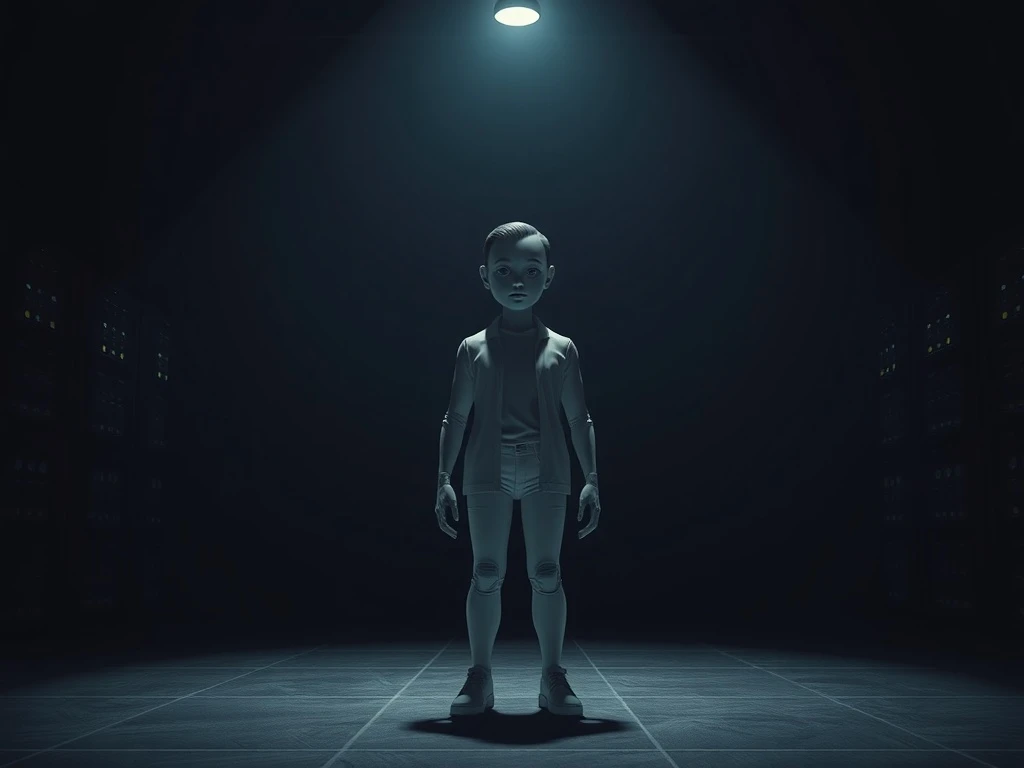
LOS ANGELES, June 9, 2026 – The debut music video from AI actor Tilly Norwood, released today by production studio Particle6, has ignited fierce criticism from Hollywood professionals and music critics. The song, titled “Take the Lead,” represents a significant escalation in the use of generative artificial intelligence to create fully synthetic performers. Industry figures, including prominent actors and the performers’ union SAG-AFTRA, have condemned the project as an existential threat to human artistry and a misuse of training data. This development follows Particle6’s controversial introduction of the Norwood character last fall, a move that drew immediate concern from established talent.
Particle6’s AI Actor and the ‘Take the Lead’ Controversy
Particle6, a studio specializing in synthetic media, first unveiled Tilly Norwood in October 2025. The company markets Norwood as a digital actor capable of starring in films, television, and now music. The release of “Take the Lead” directly challenges the warnings issued by figures like Golden Globe winner Emily Blunt. In a November 2025 interview with Variety, Blunt reacted to Norwood’s initial reveal by stating, “Good Lord, we’re screwed. Come on, agencies, don’t do that. Please stop.” The new music video, which required eighteen contributors including designers and prompt engineers, features Norwood singing an anthem about overcoming prejudice as a non-human entity. Lyrics like “I am still human, make no mistake” have been criticized as particularly dissonant, given the character’s artificial origins.
Furthermore, the production quality and musical composition have drawn sharp critiques. Early listeners have described the track as a derivative pop song that fails to connect on a human level. This stands in contrast to other AI music experiments, such as the Xania Monet project, which managed to chart on Billboard’s R&B lists in early 2026. The critical reception highlights a growing divide between technically proficient AI generation and content that resonates with audiences.
Immediate Industry Backlash and Union Response
The release has triggered organized opposition from the entertainment industry’s labor representatives. SAG-AFTRA, the union representing approximately 160,000 media professionals, issued a forceful statement within hours of the video’s publication. “‘Tilly Norwood’ is not an actor; it’s a character generated by a computer program that was trained on the work of countless professional performers — without permission or compensation,” the union stated. “It has no life experience to draw from, no emotion and, from what we’ve seen, audiences aren’t interested in watching computer-generated content untethered from the human experience.” The statement frames the issue not as innovation, but as a direct threat to performer livelihoods and artistic integrity.
- Labor Displacement Concerns: Unions fear AI actors could be used to background or even lead roles, reducing opportunities for human performers.
- Consent and Compensation: The core ethical issue revolves around AI models trained on copyrighted performances without explicit licenses.
- Artistic Devaluation: Critics argue synthetic creations lack the authenticity and emotional depth that define compelling art.
Expert Analysis on Synthetic Media’s Limits
Dr. Anya Sharma, a professor of digital media ethics at USC, contextualizes the backlash. “The Norwood project exposes the current ceiling for AI in creative fields,” Sharma explained in an interview. “We can replicate form—a face, a melody, a lyric structure—with astonishing accuracy. However, replicating the substance of human experience, the shared vulnerability that makes art meaningful, remains elusive. Projects like this often feel hollow because they are, quite literally, derived from patterns without a self.” This expert perspective underscores the technical achievement while questioning its artistic merit. Meanwhile, legal scholars point to ongoing litigation, such as the 2024 Supreme Court case regarding AI training data fair use, as the looming battleground that will determine the viability of projects like Norwood.
AI-Generated Entertainment: A Comparative Landscape
Tilly Norwood enters a crowded field of digital personas, with outcomes varying widely. The reaction to “Take the Lead” recalls historical criticism of derivative human-made art, but with a crucial technological distinction. For instance, music publication Pitchfork famously criticized the band Jet’s 2006 album “Shine On” for being unoriginal “knuckle-dragging” rock. Former editor Scott Plagenhoef noted the disappointment in seeing mainstream music become “Xeroxed.” Today, artists level similar complaints at AI, but the replication is not inspirational—it is algorithmic, built on datasets of existing work.
| AI Project | Entity/Studio | Output | Public & Industry Reception |
|---|---|---|---|
| Tilly Norwood | Particle6 | Music Video/Song | Overwhelmingly negative; union condemnation |
| Xania Monet | Independent Collective | Billboard-charting R&B Song | Mixed; technical curiosity, ethical concerns |
| AI Script Assistants | Multiple Tech Firms | Screenplay Drafts | Tool-adjacent acceptance; not replacement |
| Digital De-aging | Major VFX Studios | Visual Effects in Film | Generally accepted as a VFX tool |
Legal and Creative Futures for Synthetic Performers
The path forward for AI actors like Tilly Norwood is fraught with legal and commercial hurdles. Particle6 has not announced specific projects for the character beyond this music video. However, the studio’s actions suggest a strategy of generating controversy to attract investment or partnership opportunities in a rapidly evolving tech landscape. Industry analysts predict increased pressure on legislators to clarify copyright and publicity rights as they apply to AI-generated figures. The outcome of these debates will directly impact whether synthetic performers can be commercially licensed or insured for major productions.
Audience and Creator Community Reactions
On social platforms, reaction splits along predictable lines. Tech enthusiasts praise the technical milestone, while artists and musicians share the song as an example of AI’s creative failure. “This isn’t the future of music; it’s a parody of it,” tweeted indie musician Leo Vance. The video’s meta-narrative—an AI singing about being underestimated—has been widely mocked for its lack of self-awareness. This public sentiment presents a significant market challenge for Particle6: even if the technology improves, can an AI actor ever achieve the fan connection that drives box office and streaming success?
Conclusion
The debut of Tilly Norwood’s song “Take the Lead” marks a pivotal, if poorly received, experiment in AI-generated entertainment. It has successfully unified Hollywood labor, critics, and many creators in opposition, framing the use of synthetic performers as an ethical and artistic line. While the technology for creating digital humans advances, the Norwood case demonstrates that audience acceptance and authentic creative expression remain significant barriers. The controversy reinforces that the future of AI in media will likely be as an assistive tool rather than a replacement, with human experience remaining the irreplaceable core of compelling storytelling. The industry now watches to see if this backlash prompts a strategic retreat or further escalation from synthetic media studios.
Frequently Asked Questions
Q1: What is Tilly Norwood and who created it?
Tilly Norwood is a fully AI-generated digital actor, or synthetic persona, created by the production and technology studio Particle6. The character was first announced in October 2025.
Q2: Why are actors and SAG-AFTRA upset about this AI actor?
SAG-AFTRA and many actors argue that AI actors are trained on the work of human performers without permission or pay, threaten job opportunities, and create content devoid of genuine human emotion and experience.
Q3: Has any AI-generated music been successful before?
Yes, but reception varies. The AI persona Xania Monet had a song reach Billboard’s R&B charts in early 2026, though it also faced ethical criticism. Tilly Norwood’s song is notable for its overwhelmingly negative critical reception.
Q4: What are the main ethical issues with AI actors like Tilly Norwood?
The core issues are the use of copyrighted performance data for training without consent, the potential displacement of human workers, and the creation of art that lacks authentic human authorship and emotional depth.
Q5: What happens next for Particle6 and Tilly Norwood?
Particle6 has not announced specific next steps. The studio will likely face continued industry pressure and must navigate unresolved legal questions about AI training data and the right of publicity for synthetic beings.
Q6: Could AI actors ever be accepted in mainstream entertainment?
Experts suggest acceptance would require robust legal frameworks for compensation, transparent labeling, and perhaps limiting use to specific contexts (e.g., background crowds, dangerous stunts) rather than replacing lead human performers.
This article was produced with AI assistance and reviewed by our editorial team for accuracy and quality.