NEW YORK, February 13, 2026 — Financial markets experienced a significant disruption this week as artificial intelligence automation fears, previously contained within the technology sector, spilled into logistics, real estate, and pharmaceutical distribution. The Nasdaq Composite closed the week 1.77% below Monday’s opening levels following a series of AI-driven selloffs that analysts are calling the “scare trade” — a market phenomenon where investors rapidly exit positions in sectors newly vulnerable to AI disruption. This represents the first documented instance of AI anxiety triggering coordinated declines across traditionally non-tech industries, signaling a fundamental shift in how markets price automation risk.
The Logistics Sector Catalyst: Algorhythm’s 400% Efficiency Leap
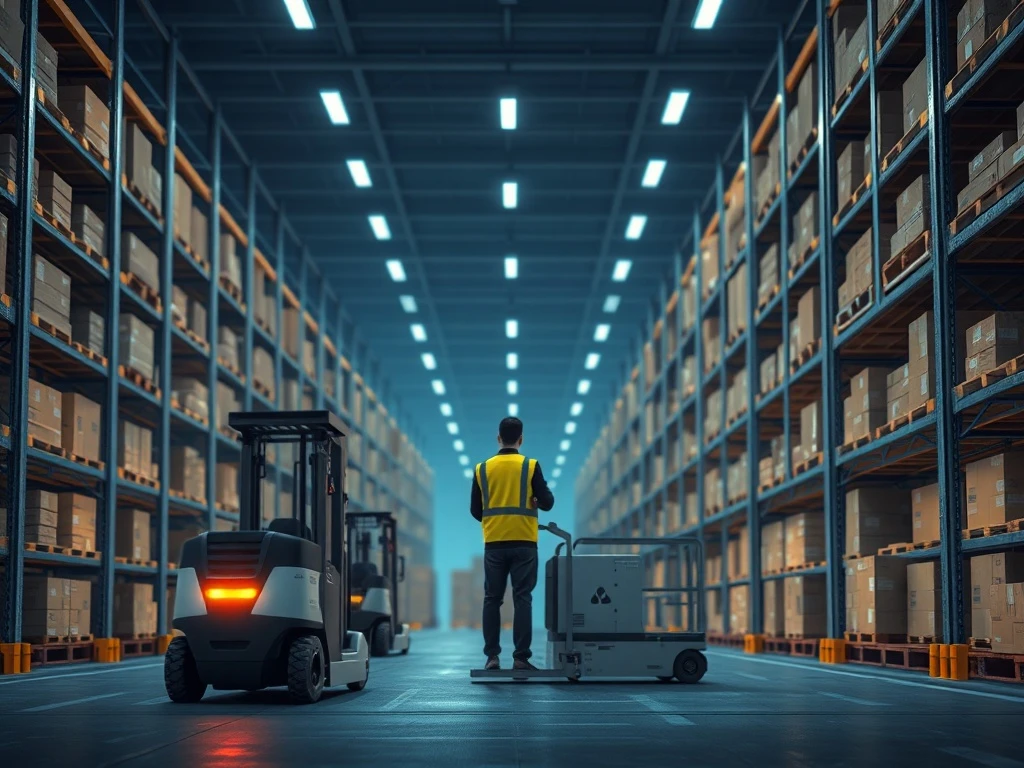
The immediate trigger occurred Thursday when AI logistics firm Algorhythm Holdings announced it had scaled freight volumes by 300-400% without increasing headcount. This announcement sent shockwaves through transportation and logistics stocks, with companies like XPO Logistics and J.B. Hunt experiencing sharp declines within hours. “The market reaction wasn’t just about one company’s efficiency gains,” explains Morgan Stanley analyst Stephen Byrd, whose research note highlighted stocks he believes are “mispriced in the AI disruption unwind.” “Investors suddenly realized that AI optimization could dismantle traditional moats in asset-heavy industries almost overnight.” The selloff quickly spread to warehouse real estate investment trusts and pharmaceutical distributors, creating a domino effect that pulled all three major U.S. indexes lower by Thursday’s close.
This event followed earlier tremors in legal and financial software sectors. On Tuesday, financial software provider Altruist unveiled an AI tool for creating tax strategies, causing immediate declines in tax planning and wealth management stocks. That selloff mirrored the previous week’s reaction to a lawyer-focused AI platform debut. The pattern reveals a market increasingly sensitive to any announcement suggesting AI can replicate or surpass human expertise in regulated, complex fields. Transportation had been considered relatively insulated from such disruption due to physical infrastructure requirements, but Algorhythm’s announcement shattered that assumption.
Quantifying the Cross-Sector Impact
The February 9-13 trading period demonstrated how AI anxiety now transcends traditional sector boundaries. While mega-cap tech stocks like Alphabet and Microsoft declined 2-2.5% on software-specific concerns, the broader damage affected companies with no direct AI exposure. The S&P 500 managed a slight Friday gain on softer inflation data, but the Nasdaq’s underperformance highlighted concentrated tech weakness. Meanwhile, Asian markets tracked Wall Street’s losses, with Japan’s tech-heavy Nikkei 225 paring earlier record highs achieved after Prime Minister Sanae Takaichi’s election victory cleared the path for stimulative policies.
- Logistics & Transportation: Experienced the sharpest declines following Algorhythm’s announcement, with some stocks falling 8-12% in Thursday’s session alone.
- Real Estate: Warehouse and industrial REITs declined 3-5% as investors questioned future demand for distribution centers if AI optimization reduces space requirements.
- Pharmaceutical Distribution: Stocks like McKesson and AmerisourceBergen saw unusual volatility despite no company-specific news, reflecting generalized anxiety about supply chain automation.
Institutional Analysis and Expert Response
Financial institutions are scrambling to adjust their frameworks. Morgan Stanley’s Byrd specifically identified Shopify and Descartes Systems as potential opportunities amid the disruption, suggesting some companies may be oversold despite strong fundamentals. Meanwhile, D.A. Davidson analyst Gil Luria maintained a bullish stance on Taiwan Semiconductor Manufacturing Company, issuing a $450 price target and calling it a “top AI foundry name” — a reminder that not all tech faces equal disruption risk. TSMC shares advanced 5.02% for the week, demonstrating how companies enabling AI infrastructure can benefit even as AI applications create volatility elsewhere.
The Federal Reserve’s potential response adds another layer. Friday’s softer-than-expected Consumer Price Index report reinforced beliefs that rate cuts could occur this year, which might normally boost growth stocks. However, global concerns about AI-driven economic displacement kept investors cautious. “We’re witnessing a recalibration of risk premiums across entire industries,” says Dr. Elena Rodriguez, economic historian at Stanford University. “Similar patterns emerged during early industrialization and the internet’s commercial adoption, but AI’s pace of capability advancement is compressing the adjustment timeline dramatically.”
Broader Context: The AI Investment Landscape Beyond Volatility
Despite this week’s volatility, substantial capital continues flowing toward AI infrastructure and development. Anthropic raised $30 billion at a $380 billion valuation, while investment firm Blue Owl Capital is reportedly planning over $100 billion for U.S. data center projects according to The Information. Meta Platforms committed more than $10 billion to a new Indiana data center, and TotalEnergies unveiled power purchase agreements to supply 1 gigawatt of solar capacity to Google data centers in Texas. These massive investments suggest institutions view current volatility as a short-term adjustment within a long-term transformation.
| Company | AI-Related Development | Market Impact |
|---|---|---|
| Algorhythm Holdings | Scaled freight volumes 300-400% without added staff | Triggered logistics sector selloff |
| Anthropic | Raised $30B at $380B valuation | Demonstrates continued massive AI funding |
| Taiwan Semiconductor | Called “top AI foundry” by D.A. Davidson | Shares rose 5.02% despite sector weakness |
| Cloudflare | Sales guidance exceeded expectations | Shares surged 13.07% for the week |
What Happens Next: Regulatory and Market Developments to Watch
Several near-term developments could either amplify or mitigate the “scare trade” phenomenon. The trial alleging Meta and YouTube platforms addict young users began Monday and may feature testimony from CEOs Mark Zuckerberg and Neal Mohan. Legal experts compare it to 1990s tobacco litigation, and any unfavorable rulings could increase regulatory scrutiny on AI deployment. Meanwhile, Amazon’s reported plans to launch a marketplace where publishers license content to AI companies on their own terms represents an industry-led attempt to address intellectual property concerns that have fueled some investor anxiety.
Stakeholder Reactions and Strategic Shifts
Corporate responses are already emerging. Apple is reportedly planning a major “product blitz” in early 2026 featuring iPhone 17e and a Siri overhaul, suggesting even established giants are accelerating AI integration. BlackBerry co-founder Michael Lazaridis invested in Railtown AI Technologies, joining its advisory board. At the individual investor level, financial advisors report increased inquiries about “AI-resistant” sectors, though most caution against reactionary portfolio changes. “The companies being sold today might be the enablers of tomorrow’s AI infrastructure,” notes Rodriguez. “Discernment between vulnerable business models and temporarily oversold quality names will separate successful investors from reactive ones.”
Conclusion
The February 2026 AI “scare trade” represents a pivotal moment in financial market evolution. For the first time, automation fears triggered coordinated selloffs across logistics, real estate, and pharmaceutical distribution — sectors previously considered insulated from immediate AI disruption. While volatility may persist as markets recalibrate risk premiums, underlying investment in AI infrastructure continues at unprecedented scale. Investors should monitor regulatory developments, corporate adaptation strategies, and differentiation between genuinely vulnerable business models versus temporarily oversold quality names. The week’s events confirm that AI’s market impact has entered a new phase where indirect consequences can be as significant as direct technological advancements.
Frequently Asked Questions
Q1: What exactly triggered the AI “scare trade” in February 2026?
The immediate catalyst was Algorhythm Holdings’ announcement that it scaled freight volumes by 300-400% without increasing staff, demonstrating AI’s potential to disrupt logistics—a sector previously considered resistant to rapid automation.
Q2: Which sectors were most affected beyond technology?
Logistics and transportation experienced the sharpest declines, but selloffs also spread to warehouse real estate investment trusts and pharmaceutical distribution companies despite no sector-specific negative news.
Q3: How did major indexes perform during this volatility?
The Nasdaq Composite closed the week 1.77% below Monday’s opening levels, underperforming the S&P 500, which managed a slight Friday gain on softer inflation data before the weekend.
Q4: Are all technology companies suffering from this AI anxiety?
No. Companies enabling AI infrastructure, like Taiwan Semiconductor Manufacturing Company (up 5.02%) and Cloudflare (up 13.07%), performed well, demonstrating differentiation within the tech sector.
Q5: What should investors watch for in coming weeks?
Key developments include the Meta/YouTube addiction trial outcomes, Federal Reserve signals on interest rates following soft inflation data, and corporate earnings guidance from mid-tier semiconductor and software companies.
Q6: How does this compare to previous technological disruptions?
Economic historians note similar patterns during industrialization and internet adoption, but AI’s rapid capability advancement is compressing the market adjustment timeline from years to weeks in some sectors.