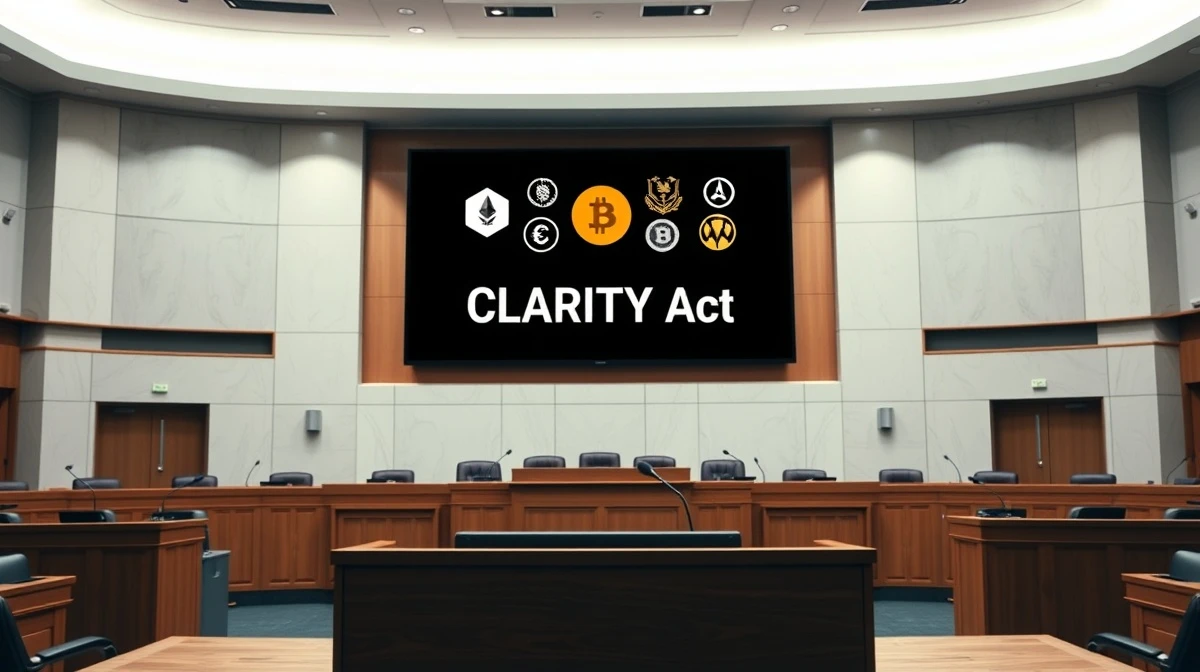
Washington D.C. — As lawmakers reconvene today for a major meeting on the CLARITY Act, a bill aimed at providing a clearer regulatory framework for digital assets, the cryptocurrency market is closely watching a select group of altcoins. These digital assets, often overshadowed by Bitcoin and Ethereum, are now at the center of discussions that could define their legal standing and market viability for years to come.
What Is the CLARITY Act and Why Does It Matter?
The CLARITY Act, short for the “Cryptocurrency Legal Assessment and Regulatory Integrity for Transactions Act,” seeks to establish definitive guidelines for how cryptocurrencies are classified and regulated in the United States. The bill aims to resolve long-standing ambiguities around whether certain digital assets are securities, commodities, or a new asset class entirely. Today’s meeting is expected to include testimony from industry executives, legal experts, and regulatory officials, potentially shaping the final language of the legislation.
Also read: Ripple Partners With Water.org to Expand Clean Water Access Using RLUSD Stablecoin
For altcoins, the stakes are exceptionally high. A favorable classification could open the door to institutional investment and mainstream adoption, while a restrictive one could limit trading, increase compliance costs, or even lead to delisting from major exchanges. This regulatory uncertainty has historically been a major headwind for the broader crypto market, and today’s proceedings could provide much-needed clarity.
Five Altcoins Drawing Investor Attention
While no official agenda has been released regarding specific projects, market analysts and legal observers have identified five altcoins that are likely to be discussed or are particularly sensitive to the outcome of the CLARITY Act. These assets represent a cross-section of the crypto ecosystem, from established smart contract platforms to newer decentralized finance (DeFi) protocols.
Also read: Galaxy Research Lowers CLARITY Act Approval Odds to 60% on Political Hurdles
1. Solana (SOL)
Solana has been a focal point of regulatory debate due to its high-speed, low-cost transaction model and its past association with projects that the SEC has scrutinized. Its classification as a commodity or security could set a precedent for other layer-1 blockchains. The network’s resilience and growing DeFi ecosystem make it a bellwether for regulatory impact on infrastructure tokens.
2. Cardano (ADA)
Cardano’s methodical, peer-reviewed development approach has attracted a loyal following. However, its native token, ADA, has been subject to speculation regarding its legal status. A clear ruling under the CLARITY Act could either validate its long-term roadmap or create new compliance hurdles for its staking mechanisms.
3. Chainlink (LINK)
As a decentralized oracle network that connects smart contracts to real-world data, Chainlink is critical infrastructure for the entire DeFi sector. Its utility-driven model may be viewed favorably under a functional regulatory framework. The outcome of the CLARITY Act could directly affect how such middleware protocols are treated under U.S. law.
4. Polygon (MATIC)
Polygon, a layer-2 scaling solution for Ethereum, has faced its own regulatory challenges, including being named in past SEC actions. Its widespread use in gaming and DeFi applications makes it a key test case for how scaling solutions are classified. The CLARITY Act could provide a pathway for such projects to operate with greater legal certainty.
5. Avalanche (AVAX)
Avalanche’s subnet architecture and focus on enterprise and gaming applications place it in a unique regulatory position. The platform’s efforts to comply with existing frameworks may offer insights into how the CLARITY Act’s provisions could be applied to multi-chain ecosystems. Its performance in today’s market will likely reflect investor sentiment regarding the bill’s potential impact.
Market Implications and Investor Considerations
The immediate market reaction to today’s meeting could be volatile. Positive signals from lawmakers, such as a clear path to compliance or a favorable classification for certain tokens, could trigger a rally in the mentioned altcoins. Conversely, any indication of stricter oversight or a broad security classification could lead to sell-offs.
Investors are advised to focus on the long-term fundamentals of these projects rather than short-term price swings. The CLARITY Act, regardless of its specific provisions, is expected to bring more institutional capital into the space by reducing legal risk. Projects with strong development teams, active communities, and clear utility are better positioned to thrive in a regulated environment.
Conclusion
Today’s CLARITY Act meeting represents a significant moment for the cryptocurrency industry. While the outcome is uncertain, the focus on altcoins underscores the growing maturity of the market and the need for thoughtful regulation. For now, investors and industry participants will be watching closely, parsing every statement for clues about the future of digital assets in the United States.
FAQs
Q1: What is the CLARITY Act?
The CLARITY Act is a proposed U.S. law aimed at creating a clear regulatory framework for cryptocurrencies, defining whether they are securities, commodities, or a new asset class. Today’s meeting is a key step in its legislative process.
Q2: Why are these five altcoins specifically mentioned?
These altcoins have been at the center of regulatory discussions due to their market size, past scrutiny from agencies like the SEC, and their representation of different sectors within the crypto ecosystem (e.g., layer-1, DeFi, oracles, scaling solutions).
Q3: Should I invest in these altcoins based on this news?
This article provides informational context, not investment advice. The outcome of the CLARITY Act could affect these assets, but investors should conduct their own research and consider the long-term fundamentals of each project before making any decisions.