
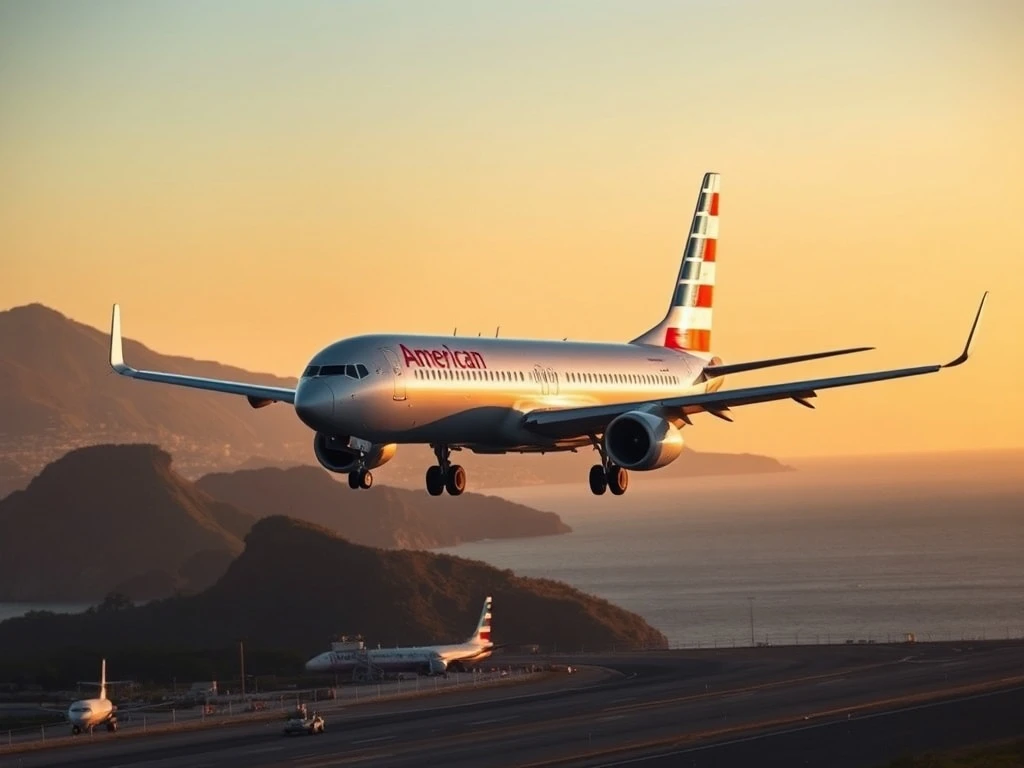
MIAMI, March 15, 2026 — American Airlines resumed commercial flights between the United States and Venezuela today, becoming the first U.S. carrier to restore service since the Trump administration suspended all direct air travel between the two nations in May 2019. The inaugural flight AA915 departed Miami International Airport at 9:45 AM EST and touched down at Simón Bolívar International Airport in Maiquetía at 1:30 PM local time, marking the end of a seven-year aviation shutdown that separated families and complicated diplomatic relations. This restoration follows months of negotiations between the Biden administration and Venezuelan authorities, signaling a cautious thaw in bilateral relations despite ongoing political tensions. The resumption of American Airlines Venezuela flights represents a significant milestone in aviation diplomacy and provides immediate relief to Venezuelan-American communities across Florida.
American Airlines Venezuela Flight Restoration Details
American Airlines will operate three weekly flights between Miami and Caracas using Boeing 737-800 aircraft configured with 160 seats. The initial schedule shows Saturday, Tuesday, and Thursday departures from Miami with return flights the following days. Ticket prices for the inaugural flights ranged from $589 to $1,249 round-trip, approximately 40% higher than pre-2019 fares but competitive with current connecting options through Panama or the Dominican Republic. Vasu Raja, American Airlines’ Chief Commercial Officer, confirmed the carrier has secured necessary operating permits through October 2027. “We’ve worked closely with both governments to ensure safe, reliable service,” Raja stated during a Miami press conference. “Our focus remains on reconnecting families and supporting legitimate travel between our countries.” The airline has stationed a dedicated team in Caracas to handle operations and has implemented enhanced security protocols at both airports.
The restoration follows a gradual easing of aviation sanctions that began in late 2024. Initially, only charter and diplomatic flights received authorization. Then, in August 2025, the U.S. Treasury Department’s Office of Foreign Assets Control issued General License 45, permitting scheduled commercial flights under specific conditions. Airlines must verify passenger identities against sanctions lists, maintain detailed manifests for U.S. review, and avoid transporting sanctioned individuals. American Airlines spent nine months preparing for this relaunch, including security assessments, crew training for the Caracas route, and negotiations with Venezuelan aviation authorities. The carrier previously served Venezuela for over twenty years before the 2019 suspension, operating up to daily flights from Miami and weekly service from Dallas/Fort Worth.
Impact on US-Venezuela Air Travel and Communities
The flight restoration immediately affects approximately 300,000 Venezuelan-Americans living in South Florida who maintain family connections in Venezuela. Prior to today, travelers faced arduous journeys through third countries like Panama, Colombia, or Mexico, often adding 8-15 hours to travel time and increasing costs by 60-80%. The direct flight reduces Miami-Caracas travel time from an average of 14 hours with connections to just 3.5 hours. Immigration attorney María González, who specializes in Venezuelan cases in Doral, Florida, notes the practical implications. “For elderly relatives needing medical care or families attending urgent events, this is transformative,” González explained. “The psychological barrier of complicated travel kept many separated. Now, reconnection becomes feasible.” Early data from travel agencies shows booking requests for the new route exceeding initial capacity by 300% for the first month of operation.
- Family Reunification: An estimated 15,000 Venezuelan-Americans have immediate family members they haven’t seen since 2019 due to travel complications.
- Economic Impact: The route is projected to generate $45-60 million annually in direct economic activity between ticket sales, airport fees, and related services.
- Diplomatic Signaling: The flight restoration serves as a confidence-building measure while broader political negotiations continue in Mexico City.
Expert Analysis: Aviation and Diplomatic Perspectives
Dr. Richard Aboulafia, managing director of AeroDynamic Advisory, contextualizes the decision within broader aviation trends. “This isn’t just about Venezuela,” Aboulafia notes. “Airlines are re-evaluating all previously suspended international routes as global travel demand stabilizes post-pandemic. The Venezuela restoration represents a calculated risk with high reward potential given the pent-up demand.” He points to similar route restorations to Cuba and Iran as precedents for politically sensitive markets. Meanwhile, Cynthia Arnson, former director of the Wilson Center’s Latin American Program, emphasizes the diplomatic dimensions. “Aviation links often serve as both thermometer and thermostat for bilateral relations,” Arnson observes. “They measure the temperature while also influencing it. Restoring flights creates institutional connections and people-to-people contact that can survive political fluctuations.” The U.S. State Department’s Bureau of Western Hemisphere Affairs confirmed coordination with American Airlines but emphasized that flight restoration doesn’t signify endorsement of Venezuela’s government.
Broader Context: Venezuela Aviation History and Comparisons
Venezuela’s aviation sector has experienced dramatic fluctuations over the past fifteen years. From 2005-2013, the country represented one of Latin America’s fastest-growing air travel markets, with multiple U.S. carriers offering daily service. The 2014 oil price collapse and subsequent economic crisis, combined with 2019 U.S. sanctions, reduced international connections by 85%. Today’s restoration places American Airlines in a cautiously optimistic position similar to other carriers that have re-entered complex markets. The table below compares recent U.S. carrier restorations to previously suspended international destinations:
| Destination | U.S. Carrier | Years Suspended | Current Status |
|---|---|---|---|
| Caracas, Venezuela | American Airlines | 7 | Restored March 2026 |
| Havana, Cuba | JetBlue | 2 | Restored 2023 |
| Moscow, Russia | Delta | 4 | Still Suspended |
| Damascus, Syria | None | 12+ | No U.S. Service |
Venezuela’s aviation infrastructure presents unique challenges. Simón Bolívar International Airport has undergone $25 million in renovations since 2023, funded through a consortium of Latin American investors. Critical upgrades include enhanced security screening, runway repairs, and modernized baggage handling systems. However, aviation analysts note that consistent maintenance and fuel availability remain concerns. Prior to the suspension, several international carriers experienced operational difficulties in Venezuela, including currency conversion problems and aircraft maintenance delays. American Airlines has established a $15 million reserve fund specifically for Venezuela operations to mitigate such risks.
What Happens Next: Expansion Prospects and Industry Response
American Airlines will evaluate load factors and operational performance for the first 90 days before considering schedule expansion. Internal projections suggest the route could support daily service by late 2026 if current demand persists. The airline has also filed tentative rights for potential Caracas-New York service in 2027, contingent on bilateral agreement modifications. Other U.S. carriers are watching closely. United Airlines, which previously served Caracas from Houston, has filed preliminary applications with the Department of Transportation but hasn’t announced restart plans. JetBlue and Spirit Airlines, both with strong Florida networks, have conducted market studies but remain in observation mode. Internationally, Air France and Iberia increased their Venezuela frequencies in anticipation of U.S. restoration, creating potential connecting opportunities through European hubs.
Stakeholder Reactions: From Celebration to Caution
Venezuelan community organizations in Florida have celebrated the restoration while urging affordable pricing. The Venezuelan American Chamber of Commerce plans to charter group flights for business delegations in April. Meanwhile, some U.S. lawmakers have expressed reservations. Senator Marco Rubio (R-FL) issued a statement warning against “premature normalization” without concrete political reforms in Venezuela. Aviation worker unions have welcomed the job creation—approximately 150 new positions across flight crews, ground operations, and support staff—but seek assurances about security protocols. Venezuelan authorities have praised the development as evidence of improving relations. “This reconnection benefits ordinary people most,” stated Venezuelan Transportation Minister Ramón Velásquez during the inaugural flight ceremony. “It’s a bridge between nations, not governments.”
Conclusion
The restoration of American Airlines Venezuela flights ends a seven-year aviation gap that complicated travel for hundreds of thousands. This development signals cautious diplomatic progress while addressing practical needs of the Venezuelan diaspora. Success depends on sustainable operations, consistent safety standards, and political stability. Other carriers will likely follow if initial months proceed smoothly. For now, American Airlines carries both symbolic and practical significance as it reconnects Miami and Caracas. Travelers should monitor evolving entry requirements and consider purchasing travel insurance given the route’s political sensitivity. The true test will come in maintaining regular service through potential future tensions—proving that aviation bridges can endure beyond political cycles.
Frequently Asked Questions
Q1: What routes is American Airlines flying to Venezuela?
American Airlines operates three weekly flights between Miami International Airport (MIA) and Simón Bolívar International Airport (CCS) near Caracas. Flights depart Miami on Saturdays, Tuesdays, and Thursdays with return flights the following days.
Q2: How much do tickets cost compared to before the 2019 suspension?
Current round-trip fares range from $589 to $1,249, approximately 40% higher than 2018 prices when adjusted for inflation. Pre-suspension fares typically ranged from $350 to $850 round-trip.
Q3: What documentation do travelers need for Venezuela flights?
U.S. citizens need a valid passport and Venezuelan visa. Venezuelan nationals require a valid passport. All travelers must complete the Venezuelan government’s online check-in system 48 hours before departure.
Q4: Are other U.S. airlines planning Venezuela service?
United Airlines has filed preliminary applications but hasn’t announced restart plans. JetBlue and Spirit are monitoring the market. No other carrier has confirmed Venezuela service for 2026.
Q5: Why did flights resume after seven years?
Restoration follows eased U.S. sanctions, Venezuelan airport improvements, demonstrated passenger demand, and diplomatic negotiations. The U.S. Treasury issued General License 45 in August 2025 permitting commercial flights under specific conditions.
Q6: How does this affect Venezuelan-Americans visiting family?
The direct flight reduces travel time from an average of 14 hours with connections to 3.5 hours. This makes family visits more feasible, especially for elderly relatives and emergency travel situations.



