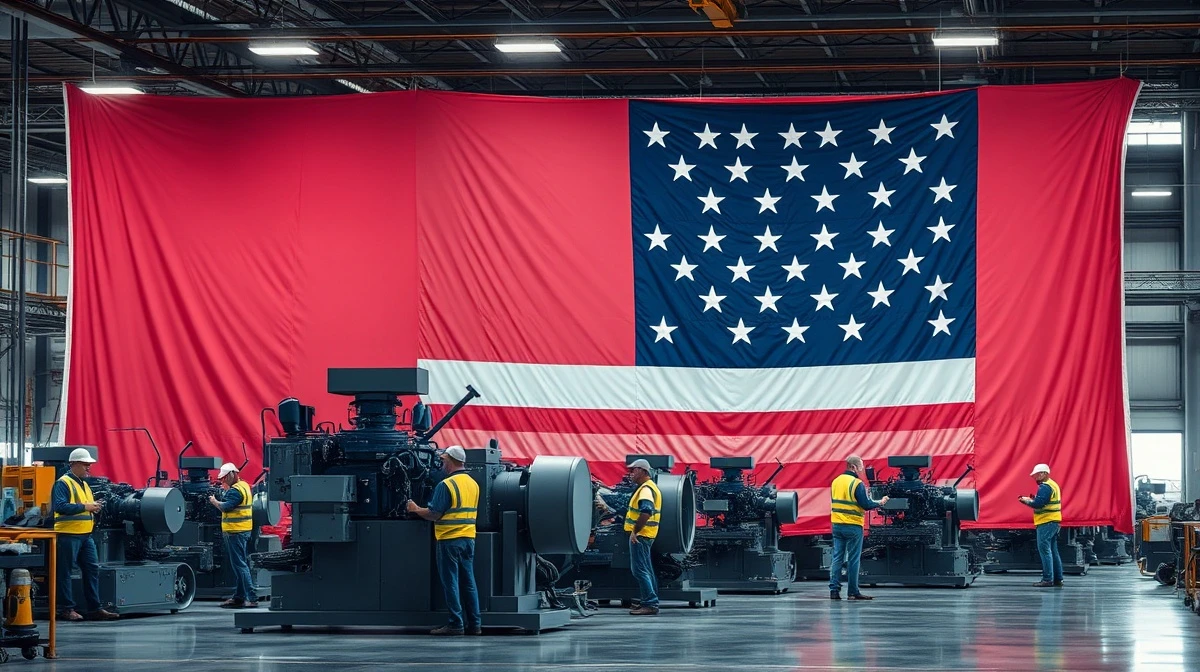
The ‘Buy America’ trade policy has seen a notable resurgence in recent months, with domestic manufacturing activity picking up pace and new procurement contracts favoring U.S.-based suppliers. But as the initial wave of enthusiasm settles, a critical question emerges: Is this rebound built on solid economic fundamentals, or is it a temporary surge fueled by policy tailwinds and shifting political sentiment?
What Is Driving the Buy America Momentum?
The current rebound is largely attributed to a combination of federal infrastructure spending, revised domestic content requirements, and a broader push for supply chain resilience. Since the passage of major infrastructure legislation, federal agencies have tightened rules requiring a higher percentage of American-made materials in publicly funded projects. This has directly boosted demand for domestic steel, cement, machinery, and electronics components.
Also read: Gold edges lower to near $4,150 as US–Iran peace uncertainty and hawkish Fed signals weigh
Data from the U.S. Department of Commerce shows a measurable uptick in manufacturing output in sectors most exposed to government procurement. Factory orders for construction-related goods rose by 4.2% in the last quarter compared to the same period last year. Employment in manufacturing has also edged higher, particularly in states with strong industrial bases such as Ohio, Pennsylvania, and Michigan.
Market Reactions and Industry Sentiment
Financial markets have responded positively to the trend. Shares of companies heavily involved in domestic infrastructure and industrial production have outperformed broader indices. Analysts at major investment firms have upgraded their outlooks for the sector, citing sustained government demand as a key driver.
Also read: Gold Answers to the Fed, Not the Fear: Rate Cut Bets Drive Rally
However, industry insiders caution that the rebound may not be as durable as it appears. Supply chain bottlenecks remain a concern, particularly for specialized components and raw materials that are not yet produced in sufficient quantities domestically. The cost of American-made inputs is often higher than imported alternatives, which could pressure profit margins and ultimately slow the pace of procurement.
What This Means for Businesses and Consumers
For businesses, the Buy America push creates both opportunities and challenges. Companies that have already invested in domestic production capacity are well-positioned to win government contracts. Smaller firms, however, may struggle to meet the compliance requirements and scale needed to compete. For consumers, the policy could lead to higher prices on certain goods in the short term, as domestic producers pass on higher costs. Over the longer term, proponents argue that a stronger domestic industrial base will stabilize supply chains and reduce vulnerability to geopolitical disruptions.
Conclusion
The Buy America trade rebound is real in the sense that measurable economic activity has increased. But its sustainability depends on several factors: continued political commitment to domestic content rules, the ability of U.S. manufacturers to scale efficiently, and the evolution of global trade dynamics. Policymakers and industry leaders alike are watching closely to see whether this moment marks a genuine structural shift or a cyclical uptick. For now, the evidence points to a cautiously optimistic outlook, but the path ahead remains uncertain.
FAQs
Q1: What is the Buy America policy?
The Buy America policy requires that federally funded infrastructure projects use a certain percentage of domestically produced materials, such as steel, iron, and manufactured goods. It is designed to support U.S. manufacturing and jobs.
Q2: Is the current rebound in manufacturing sustainable?
Sustainability depends on continued government enforcement of domestic content rules, the ability of U.S. producers to meet demand at competitive prices, and the resolution of remaining supply chain bottlenecks. Most analysts expect the trend to continue in the near term but caution about longer-term pressures.
Q3: How does Buy America affect consumers?
In the short term, consumers may see higher prices on goods affected by domestic content requirements. Over time, a stronger domestic manufacturing base could lead to more stable supply chains and potentially lower prices as efficiencies improve.