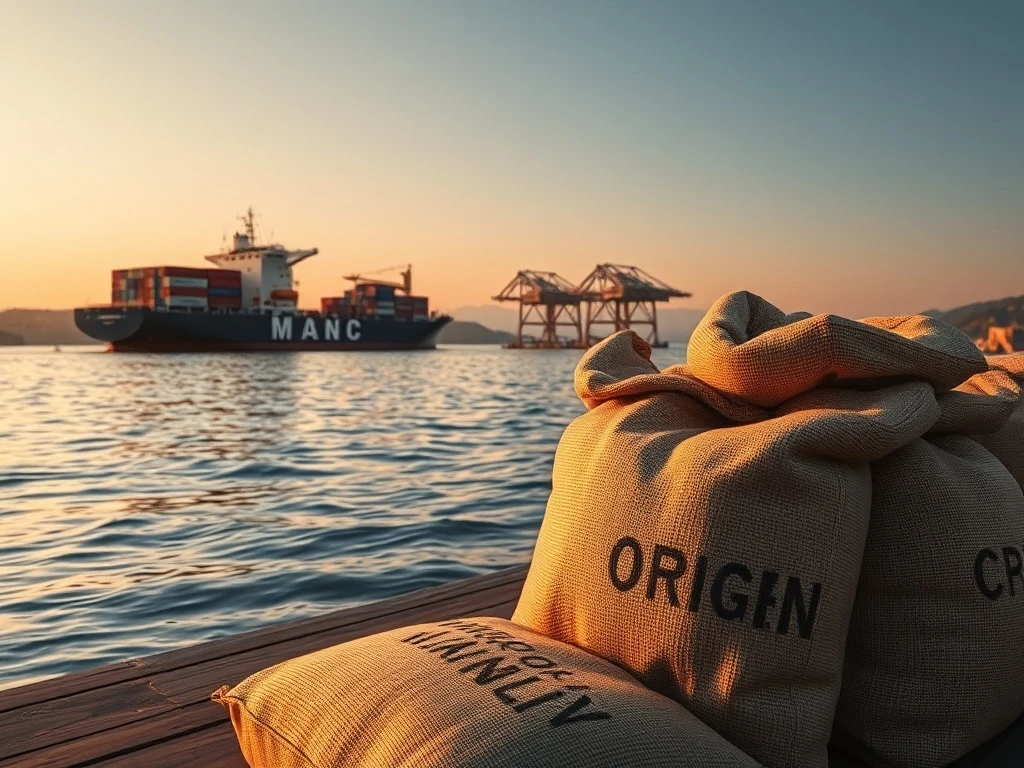
NEW YORK, March 9, 2026 — Global coffee markets experienced significant volatility today as coffee prices surged to three-week highs amid escalating shipping disruptions and ongoing supply concerns. May arabica coffee (KCK26) closed up 3.60 points (+1.23%) on Monday, reaching its highest level since mid-February, while May ICE robusta coffee (RMK26) showed more modest movement, closing down just 1 point (-0.03%). The price movements reflect a complex interplay between geopolitical tensions affecting global trade routes and fundamental supply factors in major producing regions. Market analysts immediately identified the closure of the Strait of Hormuz due to the Iran conflict as a primary catalyst for today’s price action, creating immediate concerns about transportation costs and delivery timelines for coffee importers worldwide.
Geopolitical Disruptions Reshape Coffee Supply Chains
The ongoing conflict in Iran has created rare challenges for global shipping, particularly affecting the vital Strait of Hormuz waterway. This strategic chokepoint normally handles approximately 20% of global oil shipments and serves as a critical route for container ships transporting agricultural commodities. Consequently, insurance premiums for vessels operating in the region have skyrocketed by 300-400% according to Lloyd’s of London data. Meanwhile, shipping companies have implemented emergency surcharges ranging from $500 to $1,500 per container, costs that inevitably cascade through supply chains to reach end consumers. The International Coffee Organization confirmed today that these disruptions come during peak shipping periods for South American coffee exports, potentially delaying deliveries to European and North American markets by two to four weeks.
Also read: SpaceX, OpenAI, and Anthropic: The AI IPO Wave That Could Reshape Public Markets
Shipping analysts at Drewry Maritime Research provided specific context about the operational impacts. “The rerouting of vessels around the Cape of Good Hope adds 10-14 days to typical transit times from Brazil to European ports,” explained senior analyst Maria Chen in a market update. “For time-sensitive commodities like coffee, where freshness affects quality premiums, these delays create both logistical headaches and quality preservation challenges.” The global container freight index has surged 18% since the shipping lane closures began, with specialized refrigerated container rates increasing even more dramatically due to their limited availability.
Brazilian Weather Patterns Compound Supply Concerns
While shipping disruptions captured immediate market attention, underlying production concerns in Brazil provided fundamental support for today’s price increases. Somar Meteorologia reported Monday that Minas Gerais, Brazil’s largest arabica coffee-growing region, received just 14.9 mm of rainfall last week. This amount represents only 35% of the historical average for this period, raising concerns about developing coffee cherries ahead of the critical flowering stage. The dry conditions follow irregular precipitation patterns throughout Brazil’s growing regions during January and February, creating uncertainty about the eventual size and quality of the 2026 harvest.
Also read: SpaceX IPO Allocation Leaves Binance, Kraken Users Empty-Handed Despite Massive Demand
Brazil’s Trade Ministry added to market concerns with Thursday’s export data showing February coffee exports fell 17.4% year-over-year to 142,000 metric tons. This decline occurred despite earlier projections of increased export volumes. “The export numbers surprised many market participants who expected stronger shipments given the projected record crop,” noted commodities strategist James Wilson at Rabobank. “When combined with the shipping disruptions, this creates a scenario where physical availability in consuming markets might tighten even if production estimates remain reliable.” The ministry data revealed particular weakness in arabica exports, which declined more sharply than robusta shipments.
- Transportation Cost Inflation: Shipping disruptions have increased per-container costs by $800-$1,200, adding 3-5 cents per pound to delivered coffee prices
- Inventory Drawdowns: Roasters are accelerating purchases to rebuild pipeline inventories before further price increases or delays
- Quality Preservation Challenges: Extended transit times threaten the flavor profiles of specialty coffees with strict freshness requirements
Expert Analysis on Market Dynamics
Dr. Elena Rodriguez, Director of Agricultural Economics at the University of São Paulo’s Center for Coffee Studies, provided vital context about the interplay between production forecasts and current market conditions. “The market is experiencing a classic ‘near-term versus long-term’ tension,” Rodriguez explained. “While 2026 production forecasts remain historically high, current shipping disruptions and weather concerns are creating immediate availability issues that futures markets must price accordingly.” Her research team has documented similar patterns during previous geopolitical disruptions, noting that price impacts typically persist for 60-90 days even after shipping lanes reopen.
The International Coffee Organization’s monthly market report, referenced by several analysts today, highlighted the structural vulnerability of coffee supply chains to transportation disruptions. “Coffee moves through some of the most complex agricultural supply chains in the world,” the report stated. “From smallholder farms to international shipping lanes to specialty roasters, each node represents potential vulnerability when geopolitical or logistical disruptions occur.” The ICO specifically cited the 2021 Suez Canal obstruction and 2020 pandemic-related port closures as precedents showing how shipping issues can disproportionately affect coffee markets relative to other commodities.
Global Production Outlook Presents Mixed Signals
The fundamental backdrop for coffee markets remains complex, with record production forecasts contrasting against immediate supply concerns. On February 5, Conab (Brazil’s crop forecasting agency) projected that Brazil’s 2026 coffee production would increase 17.2% year-over-year to a record 66.2 million bags. This projection included arabica production growth of 23.2% to 44.1 million bags and robusta production growth of 6.3% to 22.1 million bags. These optimistic numbers initially pressured prices in February, with arabica reaching a 15-month low on February 24 and robusta hitting a 6.75-month low on February 23.
However, subsequent reports have introduced more nuanced perspectives. Rabobank’s March 4 analysis projected global coffee production would reach 180 million bags in the 2026/27 season, approximately 8 million bags above the previous year. Yet the bank’s researchers cautioned that “distribution matters as much as production totals” given current shipping constraints. Meanwhile, the USDA’s Foreign Agriculture Service December report offered slightly more conservative estimates, forecasting 2025/26 world coffee production at 178.848 million bags with arabica production declining 4.7% and robusta increasing 10.9%.
| Region/Country | 2026 Production Forecast | Year-over-Year Change | Primary Concerns |
|---|---|---|---|
| Brazil Total | 66.2 million bags | +17.2% | Dryness in Minas Gerais, shipping access |
| Vietnam Resilient | 30.8 million bags | +6.2% | Export logistics, container availability |
| Colombia Arabica | 14.2 million bags | +3.5% | Labor availability, input costs |
| Central America Blend | 19.4 million bags | +2.1% | Climate variability, farm economics |
Inventory Trends and Currency Factors Create Countervailing Pressure
While supply concerns dominated Monday’s trading, several factors moderated price increases. ICE-monitored arabica inventories, which fell to a 1.75-year low of 396,513 bags on November 18, have recovered to a 5-month high of 553,379 bags as of Monday. Similarly, ICE robusta coffee inventories reached a 3.25-month high of 4,721 lots on March 3 after hitting a 14-month low of 4,012 lots on December 10. These rebuilding inventories provided some psychological resistance to today’s price rally, reminding traders that physical availability in exchange warehouses has improved from recent lows.
Currency movements also influenced Monday’s price action. The U.S. dollar index showed mild strengthening during the trading session, creating headwinds for dollar-denominated commodities like coffee. “The currency dynamic creates an interesting tension,” observed forex analyst David Chen at Standard Chartered. “A stronger dollar typically pressures commodity prices, but in this case, the fundamental supply concerns appear to be overriding the currency effect.” Historical analysis suggests coffee prices demonstrate approximately 0.6 correlation to inverse dollar movements, meaning today’s price strength despite dollar firmness represents notable deviation from typical patterns.
Vietnamese Production Growth Presents Market Contrast
While Brazilian supply concerns supported arabica prices, robusta markets faced different dynamics from expanding Vietnamese production. Vietnam’s National Statistics Office reported March 6 that January-February 2026 coffee exports increased 14% year-over-year to 366,000 metric tons. This growth follows a 17.5% increase in 2025 exports to 1.58 million metric tons. Production estimates also trend upward, with Vietnam’s 2025/26 coffee production projected to reach a 4-year high of 1.76 million metric tons (29.4 million bags), representing 6% year-over-year growth.
“The Vietnamese robusta story creates a fascinating divergence within coffee markets,” noted commodities trader Sarah Johnson at StoneX Financial. “While arabica responds to Brazilian weather and shipping issues, robusta faces different fundamentals centered on Vietnamese expansion and differing consumption patterns.” This divergence explains today’s price action, with arabica posting stronger gains while robusta remained essentially flat. The production growth comes as Vietnamese farmers have increasingly shifted toward higher-yielding varieties and improved agricultural practices following government extension programs.
Forward Outlook: Monitoring Multiple Risk Factors
Market participants will closely monitor several developing factors in coming weeks. The duration of shipping disruptions remains the most immediate uncertainty, with maritime analysts suggesting normal transit patterns might not resume for 30-60 days even if political resolutions emerge quickly. Brazilian weather patterns through March and April will prove significant for determining flowering success and eventual crop size. Additionally, global inventory rebuilding efforts will test whether current exchange stocks can buffer against supply chain disruptions.
The International Coffee Organization has scheduled an emergency technical committee meeting for March 15 to assess market impacts and coordinate information sharing among member nations. “Transparent data flow becomes especially important during periods of market stress,” explained ICO Executive Director José Sette. “We’re focusing on ensuring all market participants have access to accurate, timely information about shipping conditions, port operations, and inventory levels across major trading hubs.” The organization plans to release weekly disruption assessments until normal shipping patterns resume.
Conclusion
Today’s coffee prices movement reflects the complex intersection of geopolitical events, agricultural fundamentals, and logistical realities that define modern commodity markets. The 1.23% gain in arabica futures, reaching three-week highs, demonstrates how quickly supply chain vulnerabilities can translate into price impacts even amid generally favorable production forecasts. While record Brazilian crops and expanding Vietnamese production provide longer-term supply assurance, immediate challenges from Middle East shipping disruptions and Brazilian weather concerns have shifted near-term market dynamics. Market participants should monitor several key indicators in coming weeks: shipping lane reopening timelines, Brazilian precipitation patterns through the critical flowering period, and inventory drawdown rates in consuming markets. The coffee market’s sensitivity to logistical disruptions underscores the interconnected nature of global agricultural trade, where events thousands of miles from growing regions can significantly influence prices for one of the world’s most traded commodities.
Frequently Asked Questions
Q1: How are shipping disruptions specifically affecting coffee prices?
The closure of the Strait of Hormuz has increased shipping costs by 18-25% through higher insurance premiums and emergency surcharges. Rerouted vessels add 10-14 days to transit times from Brazil to Europe, creating quality preservation challenges and inventory timing issues that futures markets are pricing accordingly.
Q2: Why did arabica coffee prices rise while robusta remained flat?
Arabica markets responded more strongly to Brazilian weather concerns and shipping issues affecting South American exports. Robusta faced different fundamentals, including expanding Vietnamese production that reached a 4-year high, creating offsetting supply pressure despite similar shipping challenges.
Q3: How long might these price impacts persist?
Historical analysis of similar shipping disruptions suggests price impacts typically persist for 60-90 days even after shipping lanes reopen, as supply chains require time to normalize. However, if Brazilian weather improves and shipping resumes quickly, some price moderation could occur within 30-45 days.
Q4: What should coffee consumers expect regarding retail prices?
Retail price impacts typically lag futures markets by 4-8 weeks. Consumers might see modest price increases of 5-10% on shelf prices over the next two months, with potential for greater impacts on specialty cofferies that face both cost increases and quality preservation challenges from extended transit times.
Q5: How reliable are the record production forecasts given current challenges?
Production forecasts remain statistically strong but face execution risks. The USDA’s 178.8 million bag global forecast and Conab’s 66.2 million bag Brazil forecast assume normal weather through harvest and functional logistics. Current challenges create downside risk to these projections that markets are beginning to price.
Q6: Which companies are most affected by these market developments?
Major coffee roasters and retailers with fixed-price contracts face margin pressure, while companies with strong inventory positions benefit. Shipping companies and logistics providers experience both challenges (route disruptions) and opportunities (higher rates). Coffee farmers face price uncertainty amid otherwise favorable production conditions.