
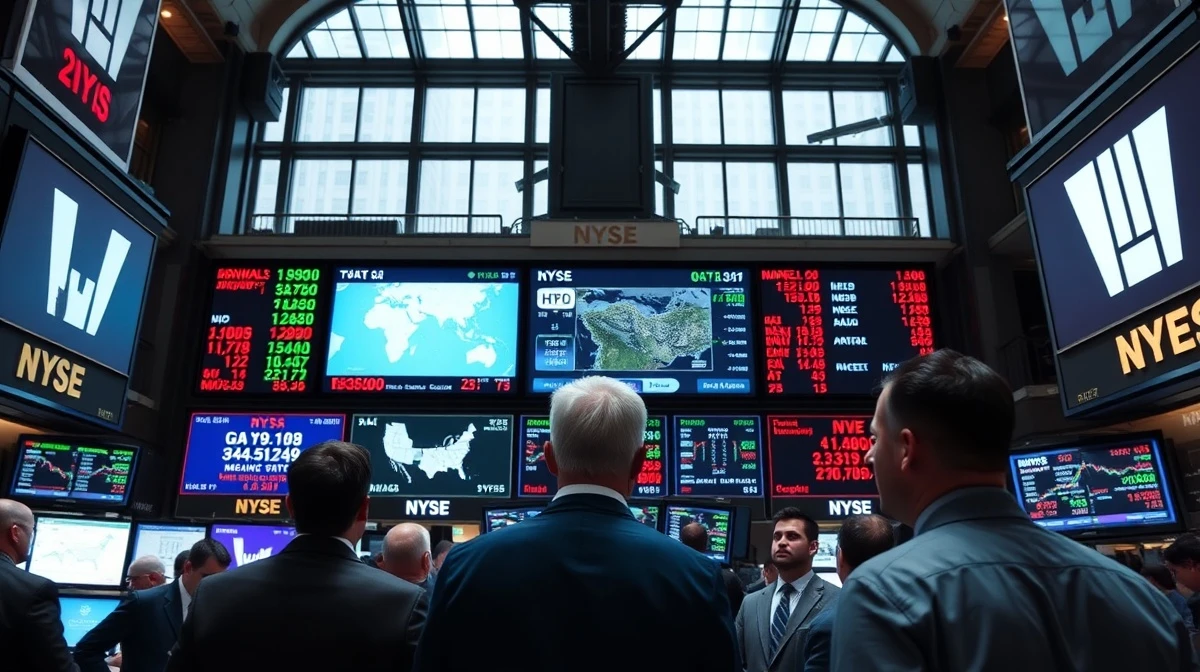
The Dow Jones Industrial Average edged lower in midday trading Tuesday, paring earlier gains, as markets absorbed news of a second reported death tied to the Israel-Hamas ceasefire agreement. The index, which had opened up roughly 80 points, gave back nearly half those gains by early afternoon, settling into a pattern analysts described as a “rerun” of prior geopolitical shocks.
The reaction—or lack thereof—underscores a broader trend on Wall Street: investors are increasingly treating Middle East conflict headlines as noise rather than signal, provided they do not threaten global oil supply or disrupt major trade routes.
Also read: Fidelity Small-Mid Multifactor ETF Sees $577M Weekly Outflow
Pattern recognition on Wall Street
This is not the first time markets have shrugged off ceasefire-related violence. In November, a similar incident triggered a brief dip in the Dow before the index recovered within hours. The S&P 500 showed a comparable pattern, while the tech-heavy Nasdaq was essentially flat.
“Markets have a very short memory for geopolitical events that don’t have a direct earnings impact,” said Michael O’Rourke, chief market strategist at JonesTrading. “Unless you see a spike in oil above $90 a barrel or a closure of the Strait of Hormuz, the algos treat this as a rerun.”
Also read: Nasdaq’s Market Modernization Push: Cloud Migration, AI Order Types, and Regulatory Strategy
The CBOE Volatility Index (VIX), often called Wall Street’s fear gauge, remained below 16, well off levels typically associated with geopolitical crises. That suggests options traders are not pricing in significant downside risk from the region.
What changed this time
The second reported death comes amid a fragile truce that had already been strained by mutual accusations of violations. While the identity and circumstances of the fatality remain unconfirmed by independent sources, the incident has not yet triggered a formal collapse of the ceasefire framework.
Analysts at Goldman Sachs noted in a research note Tuesday that the market’s muted response is “rational” given the lack of escalation beyond the isolated incident. However, they warned that a pattern of such events could erode confidence in the ceasefire’s durability over time, potentially leading to a delayed but sharper selloff if the truce breaks entirely.
Broader market context
The Dow’s modest retreat also reflects competing forces. Positive earnings reports from major retailers and a drop in Treasury yields provided support, offsetting geopolitical jitters. The 10-year Treasury yield fell 4 basis points to 4.21%, boosting interest-rate-sensitive sectors like real estate and utilities.
Energy stocks, which often rally on Middle East tensions, were mixed. Exxon Mobil rose 0.3%, while Chevron slipped 0.1%, suggesting traders saw no immediate supply threat.
What to watch
Investors will be watching for official statements from both sides and from mediators, including Egypt and Qatar. A formal breach of the ceasefire would likely trigger a more pronounced market reaction, particularly if it involves broader regional involvement.
For now, Wall Street appears to be treating the incident as a one-off—a rerun of a script markets have already seen.
Frequently Asked Questions
Why did the Dow Jones not react strongly to the ceasefire death?
Markets have become increasingly desensitized to geopolitical events in the Middle East that do not disrupt oil supply, trade routes, or major corporate earnings, treating this as a repeat of a pattern already priced in.
What is a ‘ceasefire death’ in this context?
It refers to a reported fatality that occurs after a ceasefire agreement has been declared, often raising questions about the durability of the truce and the risk of renewed hostilities.
How does market desensitization to geopolitical risk affect investors?
It can lead to underpricing of tail risks, meaning a sudden escalation could cause a sharper correction than expected, as investors may have grown complacent.
What sectors are most sensitive to Israel-Hamas ceasefire news?
Energy, defense, and shipping sectors tend to be the most directly impacted, while broad indices like the Dow Jones are more influenced by macroeconomic factors.

