
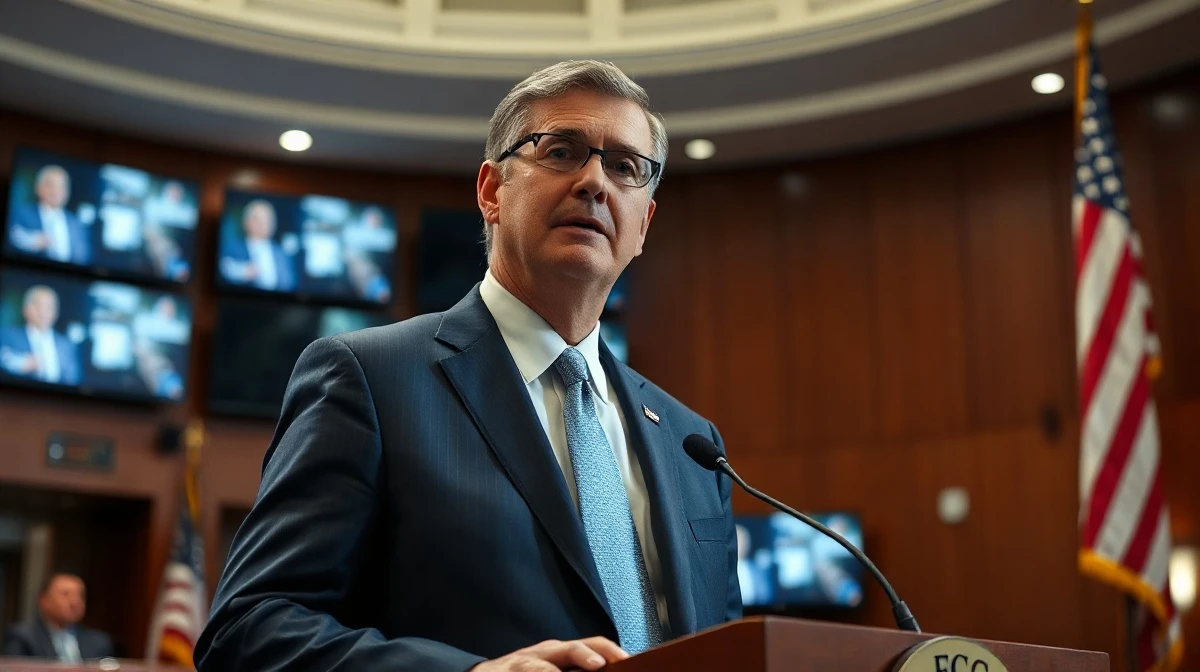
The Federal Communications Commission has advanced an order to repeal the national television ownership cap, a 39% household reach limit that Chairman Brendan Carr has called one of the most indefensible media rules still on the books. The move, announced in late July 2026, is the latest step in a broader effort by Carr to modernize broadcast regulations that predate the internet age.
The cap, in place for decades, restricts any single broadcast group from reaching more than 39% of American television households. It was originally designed to prevent excessive consolidation in an era when over-the-air TV was the dominant source of news and entertainment for most families.
Also read: Soybeans Gain 10–11 Cents as Meal Rally Offsets Weak NOPA Crush
Why the 39% cap is seen as a relic
The FCC’s proposal argues that the rule is no longer justified in a media sector where viewers have countless alternatives. Streaming platforms like Netflix, YouTube, and TikTok, along with social media networks, have fundamentally changed how Americans consume content. The commission’s order notes that these unregulated competitors face no similar ownership restrictions.
Carr has framed the cap as a government-imposed handicap that ties broadcasters’ hands while leaving trillion-dollar tech companies free to dominate digital advertising and online video. In public remarks, he has pointed out that the largest media companies today are headquartered on the coasts and have little incentive to cover middle America.
Also read: Costco's 5.5-pound chocolate Frankenstein head filled with gummy candy goes viral at $54.99
The chairman also cited a recent incident where several national TV networks declined to air President Trump’s primetime address on foreign election interference, arguing that coastal elites are making editorial decisions for the rest of the country. Repealing the cap, he argues, would help local broadcasters grow and push back against that dynamic.
Industry reaction and next steps
The proposal has drawn mixed reactions. Broadcast groups, including major station owners, have long lobbied for the cap’s removal, arguing it prevents them from achieving the scale needed to compete with streaming giants. Consumer advocacy groups and some lawmakers have expressed concern that repealing the cap could lead to further consolidation and reduce local programming diversity.
The FCC’s order is now subject to a public comment period before a final vote. If approved, the rule would be eliminated, allowing broadcast groups to expand their reach without the 39% ceiling. The change would not affect other ownership rules, such as limits on owning multiple stations in the same market.
This is not the first time the cap has been challenged. Courts previously struck down an FCC attempt to raise it in the early 2000s, and the rule has survived several legal battles since. Carr’s push represents the most serious recent effort to eliminate it entirely.
For local broadcasters, the stakes are significant. A repeal could enable larger groups to acquire more stations, potentially improving their negotiating power with cable and streaming distributors. It could also allow them to invest more in local news coverage, which many stations have cut back on in recent years.
The FCC is expected to finalize the rule change later this year, though legal challenges are likely. The outcome will shape the future of local television ownership in the United States.
This article is for informational purposes only and does not constitute financial or investment advice. Media regulation and market conditions are subject to change.

Source: Fox Business
