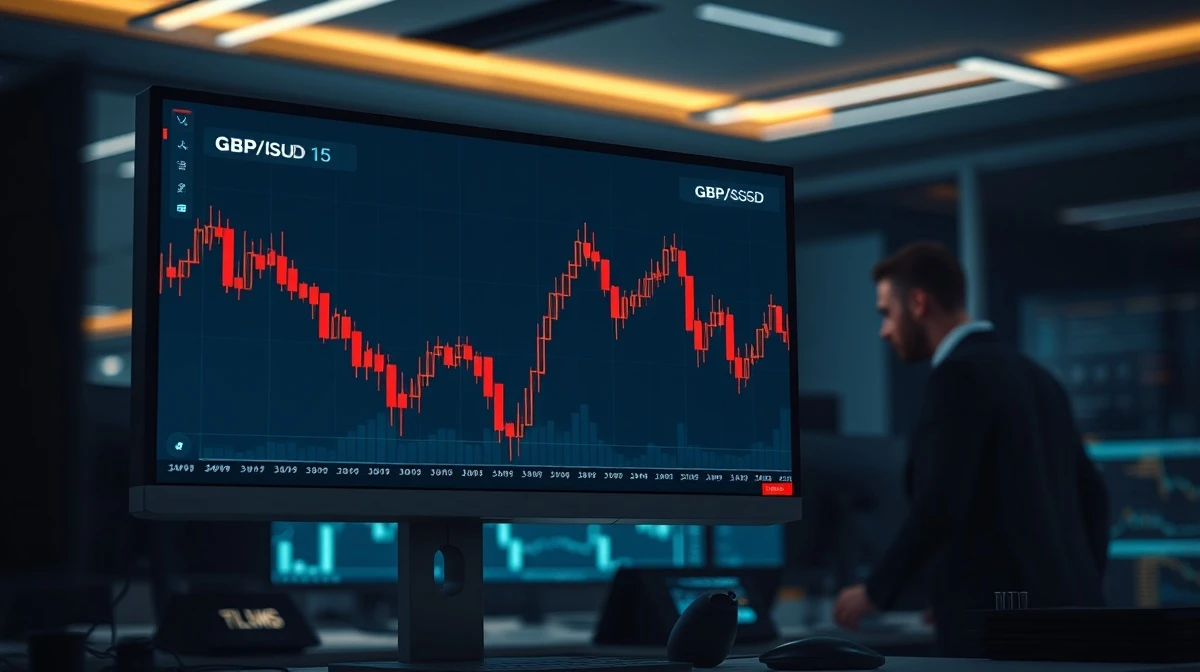
The British pound weakened against the US dollar on Tuesday, with the GBP/USD pair slipping as fading optimism over a potential ceasefire in the Middle East and a broadly firmer greenback weighed on sentiment. The move reverses some of the gains seen earlier in the week when hopes of a diplomatic resolution to the Iran-Israel tensions briefly supported risk appetite.
Iran Ceasefire Optimism Fades
Reports over the weekend suggested that indirect talks between Iran and the United States, mediated by Oman, had made progress toward a temporary ceasefire. This initially lifted risk-sensitive currencies like the pound. However, by Tuesday, those hopes had diminished significantly. Officials from both sides offered conflicting statements, and no formal agreement was announced. The lack of concrete progress prompted investors to unwind positions tied to the ceasefire narrative, reducing demand for the pound and other currencies perceived as higher risk.
Also read: Swiss Franc Dips Against Dollar, Rises Versus Euro in Mixed Forex Session
US Dollar Firms on Safe-Haven Flows
As geopolitical uncertainty resurfaced, the US dollar attracted safe-haven bids. The dollar index, which measures the greenback against a basket of six major currencies, climbed to a session high. The dollar’s strength was also supported by expectations that the Federal Reserve will maintain a cautious approach to monetary policy. Recent US economic data, including resilient labor market figures and persistent inflation readings, have reduced the likelihood of an imminent rate cut. This policy outlook contrasts with the Bank of England, which faces a more challenging growth outlook, further pressuring the pound.
Market Implications for Traders
The retreat in GBP/USD highlights the currency pair’s sensitivity to both geopolitical developments and diverging central bank expectations. For traders, the immediate focus remains on any new diplomatic signals from the Middle East. A confirmed ceasefire could trigger a short-term recovery for the pound. Conversely, an escalation in tensions would likely reinforce the dollar’s safe-haven appeal and push GBP/USD lower. Key technical levels to watch include support near the 1.2400 area, with resistance around 1.2520.
Also read: Pound Sterling faces a heavy week as Westminster empties out
Broader Context and Outlook
The GBP/USD pair has been under pressure for much of 2025, driven by the UK’s sluggish economic performance and the Bank of England’s rate-cutting cycle. The latest decline adds to a trend of lower highs and lower lows on the daily chart. The currency pair is now trading near levels last seen in late 2024. Analysts suggest that a sustained move below the 1.2400 support level could open the door for a test of the 1.2300 region. On the upside, a break above 1.2550 would be needed to signal a meaningful shift in momentum.
Conclusion
The GBP/USD decline reflects a return of geopolitical risk aversion and a stronger US dollar. With Iran ceasefire hopes fading and no clear diplomatic breakthrough in sight, the pair is likely to remain under pressure in the near term. Traders should monitor both Middle East headlines and upcoming US economic data for further directional cues.
FAQs
Q1: Why did GBP/USD fall on Tuesday?
A1: The decline was driven by fading hopes for a ceasefire between Iran and the US, which reduced demand for risk-sensitive currencies like the pound, and a stronger US dollar, which benefited from safe-haven buying.
Q2: How does the Iran situation affect the GBP/USD pair?
A2: Geopolitical tensions in the Middle East typically increase demand for safe-haven assets like the US dollar. When ceasefire hopes fade, the dollar strengthens, and currencies like the pound that are more sensitive to risk sentiment tend to weaken.
Q3: What are the key levels to watch in GBP/USD?
A3: Immediate support is near 1.2400. A break below this level could lead to a test of 1.2300. On the upside, resistance is seen around 1.2520, with a more significant barrier at 1.2550.