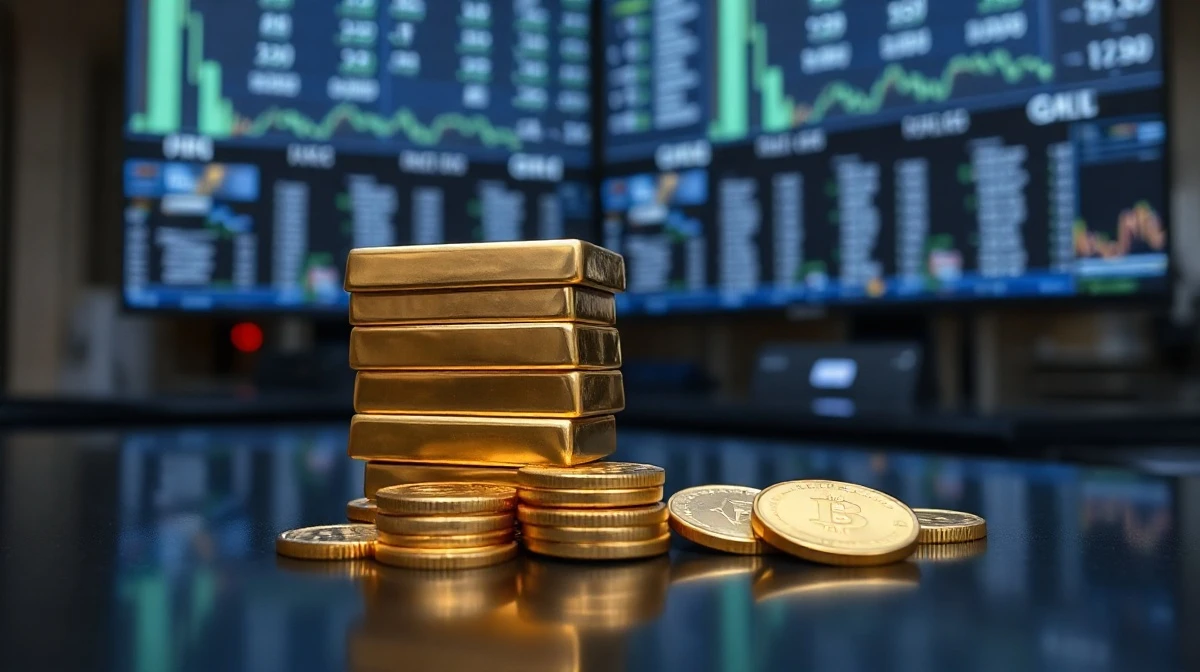
Gold prices fell during the European trading session on Thursday, pressured by a firmer US Dollar and a Federal Reserve that continues to signal a hawkish monetary policy stance. Spot gold (XAU/USD) dropped to around $2,620 per ounce, down 0.7% on the day, as the US Dollar Index climbed to 106.5, its highest level in several weeks.
The move reflects a familiar dynamic in the precious metals market: when the dollar strengthens, gold becomes more expensive for international buyers, while rising US Treasury yields increase the opportunity cost of holding an asset that pays no interest. The yield on the benchmark 10-year US Treasury note held near 4.4% on Thursday, adding further headwinds for bullion.
Also read: NZD/USD Slides as China PMI Misses Forecasts; US Dollar Rebounds
Fed’s Cautious Stance Keeps Rate Cut Bets in Check
Federal Reserve officials have consistently pushed back against market expectations for aggressive rate cuts in the near term. Minutes from the latest Federal Open Market Committee (FOMC) meeting, released earlier this month, showed that policymakers remain cautious about inflation, with several members noting that progress toward the 2% target has been slower than anticipated.
This hawkish rhetoric has led traders to scale back bets on a rate cut at the next FOMC meeting in January. According to the CME FedWatch Tool, the probability of a 25-basis-point cut at that meeting now stands at roughly 30%, down from nearly 50% a month ago. Higher-for-longer interest rates are a significant obstacle for gold, which competes with yield-bearing assets for investor capital.
Also read: Yen and Won Surge as Japan and South Korea Stage Rare Joint FX Intervention
The market’s focus now shifts to upcoming US economic data, particularly the non-farm payrolls report due next week. A strong jobs report would likely reinforce the Fed’s cautious approach, potentially pushing gold prices lower. Conversely, weaker-than-expected data could revive rate-cut speculation and provide some support for the yellow metal.
What a Firmer Dollar Means for Commodity Markets
The dollar’s strength is not an isolated phenomenon. It reflects a broader divergence between the US economy and its major peers, particularly the eurozone and China, where growth concerns have prompted more accommodative monetary policies. This divergence is a key reason why the dollar has remained resilient despite the Fed’s easing cycle.
For commodity markets, a stronger dollar typically exerts downward pressure across the board, not just on gold. Industrial metals like copper and silver have also seen softer prices this week. However, gold’s dual role as both a commodity and a monetary asset means its price action is particularly sensitive to shifts in real yields and dollar dynamics.
Central bank buying has been a notable counterweight to these headwinds. The World Gold Council reported earlier this year that central banks added over 290 metric tons of gold to their reserves in the first half of 2024, underscoring continued institutional demand. This structural support may limit the downside for prices even as the dollar remains firm.
Geopolitical uncertainty, including ongoing conflicts in Eastern Europe and the Middle East, also continues to provide a floor under gold prices. Investors often turn to gold as a hedge against geopolitical risk, and any escalation could quickly reverse the current downward trend.
For now, the path of least resistance appears to be lower, but traders are wary of a market that is heavily positioned short. A dovish surprise from the Fed or a weak jobs report could trigger a sharp short-covering rally, making the upcoming data releases critical for near-term direction.