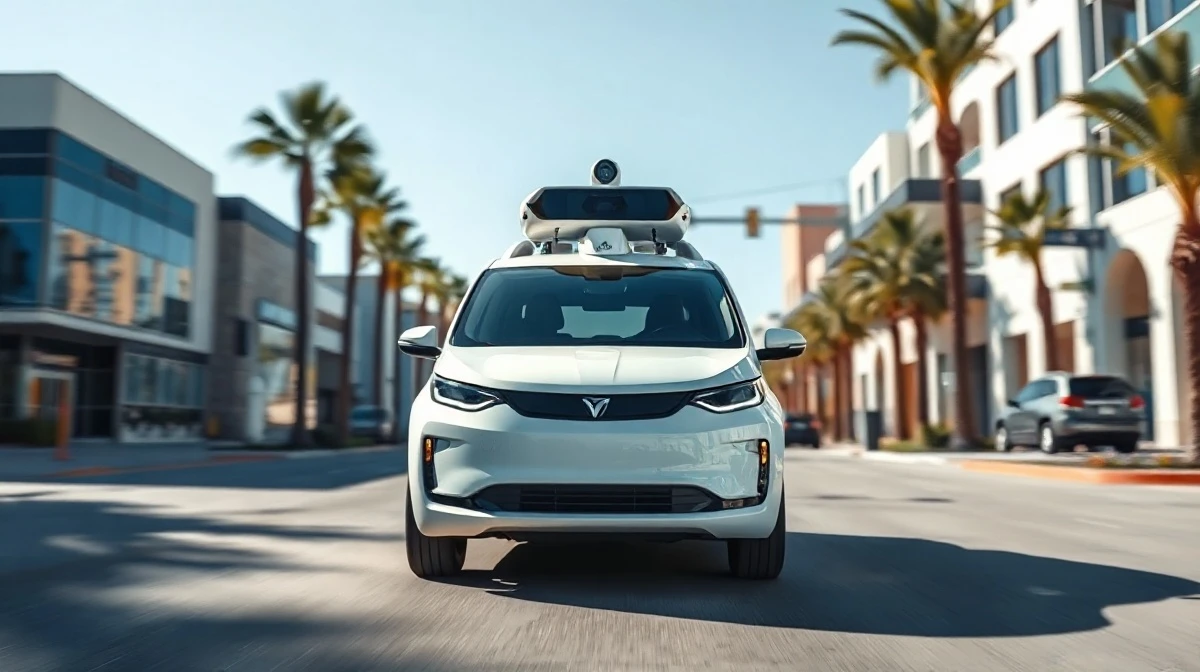
Moove, the mobility startup that began by financing vehicles for ride-hailing drivers in Nigeria, has raised $250 million in a Series C round at a $2.1 billion valuation to scale its autonomous vehicle fleet management business. The round was led by Mubadala Investment Company, with Woven Capital and Ion Pacific as co-leads, and included participation from Uber, BlackRock, MUFG, and Franklin Templeton, among others.
The company, founded in 2020 and now headquartered in Dubai, has evolved from a vehicle financing provider into a fleet operator for autonomous vehicles. It currently owns and operates a 42,000-vehicle ride-hailing fleet across 14 countries and employs 3,300 people globally. But its newest focus is on becoming the “backbone” of the robotaxi industry, a role that co-founder and co-CEO Ladi Delano says grew naturally from its earlier work.
Also read: Soybeans Gain 10–11 Cents as Meal Rally Offsets Weak NOPA Crush
From financing gig drivers to orchestrating robotaxis
Moove’s pivot to autonomous vehicles began in early 2023 after the company evaluated the industry’s four main players: AV developers, vehicle manufacturers, marketplaces like Uber, and consumers. Delano told TechCrunch that none of these players want to “own the metal” — the vehicles themselves. That gap, he said, is where Moove’s experience managing large fleets and providing financing could translate directly to autonomous vehicle operations.
“Let’s create a product where we own, operate, and orchestrate autonomous vehicles, and let’s go and find partners to do it with,” Delano said. “In 2023, we started talking to every single AV company you could imagine, and as you know — God would have it, luck would have it — we managed to partner with Waymo first.”
Also read: Costco's 5.5-pound chocolate Frankenstein head filled with gummy candy goes viral at $54.99
Moove now serves as the fleet operator for Waymo in Phoenix, Miami, and Las Vegas, with London planned for the future. The company doesn’t yet own the Waymo vehicles it operates, but it plans to purchase them using debt financing. Delano declined to share a timeline for when Moove will begin buying Waymo robotaxis, but he confirmed that Moove already owns robotaxi vehicles from another undisclosed AV developer.
“Ultimately our vision is to own, you know hundreds of thousands of vehicles,” Delano said, referring to robotaxis.
Scaling operations and building automated depots
The new funding will be used to scale Moove’s autonomous vehicle fleet management business, including hiring about 350 people. Delano said its traditional mobility business is set to achieve full profitability this year, which allows the company to invest more aggressively in its AV operations.
Part of the capital will go toward developing automated depots that Moove calls “Nests.” These facilities are designed to operate around the clock, using robotics to automate vehicle charging, maintenance, and servicing. Moove currently has about 15 depots in various stages of development, though Delano wouldn’t specify when the automated, “lights-out” depots would come online, noting that this is a future product.
The company’s expansion into AV fleet management comes at a time when robotaxi services are scaling rapidly in the U.S. Waymo has been expanding its service areas and increasing ride volumes, and other players like Cruise and Zoox are also pushing toward commercial operations. Moove’s model — owning and operating the vehicles on behalf of AV developers — positions it as a key infrastructure provider in an industry where vehicle ownership remains a costly and complex burden.
What Moove’s growth means for the robotaxi industry
Moove’s funding round signals growing investor confidence in the fleet management layer of the autonomous vehicle ecosystem. While AV developers focus on software and sensor technology, and automakers focus on manufacturing, the operational challenge of maintaining, charging, cleaning, and dispatching thousands of robotaxis remains a significant bottleneck. Companies like Moove aim to fill that gap.
For gig drivers and ride-hailing marketplaces, Moove’s expansion could also have implications. The company’s traditional business of financing vehicles for human drivers continues to operate, but its shift toward AV ownership suggests a future where autonomous fleets may gradually replace human-driven vehicles in some markets. Uber, which is both an investor in Moove and a partner in its ride-hailing business, has been preparing for this transition by partnering with AV developers and fleet operators.
The $250 million raise also adds to a growing wave of investment in autonomous vehicle infrastructure. As robotaxi services move from pilot programs to scaled commercial operations, the companies that provide the physical and operational backbone — depots, charging infrastructure, fleet management software, and vehicle ownership — are becoming increasingly valuable.
Moove’s next milestones will be closely watched: when it begins purchasing Waymo vehicles, when its automated depots come online, and how quickly it can scale its AV fleet beyond the current markets. For now, the company’s leadership is clear about its ambition. “Let’s create a product where we own, operate, and orchestrate autonomous vehicles,” Delano said, “and let’s go and find partners to do it with.”
This article is for informational purposes only and does not constitute financial advice. The autonomous vehicle and ride-hailing markets are volatile and subject to regulatory and operational uncertainties. Readers should conduct their own research before making any investment decisions.

Source: TechCrunch