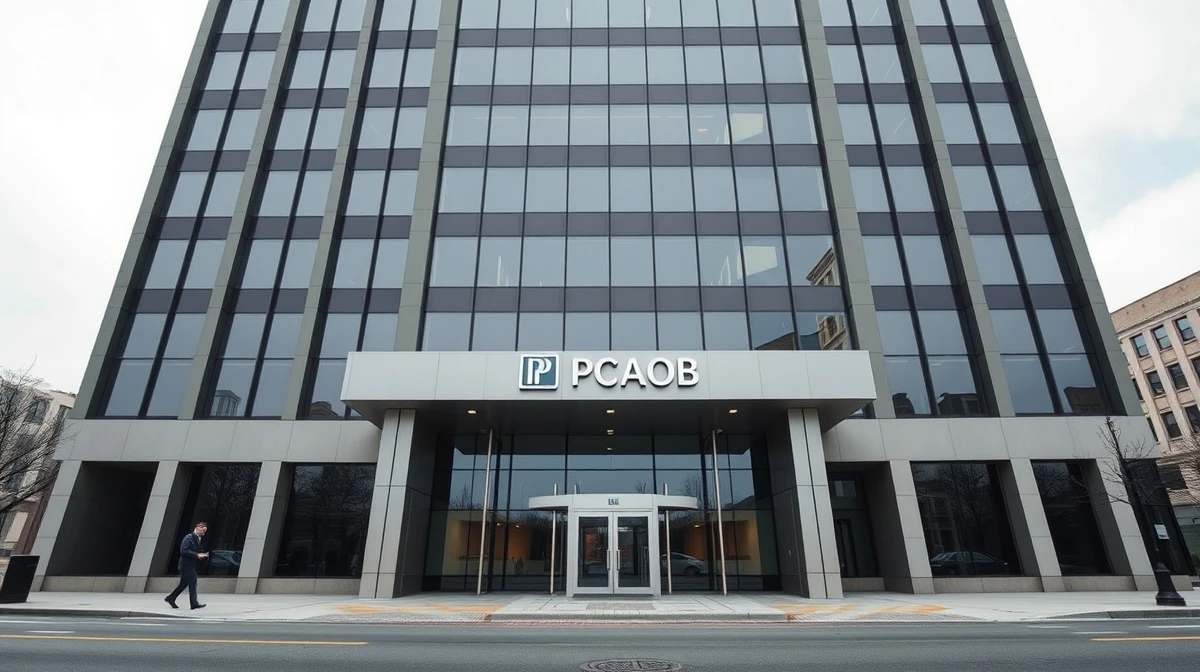
The Public Company Accounting Oversight Board (PCAOB) is considering significant staff reductions within the division responsible for directly overseeing accounting firms, according to people familiar with the matter. The move signals a strategic shift toward a less confrontational regulatory posture as the agency scales back the expansive mandate it was granted in the wake of the Enron scandal.
Background and Context
Established in 2002 by the Sarbanes-Oxley Act, the PCAOB was created to restore investor confidence after a series of high-profile accounting frauds, most notably Enron and WorldCom. The board was given broad authority to inspect, investigate, and discipline auditors of public companies. Over the past two decades, its enforcement actions have been a cornerstone of U.S. financial oversight, often resulting in significant fines and sanctions against major accounting firms.
Also read: US insurance rulemaker suspends investment risk designations after cyber attack
However, recent discussions within the agency indicate a desire to reduce the size and scope of the unit that conducts these inspections. The proposed cuts could affect dozens of positions, potentially altering the frequency and depth of audits performed on the largest accounting firms, including the Big Four: Deloitte, PwC, EY, and KPMG.
Implications for the Accounting Industry
A less aggressive PCAOB could mean fewer penalties and a lighter regulatory touch for accounting firms, which have long argued that the board’s enforcement approach has been overly punitive and costly. Industry advocates have called for a more collaborative relationship, emphasizing compliance assistance over adversarial investigations.
Also read: How to Surf Turbulent Markets: A Guide for Investors
Critics, however, warn that scaling back oversight could undermine audit quality and increase the risk of financial misstatements. Investor protection groups have expressed concern that the proposed cuts could weaken the very safeguards put in place after the Enron era, potentially exposing markets to greater instability.
What This Means for Investors and the Public
For investors, the PCAOB’s role is critical in ensuring that the financial statements of publicly traded companies are accurate and reliable. Any reduction in the agency’s capacity to scrutinize auditors could affect the quality of audits, influencing investment decisions and market confidence. The shift also reflects a broader debate in Washington about the appropriate balance between regulation and industry freedom.
Conclusion
The PCAOB’s potential staff cuts represent a major moment for U.S. financial regulation. While the agency aims to modernize its approach and reduce costs, the decision carries significant implications for audit quality, investor trust, and the legacy of post-Enron reforms. The final outcome will depend on ongoing discussions within the board and with lawmakers, who have historically viewed the PCAOB as a vital watchdog.
FAQs
Q1: What is the PCAOB?
The Public Company Accounting Oversight Board (PCAOB) is a nonprofit corporation established by Congress to oversee the audits of public companies and broker-dealers, ensuring they comply with professional standards and securities laws.
Q2: Why is the PCAOB considering staff cuts?
The board is reportedly seeking a less confrontational regulatory approach and aims to downsize its mandate, which was expanded significantly after the Enron scandal. The cuts would affect the unit that directly inspects and investigates accounting firms.
Q3: How might these cuts affect investors?
If the PCAOB reduces its oversight capacity, there could be a higher risk of undetected accounting errors or fraud, potentially affecting the accuracy of financial reports that investors rely on. However, proponents argue that a more collaborative approach could lead to better compliance overall.