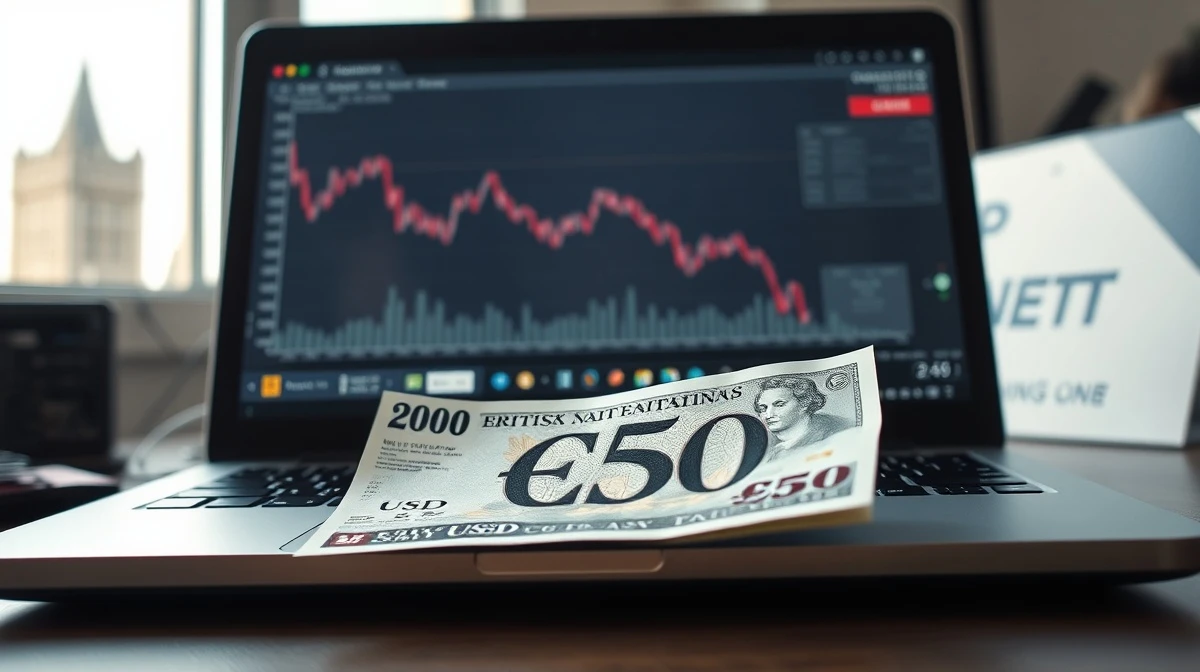
The British pound weakened sharply against major currencies on Thursday, breaking below key support levels despite the release of stronger-than-expected UK GDP data. The currency’s decline was driven by mounting political uncertainty within the Labour government, which overshadowed positive economic figures and left investors reassessing the UK’s near-term outlook.
GDP Data Beats Expectations but Fails to Lift Sterling
Official figures released by the Office for National Statistics showed the UK economy expanded by 0.4% in the first quarter of 2025, exceeding consensus forecasts of 0.3% growth. Services activity, which accounts for roughly 80% of UK output, posted a solid 0.5% gain, while manufacturing and construction also contributed modestly. The data marked the strongest quarterly performance since early 2024 and suggested the economy was gaining momentum after a prolonged period of stagnation.
Also read: The Japanese Yen Tests Tokyo's Patience at an Undisclosed Intervention Line
However, the positive headline was quickly dismissed by currency markets. The pound fell to $1.2420 against the US dollar by midday London trading, down 0.6% on the day, and also weakened against the euro, dropping to €1.1425. Analysts noted that the GDP release was backward-looking and failed to address the immediate political risks facing the government.
Labour Turmoil Weighs on Investor Confidence
The trigger for sterling’s breakdown was a series of developments within the ruling Labour Party. Reports emerged of a deepening rift between Prime Minister Keir Starmer and Chancellor of the Exchequer Rachel Reeves over fiscal policy direction, specifically regarding proposed tax increases on financial services and corporate profits. The internal disagreement became public after a leaked cabinet office memo suggested that Reeves was considering resigning if her fiscal plans were watered down.
Also read: Mexican Peso Falls as USMCA Trade Deal Uncertainty Rattles Markets
Adding to the uncertainty, Labour’s slim parliamentary majority was further threatened by the defection of two backbench MPs to the Liberal Democrats, reducing the government’s working majority to just three seats. The political instability raised the prospect of early elections or a hung parliament, both scenarios that historically weigh on sterling due to the potential for policy paralysis.
Market Reaction and Investor Sentiment
Currency traders responded by selling sterling aggressively, with the GBP/USD pair breaking below its 50-day moving average for the first time in three weeks. The sell-off accelerated after options markets showed a sharp increase in demand for downside protection, with one-month risk reversals for sterling falling to their most bearish level since November 2024.
Gilt yields also moved lower as investors sought safe-haven assets, with the 10-year yield dropping 8 basis points to 3.82%. The yield decline reflected both the political uncertainty and growing expectations that the Bank of England may need to cut interest rates sooner than previously anticipated to support the economy amid fiscal gridlock.
“The GDP data was good, but markets are forward-looking,” said Sarah Chen, senior currency strategist at Barclays in London. “Right now, the political noise is drowning out the economic signal. Investors need clarity on fiscal policy and government stability before they return to sterling.”
Implications for the UK Economy
The pound’s weakness has immediate consequences for UK households and businesses. A weaker currency makes imports more expensive, potentially fueling inflation at a time when the Bank of England is still battling to bring price growth back to its 2% target. Food and energy prices, which are priced in dollars, could see upward pressure in the coming months.
On the positive side, exporters may benefit from a more competitive exchange rate. Companies in manufacturing and services that sell abroad could see improved margins. However, the broader economic impact depends on whether the political turmoil is resolved quickly or drags on, eroding business confidence and delaying investment decisions.
Conclusion
The pound’s breakdown despite stronger GDP data underscores the extent to which political factors currently dominate currency markets. While the UK economy shows signs of genuine improvement, the Labour government’s internal divisions and reduced parliamentary majority have created an environment of uncertainty that investors are unwilling to overlook. The coming weeks will be critical: if Starmer and Reeves can present a unified fiscal plan and stabilize the government’s position, sterling could recover. If not, further downside is likely.
FAQs
Q1: Why did the pound fall despite better-than-expected GDP data?
Currency markets are forward-looking and focused on political risks. The Labour government’s internal turmoil and reduced parliamentary majority raised concerns about policy stability and the possibility of early elections, which outweighed the positive but backward-looking GDP figures.
Q2: How does a weaker pound affect UK consumers?
A weaker pound makes imported goods more expensive, including food, fuel, and electronics. This can increase the cost of living and put upward pressure on inflation, potentially delaying interest rate cuts by the Bank of England.
Q3: What needs to happen for sterling to recover?
Sterling needs clarity on fiscal policy direction and a reduction in political uncertainty. A unified statement from the Prime Minister and Chancellor, combined with a stable parliamentary majority, would likely restore investor confidence and support the currency.