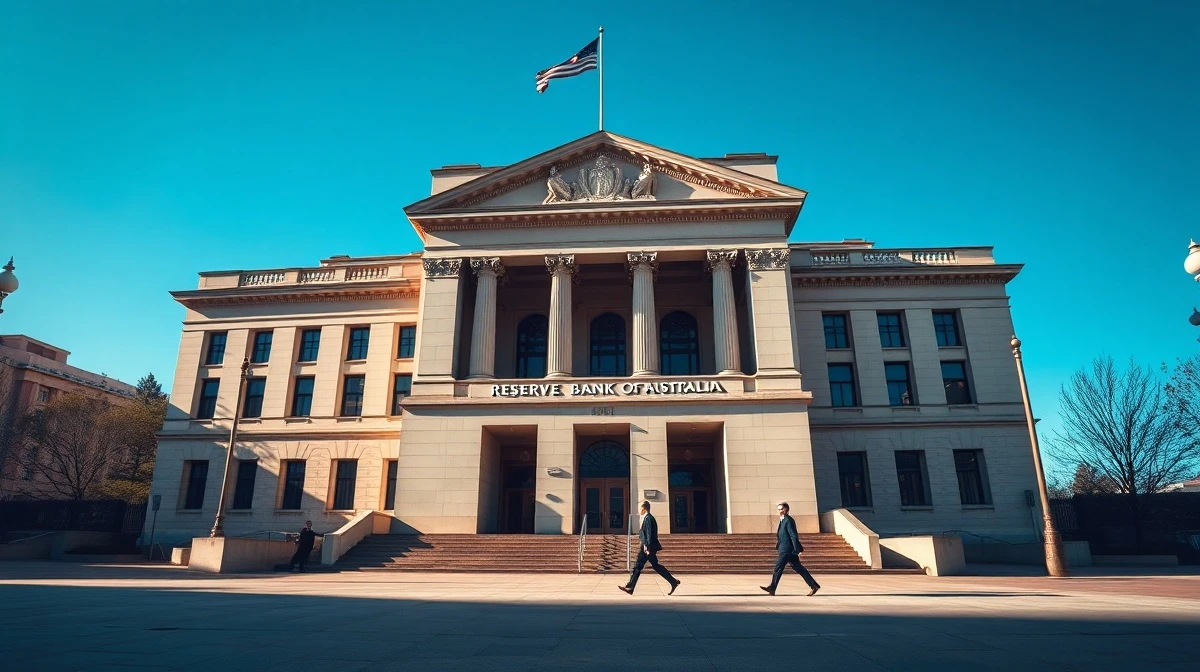
April 14, 2026 — The Reserve Bank of Australia’s primary task is to stop inflation expectations from climbing, Deputy Governor Andrew Hauser stated. His comments underscore the central bank’s ongoing vigilance despite recent moderation in price pressures.
Hauser made the remarks in a speech delivered in Sydney. He emphasized that while headline inflation has eased, the risk of public and business expectations becoming unanchored remains a significant concern for policymakers.
Also read: Gold price recovers as US-Iran draft deal talk pressures oil and dollar
Core Challenge for Policy Makers
According to the RBA, managing expectations is a core part of its inflation-fighting strategy. If businesses and workers begin to anticipate persistently higher inflation, they may act in ways that make it a reality. This could involve demanding larger wage increases or preemptively raising prices.
“The focus is squarely on preventing any rise in inflation expectations,” Hauser said. His speech pointed to recent data showing services inflation and domestic cost pressures remain elevated. This suggests the bank’s job is not yet complete.
Also read: Fed's Barkin Shuns Forward Guidance, Emphasizes Data-Driven Approach
Market data from the Australian Securities Exchange shows traders are pricing in a steady official cash rate for the coming months. Hauser’s tone aligns with this cautious outlook, offering little suggestion of imminent policy easing.
Recent Data Provides Context
The latest Consumer Price Index data, released for the March 2026 quarter, showed annual inflation at 3.2%. This is down from its peak but remains above the RBA’s 2-3% target band. Underlying measures, which strip out volatile items, were higher at 3.8%.
Wage growth figures have also been strong. Data from the Australian Bureau of Statistics indicated the Wage Price Index rose 4.2% over the year to December 2025. This mix of data creates a complex environment for the RBA board.
Industry analysts note that Hauser’s comments are a deliberate signal. The implication is that the RBA will hold rates higher for longer to ensure inflation is convincingly defeated. Any premature shift could undermine credibility and allow expectations to drift upward.
Implications for the Australian Economy
What this means for households and businesses is continued financial pressure. Mortgage holders face sustained high repayment costs. Consumer spending is likely to remain subdued as disposable income is squeezed.
For investors, the RBA’s stance suggests a prolonged period of restrictive policy. This could weigh on equity valuations for interest-rate-sensitive sectors like property and discretionary retail. The Australian dollar may find support from relatively high yields compared to other major economies.
The bank’s next official statement will be the release of the minutes from its April 2026 board meeting. Markets will scrutinize this document for any nuance in the discussion around inflation expectations. Hauser’s speech today sets a clear, hawkish tone ahead of that release.
You can read the full text of Deputy Governor Hauser’s speech on the Reserve Bank of Australia’s official website.
What Happens Next?
The RBA’s next cash rate decision is scheduled for early May. Hauser’s remarks make a sudden rate cut at that meeting highly improbable. The central bank appears committed to its current settings until it sees more decisive evidence that inflation expectations are firmly anchored at low levels.
All eyes will now turn to first-quarter wage data and business surveys. These will provide the next clues on whether the bank’s tough stance is having the desired effect on the national psychology around prices.