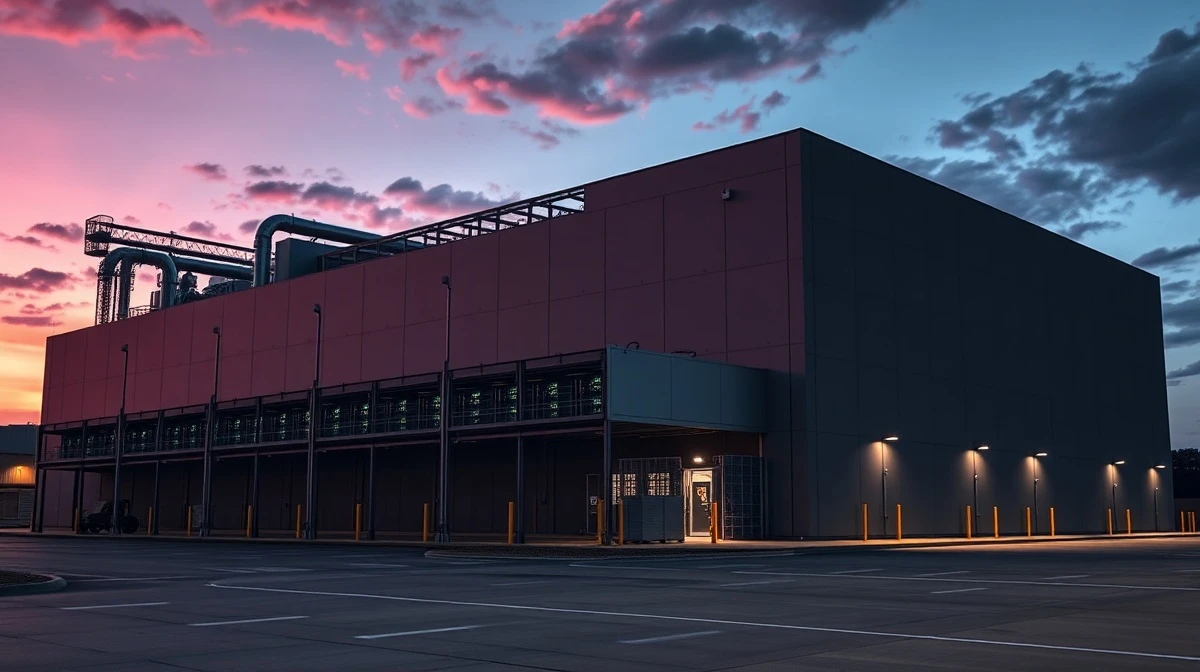
WASHINGTON — Senator Bernie Sanders (I-VT) and Representative Alexandria Ocasio-Cortez (D-NY) introduced legislation on March 25, 2026, that would ban the construction of new large-scale data centers in the United States. The proposed moratorium targets facilities with peak power loads exceeding 20 megawatts, a direct challenge to the infrastructure fueling the artificial intelligence boom.
Legislation Ties Infrastructure to AI Oversight
The lawmakers are filing companion bills in the Senate and House. Their proposal would halt major data center projects until Congress enacts what they term “comprehensive” federal regulation of artificial intelligence. This move explicitly links physical infrastructure to broader policy debates about AI safety and economic impact.
“The unchecked growth of power-hungry data centers, built for an unregulated AI industry, is unsustainable,” said Senator Sanders in a statement. His office cited remarks from several technology leaders who have publicly expressed concerns about AI risks. These include Tesla CEO Elon Musk, Google DeepMind chief Demis Hassabis, Anthropic CEO Dario Amodei, OpenAI CEO Sam Altman, and computer scientist Geoffrey Hinton.
Representative Ocasio-Cortez framed the issue around environmental and labor standards. “We cannot allow the construction of massive energy infrastructure without considering the climate impact or guaranteeing high-quality jobs,” she stated.
Public Sentiment and Political Hurdles
The proposal arrives amid significant public wariness about artificial intelligence. A Pew Research Center poll conducted in March 2026 found a majority of U.S. adults are more concerned than excited about AI’s increased use in daily life. Only 10% of respondents said their excitement outweighed their concern.
Despite this sentiment, the legislation faces substantial political obstacles. AI companies have significantly increased their lobbying and political spending. A prevailing argument against restrictive regulation is the fear of falling behind in a strategic competition with China. These factors make the passage of a sweeping moratorium unlikely in the current Congress.
Analysts view the bill as a strategic opening bid. It establishes a marker for progressive priorities in the looming debate over AI governance.
Key Provisions of the Proposed Bill
The legislation outlines a multi-pronged framework for future AI regulation, using the data center ban as leverage. Key demands include mandatory government review and certification of advanced AI models before public release. It also calls for federal protections against AI-driven job displacement.
On infrastructure, the bill seeks to limit the environmental footprint of data centers. It would require the use of union labor in the construction of any future permitted facilities. A notable trade provision aims to prohibit the export of advanced semiconductor chips to any country lacking “similar” AI and data infrastructure regulations—a category that currently includes most nations.
This export control measure is designed to set a global standard, preventing U.S. companies from simply moving operations overseas to avoid new rules.
Industry Response and Next Steps
The tech industry has consistently argued that data centers are critical for economic competitiveness and innovation. Industry groups note investments in energy efficiency and renewable power sourcing for new facilities. A ban on major projects could, they contend, slow technological development and complicate cloud service expansion.
The bill has been referred to relevant committees in both chambers. Its future depends on building support beyond its progressive core. The proposal signals that the debate over AI’s future will extend beyond software and algorithms to encompass the very physical plants that make the technology possible.
What comes next is a legislative process that will test the balance between promoting innovation and implementing guardrails. The proposal from Sanders and Ocasio-Cortez ensures that the environmental and labor costs of AI infrastructure will be part of that conversation.
This article was produced with AI assistance and reviewed by our editorial team for accuracy and quality.