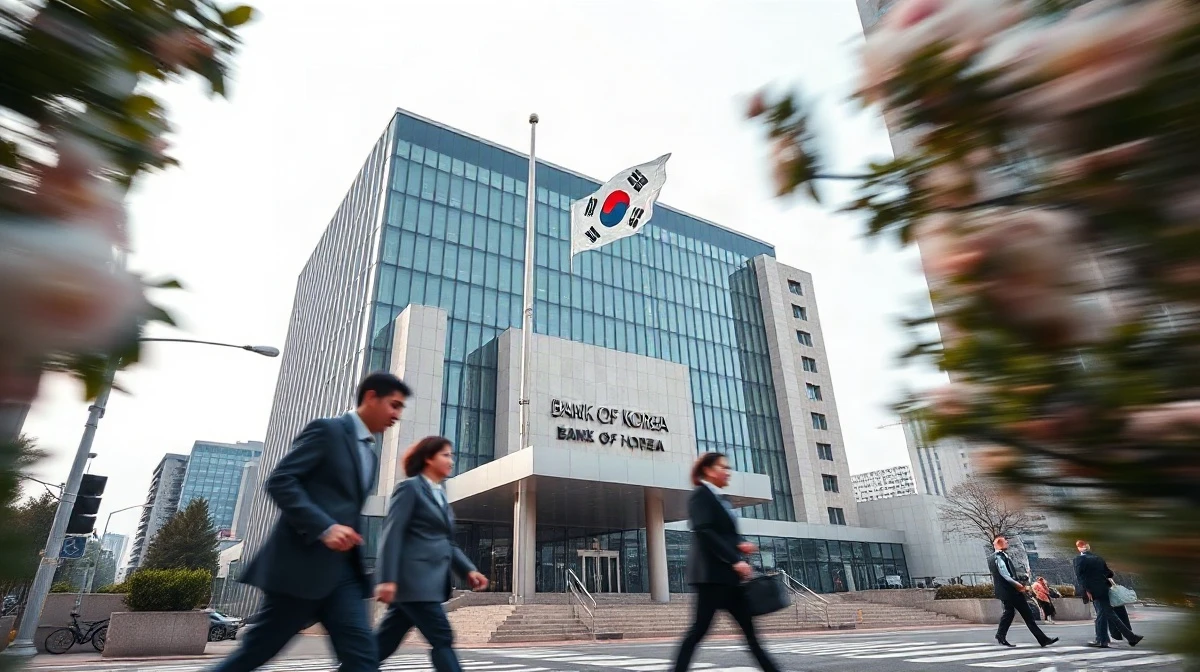
The South Korean Won climbed 0.3% against the US Dollar on Thursday, pushing USD/KRW down to near 1,380 during the Asian trading session — the pair’s lowest level in 11 months. The move came as the Bank of Korea (BoK) delivered its second consecutive interest rate hike, reinforcing the currency’s appeal in a region where several central banks are still holding rates steady.
The won’s advance marks a notable shift in sentiment. Just three months ago, USD/KRW was trading above 1,430, pressured by a strong dollar and concerns over South Korea’s export competitiveness. Now, with the BoK signaling a more aggressive tightening path, the currency has regained ground that many analysts had written off earlier in the year.
Also read: US Dollar: Policy Reality Supports Resilience, OCBC Says
What’s Driving the Won’s Rally?
The BoK’s decision to hike rates for a second straight month — raising the benchmark rate to 3.75% — reflects a central bank determined to bring inflation back to its 2% target. Consumer price growth in South Korea has remained stubbornly above 3% for most of 2026, driven by energy costs and a rebound in domestic demand.
Thursday’s move also follows a broader trend in Asian monetary policy. While the US Federal Reserve has kept its funds rate unchanged since March, other regional central banks, including the Bank of Japan and the Reserve Bank of Australia, have either tightened or signaled hawkish stances. The BoK’s actions, however, stand out for their pace — back-to-back hikes are rare in South Korea’s recent monetary history.
Also read: Dollar Steadies Near 2-Year High as Strong US Data Reinforces Fed's Cautious Cut Path
The stronger won has immediate implications for South Korean importers, who benefit from lower costs for energy and raw materials. However, exporters — particularly the country’s massive semiconductor and automobile sectors — face headwinds as their goods become more expensive in overseas markets.
Market Reaction and Outlook
Foreign investors have taken notice. According to data from the Korea Exchange, overseas investors have been net buyers of Korean equities for five consecutive sessions, a streak not seen since late 2025. The influx of capital has added further support to the won.
“The BoK’s determination to front-load rate hikes has caught many market participants off guard,” said a currency strategist at a Seoul-based brokerage, speaking on condition of anonymity. “We’re seeing a repricing of carry trade dynamics, with the won now offering a meaningful yield premium over the dollar.”
The 1,380 level is a key technical threshold. A sustained break below it could open the door to further gains, with some analysts eyeing 1,360 as the next support. However, the BoK’s future path remains data-dependent. If inflation shows signs of cooling, the central bank may pause its tightening cycle, which could temper the won’s rally.
Domestically, the stronger currency is a double-edged sword. South Korea’s export-driven economy has benefited from a weaker won in recent years, and a rapid appreciation could squeeze profit margins for major conglomerates like Samsung Electronics and Hyundai Motor. Yet, for households grappling with high import prices, the won’s strength offers some relief.
Looking ahead, all eyes will be on the BoK’s next policy meeting in October. Economists are divided on whether the bank will extend its hiking streak or adopt a wait-and-see approach. For now, the won’s momentum appears intact, but the currency’s fate is closely tied to both domestic inflation data and the Federal Reserve’s next move.
This article is for informational purposes only and does not constitute financial advice. Currency markets are volatile and unpredictable; readers should conduct their own research or consult a qualified financial advisor before making any trading decisions.