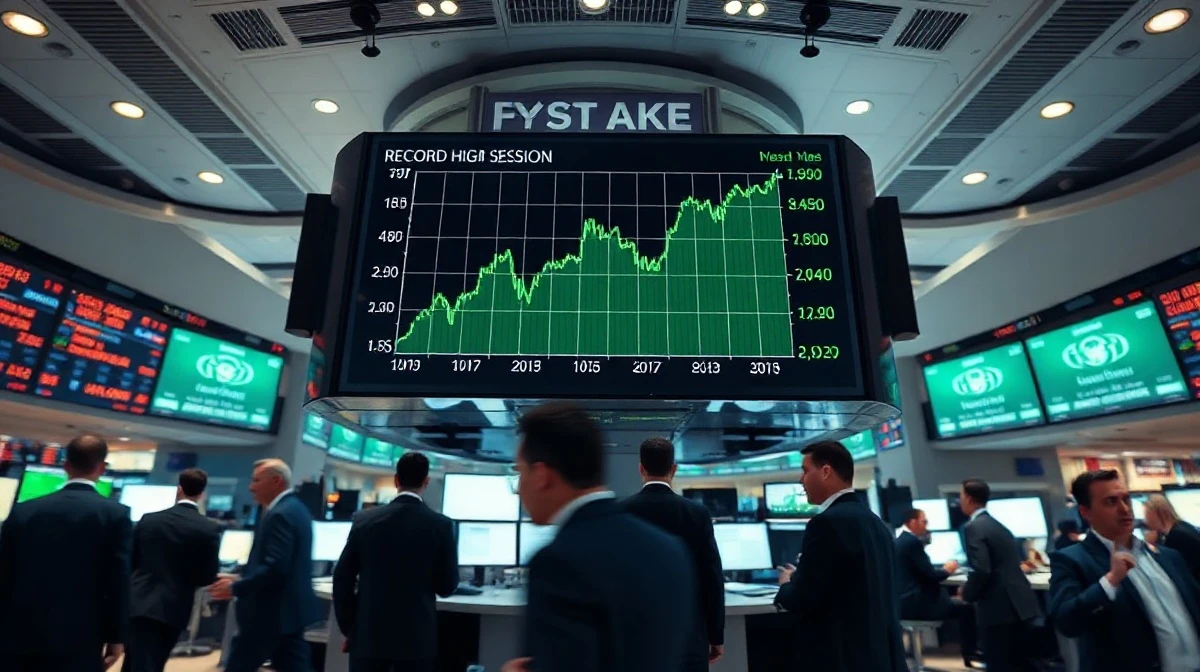
Deutsche Bank strategists said last week that the S&P 500 and other major equity indices climbed to fresh record highs, fueled by a drop in energy prices and a shift in market expectations toward a less aggressive Federal Reserve. The report, dated August 7, 2026, highlighted that the combination of cheaper oil and softer rate-hike bets provided a tailwind for risk assets.
Oil’s slide and the Fed factor
Brent crude futures fell by roughly 4% during the week, touching their lowest level since early 2026, as concerns over global demand outweighed supply disruptions. The decline in energy costs is a double-edged sword: while it pressures energy-sector earnings, it also lowers input costs across manufacturing, transportation, and retail, which can support broader profit margins.
Also read: Robinhood's New Fund Lets Retail Investors Back Y Combinator Startups — But Fees Are Steep
At the same time, traders adjusted their Fed outlook after a string of softer inflation data and comments from central bank officials suggesting they were in no hurry to resume tightening. According to CME FedWatch data cited by Deutsche Bank, futures now price in a near-certain pause at the September meeting, with a small probability of a cut by December.
“The market is increasingly comfortable with the idea that the Fed’s next move is more likely to be a cut than a hike,” the strategists wrote, noting that this shift has been a key driver of the equity rally.
Also read: Situational Awareness Hedge Fund Offloads Public Equity Holdings After Tech Sell-Off Losses
What the record means for investors
The S&P 500’s close above 6,200 on August 7 marked its third record high in four sessions, with the Dow and Nasdaq also notching all-time peaks. The breadth of the rally was notable: more than 70% of S&P 500 components finished the week in positive territory, a sign that the advance is not confined to a handful of mega-cap tech stocks.
However, Deutsche Bank cautioned that the market’s reliance on falling oil prices and Fed expectations leaves it vulnerable to sudden reversals. A spike in crude due to geopolitical tensions or a hotter-than-expected inflation print could quickly erase the gains, the strategists noted.
For everyday investors, the record highs may feel like a vindication of staying the course, but they also raise the bar for future returns. Valuations are stretched by historical standards, with the S&P 500 trading at roughly 22 times forward earnings, well above the 10-year average of 18.
Looking ahead: data and earnings in focus
This week, the market will parse July’s consumer price index report, due Wednesday, which is expected to show a further cooling in headline inflation. A benign reading could cement the case for a prolonged Fed pause, while a surprise uptick could reignite rate-hike fears.
Earnings season is also winding down, with retailers such as Walmart and Home Depot set to report in the coming days. Their guidance will offer clues on whether consumer spending is holding up in the face of higher borrowing costs.
Deutsche Bank’s report underscores a broader trend: equity markets are increasingly driven by macro forces — oil prices, central bank policy, and inflation data — rather than company-specific fundamentals. That makes the next few weeks of data releases particularly critical for sustaining the rally.
Disclaimer: This article is for informational purposes only and does not constitute financial advice. Market conditions are volatile and uncertain; always conduct your own research before making investment decisions.