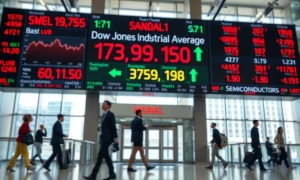
The S&P 500 and Nasdaq 100 closed at new all-time highs on Wednesday, propelled by a powerful combination of stellar earnings from chipmakers and a sharp drop in oil prices fueled by growing optimism over a potential US-Iran peace agreement. The Dow Jones Industrial Average also surged, reaching its highest level in nearly three months.
Tech Earnings Ignite AI-Fueled Rally
The technology sector led the charge, with Advanced Micro Devices (AMD) soaring more than 17% after reporting quarterly revenue that beat expectations and issuing a resilient full-year sales forecast driven by surging data center spending. Super Micro Computer (SMCI) jumped over 24% after posting improved margins and a solid profit outlook, reinforcing confidence that the massive investment in artificial intelligence infrastructure remains on a strong trajectory.
Also read: SpaceX, OpenAI, and Anthropic: The AI IPO Wave That Could Reshape Public Markets
Other chip and AI-related stocks followed suit. ARM Holdings climbed more than 12%, Lam Research gained over 7%, and Nvidia rose more than 5%. The strong earnings season continues to support the broader market, with 84% of the 393 S&P 500 companies that have reported first-quarter results beating analyst estimates. Overall, S&P 500 earnings are projected to rise 12% year-over-year, according to Bloomberg Intelligence.
Oil Prices Plunge on US-Iran Peace Hopes
Crude oil prices fell more than 7% to a two-week low after reports emerged that the US and Iran are nearing a framework agreement to end hostilities. Axios reported that the two sides are working on a one-page memorandum of understanding that, if accepted by Iran, would lead to the gradual reopening of the strategic Strait of Hormuz and the lifting of the US blockade on Iranian ports.
Also read: SpaceX IPO Allocation Leaves Binance, Kraken Users Empty-Handed Despite Massive Demand
President Trump stated that “great progress has been made toward a complete and final agreement,” though he emphasized that a blockade of Iranian ports would remain in place until a deal is finalized. The potential reopening of the Strait of Hormuz, through which about a fifth of the world’s oil and liquefied natural gas transits, has significant implications for global energy markets. Goldman Sachs estimates the current disruption has drawn down nearly 500 million barrels from global crude stockpiles.
Market Implications of Lower Oil Prices
The sharp decline in crude prices provided a powerful tailwind for sectors sensitive to fuel costs. Airline and cruise line stocks rallied sharply, with United Airlines, Carnival, and Royal Caribbean all posting strong gains. Conversely, energy producers and service providers retreated, with Devon Energy, Occidental Petroleum, and Exxon Mobil all declining.
The drop in oil also eased inflation expectations, pushing the 10-year Treasury note yield down to a one-week low of 4.33%. This dovish signal, combined with a weaker-than-expected ADP employment report showing 109,000 jobs added in April (below the 120,000 forecast), helped sustain the rally in bonds and equities.
Broader Market Movers and Key Themes
Beyond tech and energy, several other sectors saw notable moves. Mining stocks surged as gold, silver, and copper prices rallied. Walt Disney rose more than 7% after reporting better-than-expected quarterly revenue. Uber Technologies gained over 8% on strong gross bookings. Meanwhile, companies like Primoris Services and TransMedics Group fell sharply after disappointing earnings reports.
The market is currently pricing in only a 6% chance of a Federal Reserve rate cut at the next FOMC meeting in June, as inflation remains above the central bank’s 2% target. St. Louis Fed President Alberto Musalem noted that risks are shifting toward inflation, suggesting the Fed will remain cautious.
Conclusion
Wednesday’s rally reflects a market buoyed by strong corporate fundamentals and a significant geopolitical development that could reshape energy markets. While the AI-driven earnings momentum remains a key pillar of support, the potential de-escalation in the Middle East introduces a new variable that could sustain the positive sentiment in the near term. Investors will now watch for the formal response from Iran and the upcoming quarterly refunding auction by the US Treasury.
FAQs
Q1: Why did stock markets hit all-time highs on Wednesday?
The rally was driven by two main factors: exceptionally strong earnings from major tech companies like AMD and Super Micro Computer, which reinforced confidence in AI-driven growth, and a sharp drop in oil prices on hopes of a US-Iran peace deal, which lowered inflation expectations and boosted sectors like airlines.
Q2: How does a potential US-Iran peace deal affect oil prices?
A deal could lead to the reopening of the Strait of Hormuz, a critical waterway for global oil shipments, and the lifting of sanctions on Iranian oil exports. This would increase global oil supply, putting downward pressure on prices. The recent drop reflects market optimism that such an agreement is imminent.
Q3: What does the strong earnings season mean for the broader market outlook?
With 84% of S&P 500 companies beating estimates and earnings growth projected at 12%, the strong earnings season provides fundamental support for current stock valuations. However, excluding the tech sector, earnings growth is only around 3%, highlighting the uneven nature of the recovery and the heavy reliance on AI-related spending.