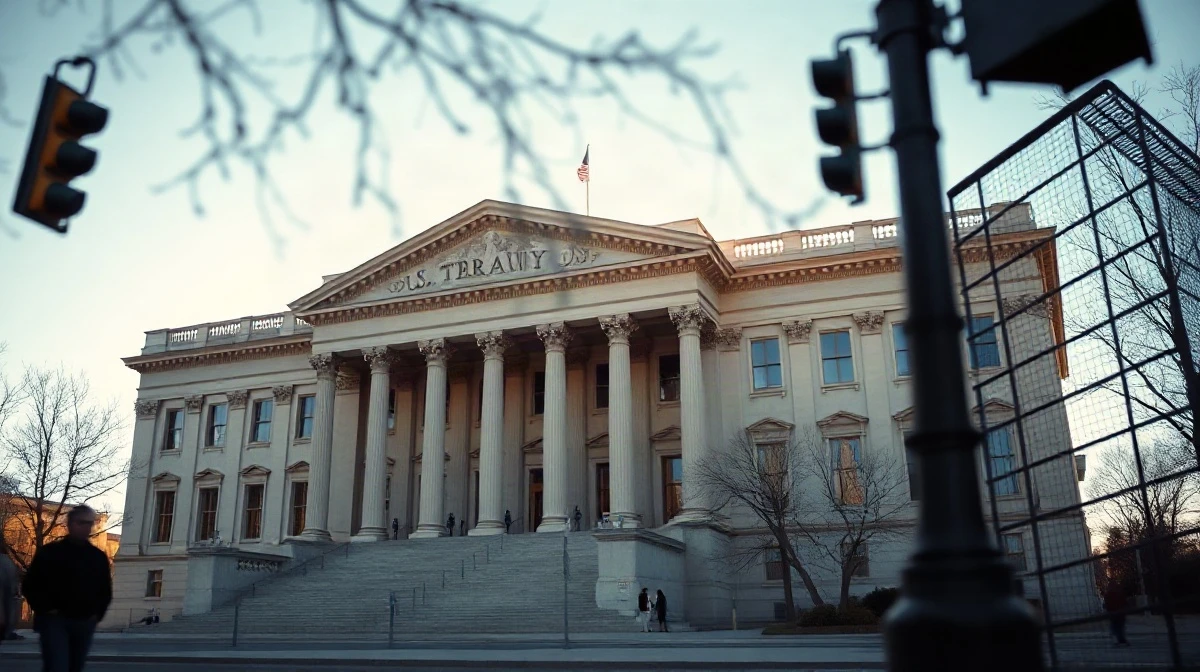
The U.S. Treasury spent the morning reassuring bond markets it has roughly $950 billion available to hold long-term yields down. By the afternoon, the same department was preparing to announce new sanctions aimed at tightening the oil chokepoint that helped push those yields up in the first place. The one-day policy crosscurrent, reported on August 24, 2026, left traders in both the fixed-income and equity markets recalibrating their positions.
The juxtaposition highlights a central tension in current U.S. economic policy: the desire to suppress borrowing costs while simultaneously taking actions that could stoke inflation. The Treasury’s bond-buyback program, a tool used to manage the yield curve, is designed to support the market for long-dated U.S. debt. But the planned sanctions, which target shipping and insurance networks tied to Iranian oil exports through the Strait of Hormuz, carry the risk of tightening global supply and lifting energy prices.
Also read: Cotton Futures Close Steady Friday as Export Data Shows Strong 2026/27 Demand
Why the Treasury Is Stepping In
The Treasury’s intervention comes after a sustained period of upward pressure on long-term yields, driven by inflation concerns and heavy government issuance. The $950 billion figure represents a substantial war chest, giving the department room to purchase longer-dated securities and smooth out volatility. This is part of a broader strategy to keep the government’s own borrowing costs manageable as it refinances a large stock of debt.
Bond markets responded positively to the morning’s announcement, with yields on the 10-year Treasury dipping modestly. However, the gains were quickly tempered by the afternoon’s sanctions news, which reignited fears of an oil supply shock. Analysts noted that the two announcements, while distinct, are deeply interconnected: higher oil prices feed directly into inflation expectations, which in turn push bond yields higher.
Also read: TD Securities: US Growth Set to Move Sideways in 2026, Stagflation Risks Loom
The Sanctions Dilemma and Market Reaction
The new sanctions are designed to close loopholes that have allowed Iranian crude to reach global markets despite existing restrictions. The Strait of Hormuz, through which roughly 20% of the world’s oil passes, remains a critical vulnerability. Any tightening of enforcement there has an outsized effect on energy prices and, by extension, on the broader economy.
For the Dow Jones Industrial Average, the day’s events created a familiar dilemma. Lower bond yields typically support equity valuations, but the prospect of higher oil prices threatens corporate margins and consumer spending. The index saw choppy trading as investors weighed these competing forces. Energy stocks, however, rallied on the sanctions news, providing a partial offset to losses in other sectors.
The timing of the two announcements is unlikely to be coincidental. By signaling its willingness to buy bonds, the Treasury may be attempting to preempt the yield spike that could follow the sanctions. This coordination, or at least sequencing, suggests a deliberate effort to manage the market impact of a politically sensitive policy move.
What to Watch Next
Investors will be watching the details of the sanctions package, particularly how quickly they take effect and whether they include waivers for key buyers. The response from major oil importers, especially in Asia, will also be important. If the sanctions are seen as disruptive without a clear off-ramp, oil prices could spike further, complicating the Federal Reserve’s path on interest rates.
The Treasury’s buyback program also has limits. The $950 billion is substantial, but it is not unlimited, and repeated interventions could raise questions about the central bank’s independence and the government’s commitment to fiscal discipline. For now, the market’s focus is on the immediate crosscurrent: a Treasury trying to hold yields down while its own actions threaten to push them back up.
As the session wore on, the Dow’s losses narrowed, reflecting the market’s attempt to digest the dual headlines. The coming days will reveal whether the Treasury’s balancing act can hold, or whether the oil market’s reaction forces a more difficult choice between inflation control and economic support.
This article is for informational purposes only and does not constitute financial advice. Market conditions are volatile and uncertain; readers should conduct their own research before making investment decisions.