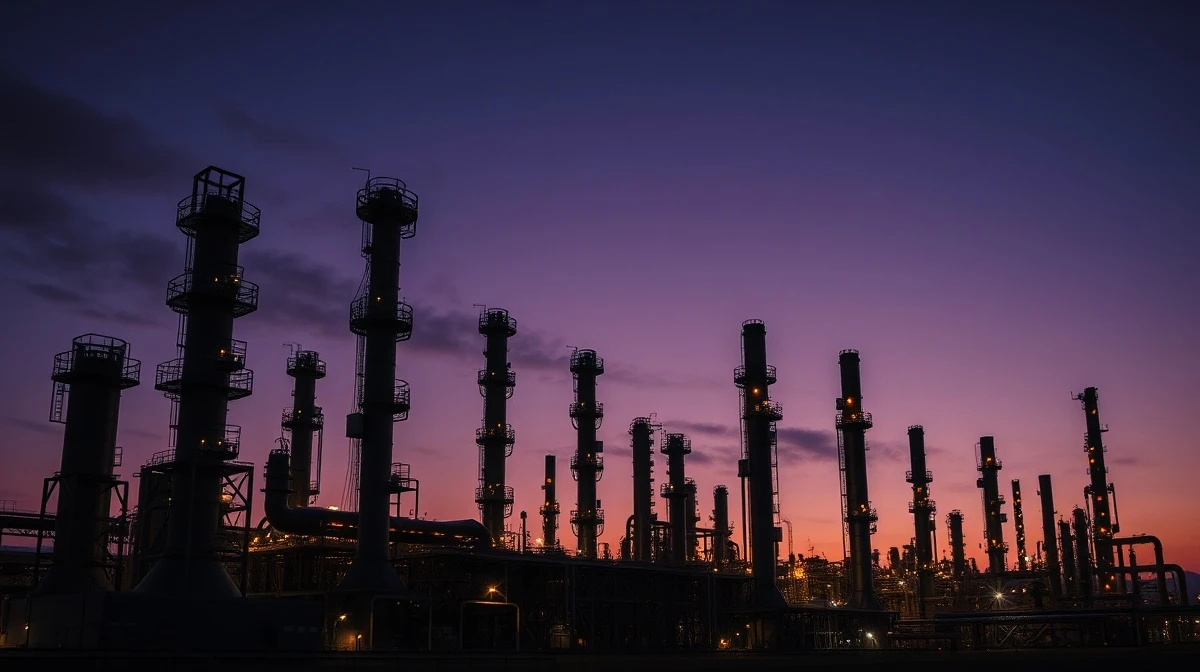
The Trump administration has invoked the Defense Production Act to direct a major oil company to resume operations at a key California facility. The order, issued on March 15, 2026, compels the immediate restart of production to address what officials describe as a critical national security and energy supply need.
Invoking Wartime Powers for Energy
The Defense Production Act (DPA) grants the President broad authority to direct private industry to prioritize orders deemed essential for national defense. Its use in the energy sector is rare and signals a significant federal intervention. The administration’s directive mandates the oil company to bring its California operations back online without delay.
No specific company was named in the initial announcement. The order focuses on restoring domestic production capacity. Officials argue the move is necessary to bolster energy independence and secure fuel supplies for military and critical infrastructure.
Context of California’s Energy Landscape
California has faced complex energy challenges in recent years, including regulatory pressures on fossil fuel production and intermittent supply constraints. The state remains heavily dependent on petroleum for transportation, despite ambitious climate goals. Federal intervention at this scale represents a direct clash with state-level environmental policies.
Industry analysts note that restarting idled oil operations is not an instantaneous process. It requires recalling workers, conducting safety checks, and securing supply chains. The DPA order is intended to sweep aside potential regulatory or logistical hurdles that could cause delays.
Market data from the U.S. Energy Information Administration shows California’s in-state crude oil production has declined over the past decade. The state imports a significant portion of its fuel from foreign sources and other domestic regions.
Legal and Political Implications
The use of the Defense Production Act for this purpose is expected to face immediate legal and political challenges. Previous administrations have used the DPA primarily for medical supplies during health crises or for materials like semiconductors. Applying it to compel fossil fuel production is a novel application of the law.
California state officials have historically opposed federal efforts to expand oil drilling off the coast or on federal lands within the state. This order could set up a confrontation between state and federal authorities over jurisdiction and environmental regulation.
The White House statement framed the action as a matter of economic and national security, not an energy policy debate. It emphasized the need for a reliable domestic industrial base, a core principle of the DPA since its enactment in 1950.
What Happens Next
The directed oil company must now comply with the federal order. Legal experts anticipate swift court filings from environmental groups and potentially the state of California seeking an injunction. The outcome will test the limits of presidential power under the Defense Production Act and could redefine the federal government’s role in managing the nation’s energy infrastructure during non-wartime periods.
For more information on the Defense Production Act, see the official FEMA overview of the law. Historical data on California oil production is available from the U.S. Energy Information Administration.
This article was produced with AI assistance and reviewed by our editorial team for accuracy and quality.