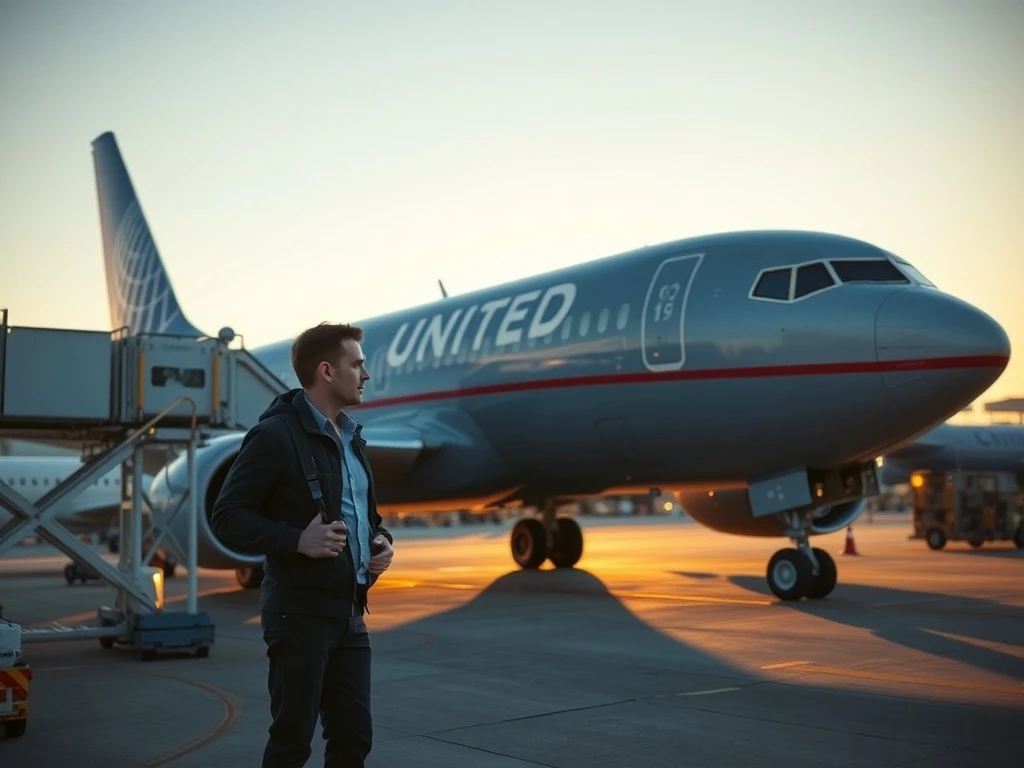
CHICAGO, March 15, 2026 — United Airlines implemented a groundbreaking policy today that allows flight crews to refuse transportation to passengers who decline to wear headphones during inflight entertainment consumption. The airline’s new United Airlines headphone policy, effective immediately across all domestic and international routes, represents the most aggressive passenger conduct enforcement measure in commercial aviation since mask mandates ended. United confirmed the policy change through an official statement from its Chicago headquarters, citing escalating cabin noise complaints and passenger conflict incidents as primary drivers. Consequently, travelers must now use personal audio devices with all seatback screens and personal electronic devices during flights, or risk being denied boarding or removed from aircraft.
United Airlines Mandates Headphone Use for All In-Flight Entertainment
United Airlines formally announced its mandatory headphone requirement through a system-wide operations bulletin distributed to all crew members at 6:00 AM Central Time. The policy document, obtained by aviation journalists, states that flight attendants now have explicit authority to deny boarding or request passenger deplaning if individuals refuse to use headphones when engaging with any audio-emitting device. According to United’s Chief Customer Officer, Maya Rodriguez, the policy addresses a 47% increase in noise-related passenger complaints documented between 2024 and 2025. “We’ve reached a tipping point where the shared cabin experience requires clearer standards,” Rodriguez stated during a press briefing at O’Hare International Airport. “This isn’t about restricting personal freedom. Instead, it’s about preserving a baseline environment where all passengers can reasonably expect a certain acoustic standard during long-haul flights.”
The airline’s internal data reveals that noise disputes have become the third-most common source of mid-air conflicts, trailing only seat recline arguments and overhead bin disputes. United’s move follows six months of pilot testing on transcontinental routes between Newark and San Francisco, where flight crews reported a 68% reduction in noise complaints when headphone protocols were strictly enforced. However, the policy contains specific exemptions for passengers with documented medical conditions that prevent headphone use and for infants under two years old. Travelers using noise-canceling headphones receive explicit approval, while bone conduction headphones remain under review pending further acoustic testing.
Immediate Impacts on Passenger Experience and Airline Operations
The enforcement of airline passenger conduct rules at this unprecedented level creates immediate operational and customer service implications. During the policy’s first twelve hours of implementation, United reported fourteen instances where passengers initially resisted the requirement at boarding gates. Ultimately, twelve passengers complied after purchasing headphones from airport vendors, while two individuals forfeited their travel plans entirely. Gate agents at Denver International Airport distributed over 300 complimentary earbud sets during morning departures, representing an unplanned operational cost exceeding $1,500. Meanwhile, social media platforms erupted with passenger reactions ranging from enthusiastic support to accusations of corporate overreach.
- Reduced Cabin Noise Complaints: Early data from United’s first twenty policy-enforced flights shows noise-related crew interventions dropped by 81% compared to the previous week’s equivalent routes.
- Increased Pre-Flight Boarding Time: Average boarding duration extended by approximately four minutes per flight as gate agents conducted headphone compliance checks and distributed equipment to unprepared travelers.
- Airport Retail Sales Spike: Hudson News and other airport retailers near United gates reported selling three times their usual daily headphone inventory by midday, with basic earbud models selling out entirely at Chicago O’Hare’s Terminal 1.
Aviation Regulatory Experts Weigh In on Policy Precedent
Dr. Arjun Patel, Director of Aviation Policy at the Massachusetts Institute of Technology’s International Center for Air Transportation, describes United’s move as “the most significant expansion of airline conduct authority since the post-9/11 security era.” In an exclusive interview, Patel explained that while airlines possess broad discretion over passenger conduct under federal aviation regulations and contract-of-carriage provisions, this specific audio-focused enforcement creates new legal territory. “The Federal Aviation Administration delegates considerable operational authority to carriers regarding safety and comfort,” Patel noted. “However, United is essentially defining a new category of disruptive behavior centered on acoustic emissions rather than physical safety threats. This will undoubtedly trigger challenges before the Department of Transportation’s Office of Aviation Consumer Protection.” The Aviation Consumer Action Project, a nonprofit passenger rights organization, has already announced plans to file a formal complaint questioning whether the policy constitutes an unreasonable condition of carriage under 14 CFR Part 259.
Comparative Analysis of Global Airline Noise Policies
United’s policy positions the carrier at the extreme end of a global spectrum regarding in-flight noise regulations. While most international carriers maintain general prohibitions against disruptive behavior, few have implemented explicit headphone mandates with transportation refusal consequences. A comparison of major global airlines reveals divergent approaches to cabin acoustic management, reflecting cultural differences and regulatory environments. European carriers typically emphasize passenger mediation over enforcement, while Asian airlines often incorporate noise considerations into broader courtesy campaigns rather than formal policies.
| Airline | Noise Policy Approach | Enforcement Mechanism |
|---|---|---|
| United Airlines (US) | Mandatory headphone use for all personal audio | Refusal of transport for non-compliance |
| Delta Air Lines (US) | “Quiet cabin” expectations with crew discretion | Verbal warnings, possible seat reassignment |
| Lufthansa (Germany) | General courtesy guidelines | Mediation by cabin crew |
| Singapore Airlines | Designated quiet zones on select aircraft | Zone-specific enforcement |
| Qantas (Australia) | No explicit noise policy beyond safety rules | Case-by-case crew judgment |
Legal Challenges and Industry Response Timeline
The Air Line Pilots Association International issued a cautiously supportive statement, acknowledging that excessive cabin noise contributes to crew fatigue and distraction during critical phases of flight. However, the Association of Flight Attendants-CWA expressed concerns about placing enforcement responsibility on frontline crew members without additional conflict de-escalation training. United has scheduled mandatory training sessions for all customer-facing employees beginning March 18, focusing on policy communication and non-confrontational enforcement techniques. Meanwhile, competitor American Airlines released a statement indicating it would monitor United’s implementation “with interest” but has no immediate plans to adopt similar measures. Southwest Airlines explicitly rejected the approach, with a spokesperson affirming, “We believe in talking to customers, not policing them.”
Passenger Advocacy Groups Mobilize Response Campaigns
The nonprofit FlyersRights.org launched a digital petition demanding United rescind the policy, gathering over 15,000 signatures within six hours. Executive Director Paul Hudson argues the policy exceeds reasonable carrier authority. “Airlines already have ample power to address genuinely disruptive passengers,” Hudson stated. “Creating a new category of violation for something as subjective as audio leakage establishes a dangerous precedent where any minor annoyance could become grounds for denied boarding.” Conversely, the Quiet Skies Coalition, which advocates for reduced aircraft noise pollution in communities, praised United’s initiative as “a logical extension of noise abatement principles into the cabin environment.” This polarization suggests the policy will face sustained scrutiny from multiple stakeholder groups throughout 2026.
Conclusion
United Airlines’ mandatory headphone policy represents a watershed moment in commercial aviation, transforming passive cabin courtesy expectations into enforceable conduct requirements with tangible consequences. The policy’s implementation tests the boundaries of airline authority over passenger behavior beyond traditional safety and security concerns. While early operational data indicates significant reductions in noise complaints, the approach has triggered immediate legal questions and passenger rights concerns. Travelers should now consider personal audio equipment as essential as identification documents when flying United. The aviation industry will closely monitor this experiment in acoustic regulation throughout 2026, as outcomes may establish new standards for cabin environment management across global aviation. Passengers can expect clarification from the Department of Transportation regarding policy legality within the next ninety days.
Frequently Asked Questions
Q1: When did United Airlines’ headphone policy take effect?
The policy became active on March 15, 2026, following an official announcement from United’s Chicago headquarters. The airline implemented it across all routes simultaneously without a phased rollout.
Q2: What happens if I forget my headphones at home?
United gate agents can provide complimentary basic earbuds at boarding, though supplies may be limited. Passengers may also purchase headphones from airport retailers. Consistent refusal to use any audio containment method may result in denied boarding.
Q3: Does this policy apply to all audio, including phone calls?
The policy specifically covers entertainment audio from seatback systems and personal devices. Phone calls remain governed by existing FCC regulations and airline phases of flight restrictions, though United strongly encourages headphone use for all audio activities.
Q4: How are flight attendants enforcing this new rule?
Crew members receive specific guidance to first politely request compliance, then offer assistance or alternative solutions. Only persistent refusal triggers escalation to supervisors and potential removal from the aircraft.
Q5: Could other airlines adopt similar policies soon?
Industry analysts predict competitors will observe United’s implementation for at least three months before considering similar measures. Delta and American have indicated they prefer educational approaches over mandatory enforcement at this time.
Q6: What about passengers with hearing aids or medical conditions?
United’s policy includes documented medical exemptions. Passengers with hearing implants, certain auditory processing disorders, or other conditions preventing headphone use should contact United’s accessibility desk at least 48 hours before departure to arrange accommodations.