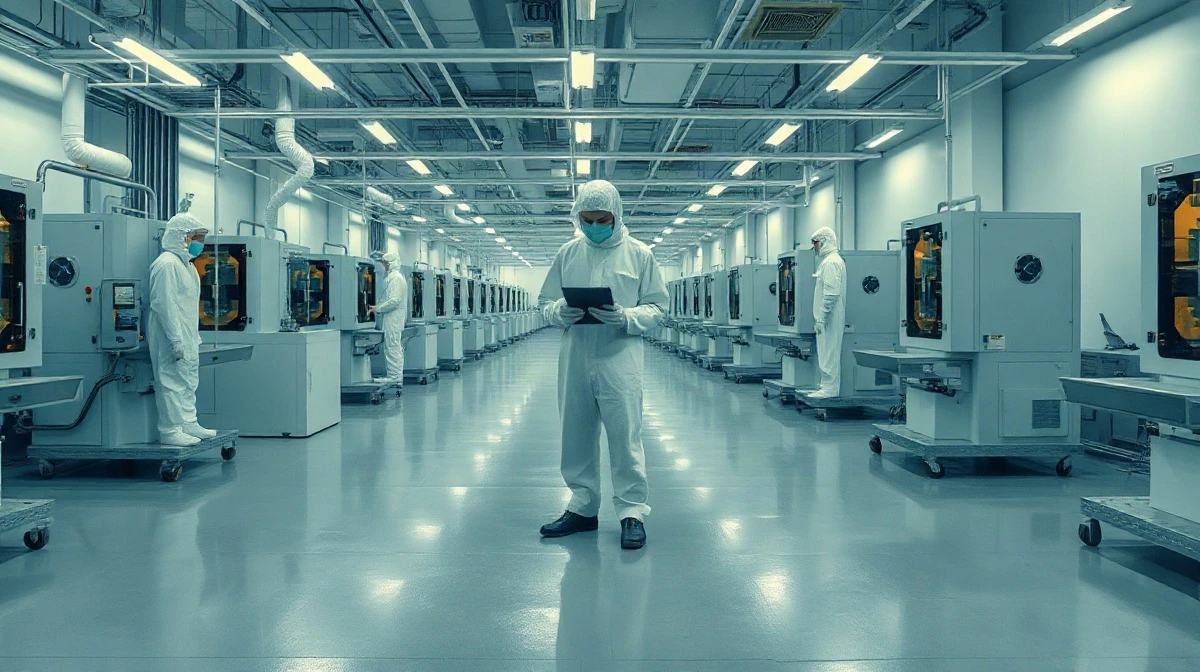
The U.S. semiconductor industry could be short as many as 157,000 workers by 2030, according to a new report from McKinsey and the SEMI Foundation, as a historic wave of new fabrication plants comes online across the country. Samsung’s semiconductor division in Austin, Texas, is already feeling the squeeze. “I’m concerned,” Jon Taylor, an executive vice president at the company, told CNBC. “We just don’t see that there’s enough technical people in the pipeline.”
The finding, reported by CNBC, lands at an awkward moment for the buildout. Taiwan Semiconductor Manufacturing Company and Intel are now producing advanced logic chips at new fabs in Arizona, and Samsung is set to begin production at the first of two Taylor, Texas, plants later this year. The two Texas fabs are part of a $35 billion investment and are expected to create roughly 3,500 jobs. “We’re hiring engineers, we’re hiring technicians, we’re hiring people in supply chain,” Taylor said, describing the competition for workers as a race against time as plants start operating.
Also read: ClickFix Scams Spread Through Hijacked HBO Max Reddit Ads, Researchers Say
Key facts
- McKinsey and the SEMI Foundation estimate a U.S. shortage of up to 157,000 semiconductor workers by 2030.
- Only 3% of U.S. graduates entering engineering roles go into the semiconductor industry each year, and 73% of chip employers report significant difficulty filling engineering positions.
- Samsung’s two planned fabs in Taylor, Texas, are part of a $35 billion state buildout expected to create about 3,500 jobs.
- U.S. chip salaries typically range from $127,000 to $187,000, with senior roles above $238,000, according to the SEMI Foundation.
- SK Hynix is building a $4 billion packaging facility at Purdue Research Park in West Lafayette, Indiana, while Micron is constructing the first U.S. advanced memory fab in Boise, Idaho, set to open next year.
Compensation gap with Asia
For decades nearly all advanced chip manufacturing has been based in Asia, where the technical talent pipelines are deepest. That legacy shapes the current hiring crunch. Micron has run expedited hiring events at technical universities in South Korea, interviewing students and offering permanent positions at its Asia fabs in a single day, according to CNBC. SK Hynix CEO Kwak Noh-Jung told CNBC that securing high-quality employees within a few years, based on collaboration with the local community in Indiana, is “really the critical issue.”
Pay is a persistent obstacle. In South Korea, chip workers are highly sought after, and when thousands threatened strikes at Micron, Samsung and SK Hynix, bonuses climbed above $500,000. Against that benchmark, U.S. compensation looks modest. “As people continue to evolve their skills, they’re going to have to pay higher salaries,” said Michael Crow, president of Arizona State University, adding that workforce demands grow as companies scale. Samsung and SK Hynix both told CNBC they are temporarily bringing workers over from South Korea to launch their new U.S. fabs, and Samsung has sent U.S. employees to South Korea for months of hands-on training.
Also read: Massachusetts orders large data centers to supply clean power or pay into ratepayer fund
Building a domestic pipeline
Schools and chipmakers are investing heavily in U.S. training programs. Purdue launched a series of semiconductor degrees in 2022, with about 2,500 students enrolled in chip-related courses each semester. Arizona State converted an old Motorola fab into the MacroTechnology Works cleanroom with $200 million from Applied Materials, and TSMC runs a technician program there that guarantees an interview on completion. TSMC told CNBC it visited roughly a dozen universities last year and plans to offer advanced jobs to many of its hundreds of interns to help fill about 6,000 roles at its first three Arizona fabs.
Samsung has donated millions of dollars to the University of Texas, Texas A&M and the University of Illinois for new chip engineering programs, gave $1 million to launch technical labs at Taylor High School, and hosts more than 100 interns annually. Intel launched an apprenticeship program in Arizona in 2024 and pledged $50 million in scholarships across more than 80 Ohio institutions. Federal support has also expanded: more than 80 community colleges have started or grown semiconductor programs since the CHIPS Act passed in 2022, aided by a $200 million federal fund for domestic chip workforce development. Purdue interim president Mitch Daniels told CNBC that demand for graduates remains strong, saying “our job fairs are always overbooked” and warning the country cannot afford slow progress.
Why it matters
Memory makers are racing to add capacity during a global shortage that has Nvidia and Advanced Micro Devices competing for supply, so a thin labor pool slows the whole AI hardware chain. Semiconductor workers are emerging as a rare bright spot for U.S. graduates facing a softer software engineering job market, though the pay gap with Asian employers may keep some talent abroad. The shortage also tests whether a domestic talent pipeline can be built fast enough to justify the billions already committed to U.S. fabs.
What to watch
Samsung’s planned start of production at its first Taylor, Texas, fab later this year will be the next concrete test of whether U.S. hiring can keep pace with construction. Also worth watching is whether SK Hynix reaches a deal with Intel, following a Reuters report on Wednesday that the companies are in talks about manufacturing memory chips in the U.S., including a scenario in which SK Hynix would lease part of Intel’s Ohio facility.

Reported by cnbc.com.