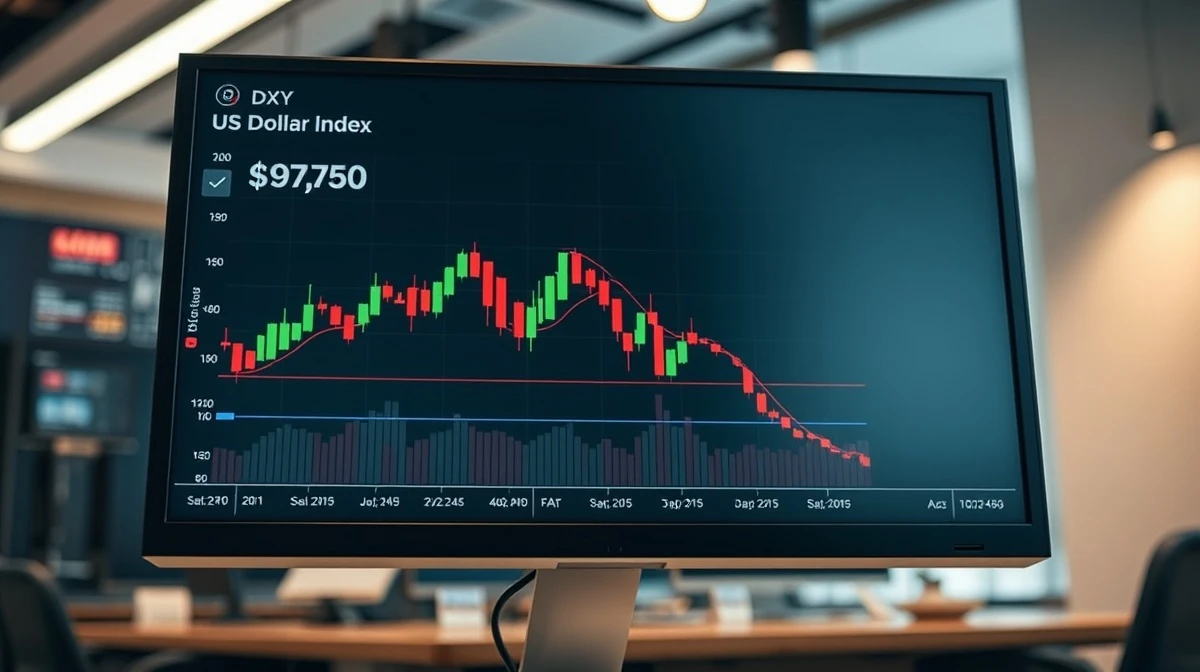
The US Dollar Index (DXY) is extending its recent decline, edging closer to two-month lows near the 97.50 support zone. The move reflects growing market expectations of a shift in Federal Reserve policy, alongside persistent pressure from softer US economic data and renewed risk appetite among global investors.
DXY Technical Outlook: Key Support Under Scrutiny
The index, which measures the greenback against a basket of six major currencies, has shed over 2% since mid-March. The 97.50 level now emerges as a critical technical floor. A decisive break below this mark could open the door to further losses toward the 97.00 round number and the February low near 96.80.
Also read: Pound Sterling faces a heavy week as Westminster empties out
On the upside, immediate resistance sits at 98.00, followed by the 20-day moving average near 98.30. A recovery above 98.50 would signal a potential reversal of the current bearish momentum.
Technical indicators are leaning bearish. The Relative Strength Index (RSI) remains below the 50 neutral threshold, suggesting sellers maintain control. The Moving Average Convergence Divergence (MACD) line is also below its signal line, reinforcing the negative short-term bias.
Also read: US Dollar Index Holds Firm Near 101.00 as Traders Assess Fed Outlook
Fundamental Drivers Behind the Dollar’s Weakness
The dollar’s recent slide is tied to several key developments:
- Fed pivot expectations: Markets are pricing in a growing probability of rate cuts later this year, following softer-than-expected inflation and retail sales data.
- Risk-on sentiment: A rally in global equities has reduced safe-haven demand for the US dollar.
- Currency-specific pressure: The euro and Japanese yen have strengthened on their own domestic catalysts, adding to DXY downside.
What This Means for Forex Traders
For currency market participants, the 97.50 zone represents a important decision point. A breakdown could accelerate dollar selling across major pairs, particularly EUR/USD and USD/JPY. Conversely, a false break and bounce from this level may offer a short-term buying opportunity for dollar bulls.
Traders should monitor upcoming US economic data releases, including jobless claims and consumer confidence figures, for further directional cues. Any hawkish surprise from Fed commentary could quickly reverse the current trend.
Conclusion
The US Dollar Index is testing a critical support zone near 97.50, with technical and fundamental factors aligning against the greenback in the near term. A break below this level would confirm a bearish phase, while a hold could set the stage for a corrective rebound. Market participants should remain vigilant as the dollar approaches this inflection point.
FAQs
Q1: What is the US Dollar Index (DXY)?
The US Dollar Index (DXY) measures the value of the US dollar relative to a basket of six major foreign currencies: the euro, Japanese yen, British pound, Canadian dollar, Swedish krona, and Swiss franc. It is widely used as a benchmark for the dollar’s overall strength.
Q2: Why is the 97.50 level important for DXY?
The 97.50 level represents a key technical support zone that has held on multiple occasions over the past two months. A break below this level would signal further downside potential, while a bounce could indicate a temporary bottom.
Q3: What factors are currently driving the dollar lower?
The dollar is under pressure due to growing expectations of Federal Reserve rate cuts, softer US economic data, and increased risk appetite among global investors that reduces demand for safe-haven currencies.