March 25, 2026 — Autonomous vehicle company Waymo has repeatedly relied on police and other first responders to physically move its stuck robotaxis during emergencies, according to incident reports and public records. This dependence on taxpayer-funded emergency services has sparked criticism from city officials who say it diverts critical resources.
Incidents Reveal Reliance on First Responders
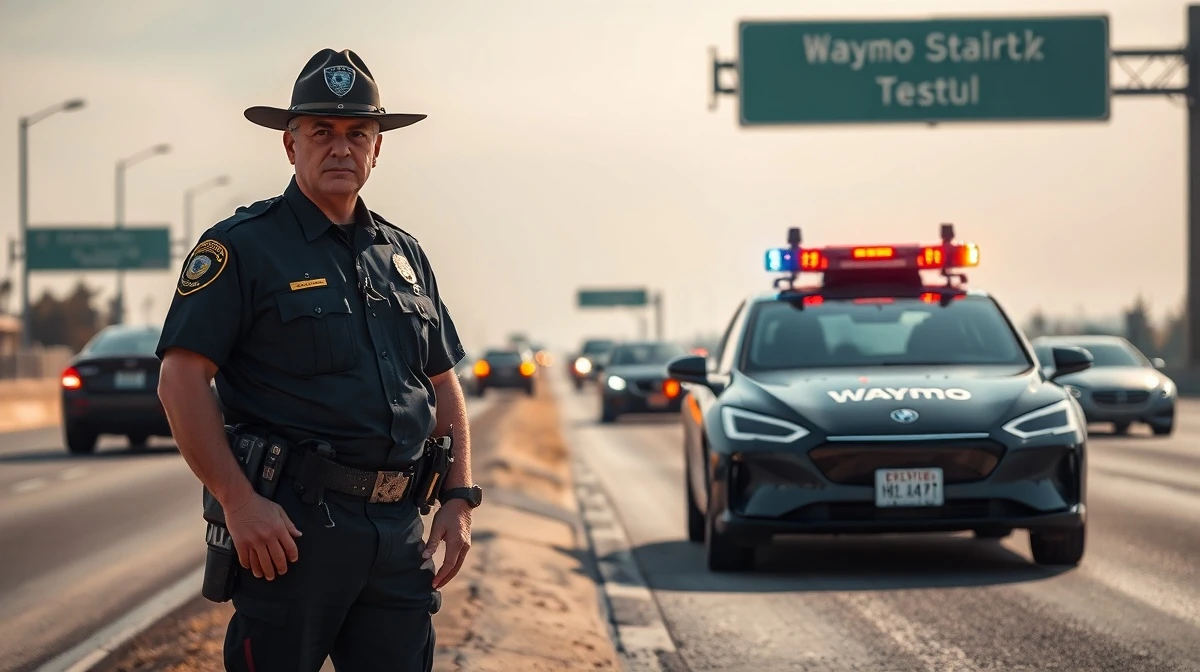
In August, a grass fire on California’s I-280 near Redwood City forced California Highway Patrol officers to direct traffic, including turning vehicles around to travel the wrong way on the freeway. A Waymo robotaxi, unable to navigate the unprecedented scenario, attempted to pass on the shoulder before stopping completely.
Audio from a 911 call obtained by TechCrunch reveals a Waymo remote assistance worker asking for police help. “Highway patrol turned everyone around, but unfortunately our car is not able to turn around,” the employee told a dispatcher. A CHP officer ultimately drove the vehicle to a nearby park-and-ride lot.
This was not an isolated case. TechCrunch identified at least six instances where first responders manually moved Waymo vehicles. In one case this month, an Austin police officer moved a robotaxi blocking an ambulance responding to a mass shooting. In February, a first responder in Atlanta had to disengage a Waymo that entered an active crime scene.
City Officials Voice Concerns
During a March 2 hearing in San Francisco, emergency officials expressed frustration. “What has started to happen is that our public safety officers and responders are having to be the ones to physically move [Waymos],” said Mary Ellen Carroll, executive director of San Francisco’s Department of Emergency Management. “In a sense, they’re becoming a default roadside assistance for these vehicles, which we do not think is tenable.”
District Supervisor Bilal Mahmood, who oversaw the hearing, told TechCrunch that Waymo failed to provide satisfactory answers about taking more accountability. “I was asking: How are you going to take more accountability to ensure that our first responders are not doing that?” he said.
Waymo’s Human Support Structure
Waymo maintains several human support teams for its fleet of roughly 3,000 vehicles, which provide over 400,000 paid rides weekly. A “remote assistance” team of about 70 workers, split between the U.S. and the Philippines, provides guidance to vehicles in complex situations but does not drive them.
A separate U.S.-based “event response team” coordinates with emergency responders after crashes or during emergencies. The company also employs a “roadside assistance” team for on-scene support, including moving vehicles, though Waymo declined to specify its size or response metrics.
“Waymo Roadside Assistance is a dedicated team of specialists who lend extra on-the-ground support to our fleet,” the company said in a statement. “Waymo’s standards for roadside response and service quality prioritize minimizing potential community impacts.”
Communication Breakdowns and Scaling Questions
Records show communication problems can occur. During the Redwood City fire, CHP officers were initially under the impression for ten minutes that Waymo wanted the passenger to drive the vehicle away. Waymo stated it never asks riders to take control.
The company is racing to expand its service to about 20 more cities this year. It declined to answer questions about how it plans to scale its roadside assistance team to match this growth or how many times its own workers have moved a vehicle versus first responders.
At the San Francisco hearing, Waymo manager Sam Cooper said the company has trained over 30,000 first responders globally on interacting with its vehicles and designed a system for them to take control quickly. “We simply want to give them the capability, in that event, to adequately move that vehicle from the scene,” Cooper said.
What Happens Next
The repeated incidents have put a spotlight on the practical challenges of scaling autonomous ride-hailing services. As Waymo expands, pressure is mounting from city officials for the company to develop more robust, self-sufficient protocols for vehicle recovery that do not default to emergency services. The company’s ability to address these operational growing pains may influence public and regulatory acceptance in new markets.
This article was produced with AI assistance and reviewed by our editorial team for accuracy and quality.