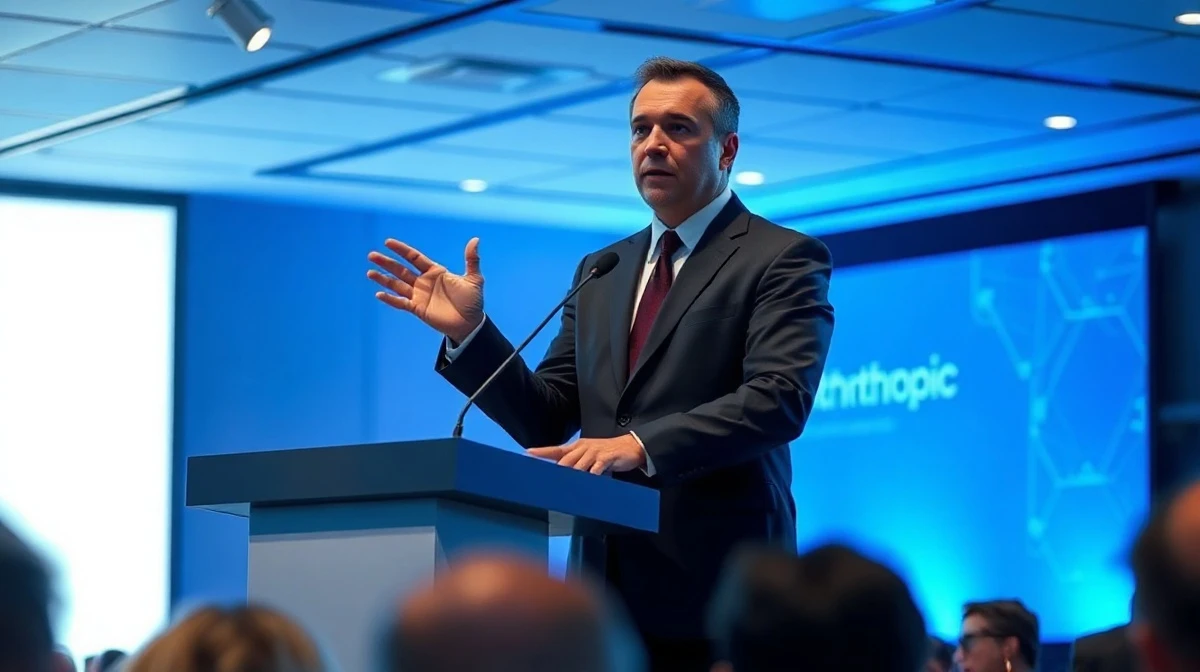
Anthropic CEO Dario Amodei pushed back on August 15, 2026 against the claim that his warnings about AI dangers have fueled a public backlash, arguing instead that the industry faces a “crisis of trust” that has been building for decades. In a series of posts on X, Amodei responded directly to investor Gavin Baker, who had argued on the All-In podcast that Amodei’s risk-focused messaging contributed to skepticism toward AI and data centers in the United States.
“I think it is fundamentally a crisis of trust,” Amodei wrote. “I think that ordinary people don’t trust companies, governments, or the tech industry and always suspect that we are cooking up some new way to screw them over.”
Also read: Washington's AI Strategy: Rabobank Maps Out Carrot-and-Stick Approach
The Dispute Over AI Messaging
Baker, a prominent tech investor, had said that Amodei “lost the argument” on AI regulation and suggested the CEO should be “a more positive advocate for his own industry.” Baker’s critique reflects a broader sentiment among some tech figures that public skepticism toward AI — and even government crackdowns on data centers — stems in part from the dire warnings issued by AI executives themselves.
Amodei rejected that framing. He said his writing has been “about equally balanced between risks and benefits,” citing his essay “Machines of Loving Grace” as an attempt to paint an inspiring picture of AI’s potential. He acknowledged that “the public has a negative view of AI” and called it “a big problem,” but disagreed that his messaging was the primary cause.
Also read: Meta's Glimmer launch and Zuckerberg's 'AI for everyone' pitch: what's actually open?
Instead, Amodei pointed to a deeper issue: “I think by far the most accurate criticism of AI companies including Anthropic is that we haven’t yet delivered on our big promises to benefit the world,” he said. “That is totally on us.”
Regulation and the ‘False Choice’
Amodei also took issue with Baker’s characterization of regulation as a path to regulatory capture. “I know that there’s a sort of Silicon Valley shorthand where regulation = regulatory capture = concentration of power, but I’ve always found this to be an overly simplified picture of the world,” he wrote.
He noted that many outside the tech bubble view regulation as a constraint on corporate power. “We try very hard to make proposals that disadvantage (slow down) frontier AI companies while *advantaging* smaller competitors,” Amodei said, referencing Anthropic’s support for a California bill that imposes transparency requirements on large AI companies.
What This Means for the AI Industry
The exchange highlights a growing divide within the tech industry over how to discuss AI’s risks. While some executives like Amodei and OpenAI CEO Sam Altman have warned about potential dangers, others argue that such messaging invites overregulation and public fear.
Amodei’s emphasis on trust — and his admission that AI companies have underdelivered — suggests a shift in how frontier labs are framing their public communications. Rather than focusing solely on hypothetical future risks, he urged critics to focus on the industry’s actual record: “instead of all this stuff about messaging and marketing.”
Anthropic has also faced recent scrutiny over its decision to watermark AI-generated text, a move that drew criticism from some users. That controversy, along with the broader trust deficit Amodei described, underscores the challenges AI companies face in winning over the public.
As the debate over AI regulation continues, Amodei’s remarks signal that Anthropic intends to position itself as a measured voice — one that acknowledges both the technology’s promise and its current shortfalls. Whether that approach will satisfy critics like Baker remains to be seen, but the exchange itself reflects a maturing conversation about AI’s role in society.
Disclaimer: This article is for informational purposes only and does not constitute financial or investment advice. The cryptocurrency and AI markets are volatile and uncertain; readers should conduct their own research before making any decisions.