
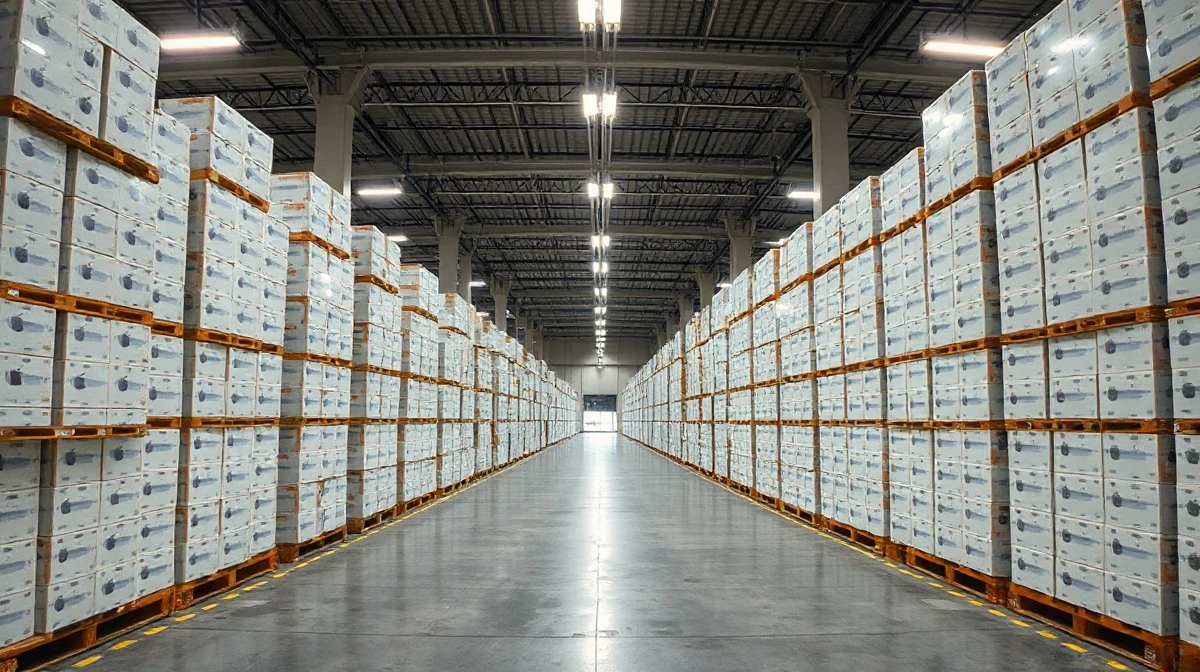
Apple nearly doubled its inventory to $11.1 billion in its most recent quarter, a sharp departure from outgoing CEO Tim Cook’s long-held supply chain philosophy, as the company braces for what Cook called a “hundred-year flood” in memory component pricing. The inventory buildup — up from $5.7 billion last September — signals that Apple expects the severe memory shortage, widely referred to as RAMageddon, to worsen before it improves.
Inside Apple’s inventory strategy shift
Cook, who built his reputation on lean supply chain management — famously arguing that inventory is “fundamentally evil” — acknowledged the about-face on Apple’s quarterly earnings call. “We continue to expect high levels of demand. However, with less flexibility in supply chain, we expect the impact from the supply constraints to increase significantly sequentially,” Cook said. He added that Apple is “scrambling on the supply side” to secure components.
Also read: ClickFix Scams Spread Through Hijacked HBO Max Reddit Ads, Researchers Say
The constraints are most acute for advanced memory nodes used in Apple’s A-Series and M-Series processors, which power iPhones and Macs. The generative AI boom has created a surge in demand for high-bandwidth memory, squeezing supply for consumer electronics manufacturers. Apple described its June quarter as its “strongest ever,” with iPhone sales up 22% and Mac sales up 29% year over year, but warned that the supply picture is deteriorating.
Price hikes and investor concerns
The supply pressures have already forced Apple to raise prices on Macs and iPads last month, a move Cook described as “reluctant.” Apple is not alone: Meta, Samsung, Microsoft, and Sony have all raised hardware prices in recent months due to rising component costs.
Also read: Massachusetts orders large data centers to supply clean power or pay into ratepayer fund
For the upcoming quarter, Apple forecasts revenue growth between 9% and 11% year over year — a notable slowdown from the roughly 16% growth it has maintained in recent quarters. Investors reacted negatively, with Apple stock dropping 6% in after-hours trading following the earnings release.
The timing adds pressure on incoming CEO John Ternus, Apple’s Senior VP of Hardware Engineering, who will take over in September. Ternus will inherit a company addressing its most significant supply chain challenge in years, with no clear end in sight to the memory crunch.
What RAMageddon means for consumers
For consumers, the memory shortage translates directly into higher prices and potentially longer wait times for new devices. Apple’s inventory stockpile suggests the company is betting that demand will remain strong even at higher price points, but the slowdown in revenue growth indicates that even Apple’s pricing power has limits.
The broader industry is watching to see whether the memory shortage eases as new fabrication capacity comes online, or whether AI demand continues to absorb available supply. For now, Apple is preparing for the worst — and its balance sheet reflects that calculus.

