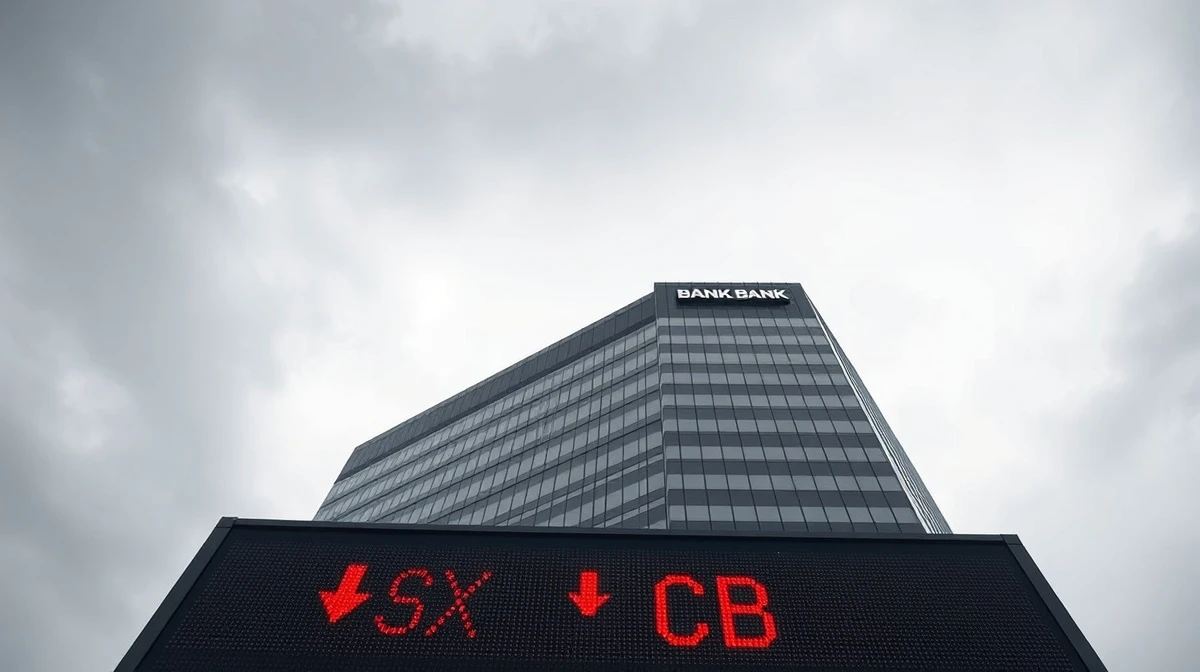
Australia’s banking sector faced a sharp sell-off on Wednesday, with shares of the Commonwealth Bank of Australia (CBA) plunging as much as 10% after the federal government unveiled new measures targeting property investors in the annual budget. The broader financial sector also came under heavy pressure, as investors weighed the implications of tighter housing policies against a deteriorating macroeconomic outlook.
Budget Measures Hit Investor Sentiment
The sell-off was triggered by a series of budget announcements designed to cool the housing market and improve affordability for first-home buyers. Key measures include stricter caps on interest-only loans for investors, reduced capital gains tax concessions for properties held for less than five years, and increased supply-side incentives that could put downward pressure on rental yields. Analysts at Macquarie noted that the changes directly target the profitability of mortgage-heavy banks like CBA, which derives a significant portion of its earnings from investor lending.
Also read: Sovereign Wealth Funds Shift From Public Markets to Private Assets to Capture AI Growth
“The budget signals a clear policy shift away from treating housing as an investment vehicle and toward treating it as a social good,” said Sarah Chen, a banking analyst at Morningstar. “For the major banks, this means slower credit growth, tighter margins, and potentially higher loan losses if property prices correct.”
Commonwealth Bank Leads the Decline
CBA’s stock fell to its lowest level in six months, wiping out nearly AUD 15 billion in market value in a single session. The decline was the steepest among the Big Four banks, with Westpac, NAB, and ANZ also dropping between 4% and 6%. The broader S&P/ASX 200 index fell 2.3%, dragged down by the financials sub-index, which lost 5.1%.
Also read: US insurance rulemaker suspends investment risk designations after cyber attack
The sell-off was compounded by a surprise downward revision to the government’s GDP growth forecast, now expected to fall below 1.5% for the fiscal year. The Reserve Bank of Australia has also signaled that interest rates may remain higher for longer than previously anticipated, further squeezing household budgets and reducing demand for new loans.
What This Means for Property Investors and Homeowners
For property investors, the budget changes mean higher holding costs and lower after-tax returns. The tightening of negative gearing rules and capital gains tax discounts will reduce the appeal of leveraged property investment, particularly in Sydney and Melbourne, where prices have already begun to soften. Homeowners, meanwhile, face a dual challenge: rising mortgage repayments due to higher rates and a potential decline in property values that could reduce equity.
“This is a structural shift, not a temporary one,” said David Llewellyn-Smith, chief strategist at MB Super. “The government is deliberately trying to redirect capital away from housing and into productive sectors of the economy. That’s good for long-term productivity, but painful for banks and investors in the short term.”
Market Outlook and Investor Positioning
In the immediate term, analysts expect further volatility in bank stocks as the market digests the full impact of the budget. Some investors may view the sell-off as an overreaction, given that CBA’s dividend yield has risen above 5%, but others warn that earnings downgrades could persist if the housing market enters a prolonged downturn.
The financial sector is now trading at a price-to-earnings discount of roughly 15% compared to the broader market, a level not seen since the early stages of the COVID-19 pandemic. Whether that discount narrows or widens will depend on how quickly the housing market adjusts to the new policy environment.
Conclusion
Australia’s bank stocks are under significant pressure as the government’s budget targets property investors at a time of economic uncertainty. The Commonwealth Bank’s 10% slide reflects deep investor concern over slower credit growth, tighter margins, and a weakening housing market. For readers, the key takeaway is that the era of easy property-driven returns for banks may be ending, with implications for mortgage rates, property values, and the broader economy.
FAQs
Q1: Why did Commonwealth Bank shares fall 10%?
A1: The sharp decline followed the Australian government’s budget announcement of stricter measures on property investors, including caps on interest-only loans and reduced capital gains tax concessions. This directly threatens CBA’s profitability from mortgage lending.
Q2: Will the budget changes affect my home loan?
A2: While the budget targets investors, homeowners may still feel indirect effects. Banks facing lower profits from investor lending could tighten overall lending standards or raise interest rates on new loans to maintain margins.
Q3: Are other Australian banks also affected?
A3: Yes. Westpac, NAB, and ANZ all fell between 4% and 6% on the same day, reflecting broad sector exposure to property investor lending. The entire financial sector is reassessing earnings expectations in light of the policy shift.