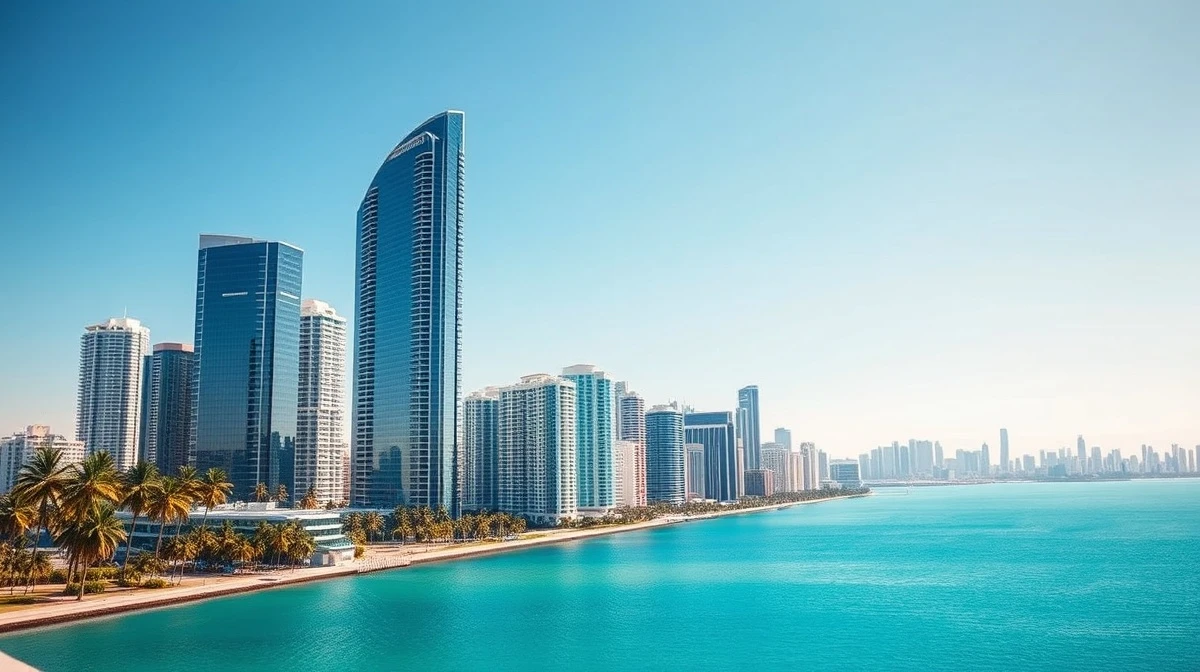
The migration of high-net-worth individuals from New York to Miami has been one of the most significant demographic shifts in recent American history. Over the past five years, Florida’s largest city has attracted a wave of billionaires, hedge fund managers, and private equity titans drawn by lower taxes, warmer weather, and a more business-friendly regulatory environment. But a significant question now hangs over this so-called ‘Wall Street South’: will the businesses themselves follow the billionaires?
The Billionaire Migration: A Tax-Driven Exodus
The initial wave was unmistakable. Prominent financiers including Ken Griffin of Citadel, Paul Tudor Jones, and Carl Icahn established a presence in Miami, moving their primary residences and, in many cases, their family offices. The primary driver was financial: Florida has no state income tax, a stark contrast to New York’s top marginal rate of over 10%. For individuals earning hundreds of millions annually, the savings are immense. Miami-Dade County also offered a more permissive approach to business regulation, particularly in finance and technology. The pandemic-era remote work boom accelerated the trend, as physical proximity to Wall Street became less essential for day-to-day operations.
Also read: How to Surf Turbulent Markets: A Guide for Investors
Wall Street South vs. Wall Street North: The Corporate Reality
While the personal relocation of billionaires has been well-documented, the corporate headquarters shift has been far more measured. Citadel and its market-making arm, Citadel Securities, moved their official headquarters from Chicago to Miami in 2022, a symbolic win for the city. However, the vast majority of major investment banks, asset managers, and law firms remain anchored in Manhattan. The reasons are structural: New York possesses an unmatched density of talent, institutional infrastructure, and a legal and regulatory ecosystem built over a century. The New York Stock Exchange and Nasdaq remain the epicenters of global capital markets. Miami, for all its growth, lacks the deep pool of specialized labor—from compliance officers to investment bankers to M&A lawyers—that large financial institutions require.
The Talent and Infrastructure Gap
A major obstacle to a full-scale corporate migration is the talent pipeline. New York’s financial workforce is vast and interconnected. A junior analyst can change firms without leaving a five-block radius. Miami’s labor market is smaller and less specialized. While the city has attracted tech talent and back-office operations, the critical mass of front-office finance professionals is still forming. Additionally, Miami’s public transportation, school system, and housing affordability—while improving—still lag behind New York’s established infrastructure. For companies considering a full relocation, the cost of moving hundreds of employees and the risk of losing key talent to firms that remain in New York is a significant deterrent.
Also read: Gold edges lower to near $4,150 as US–Iran peace uncertainty and hawkish Fed signals weigh
What Miami’s Growth Means for Both Cities
The trend is not binary. Rather than a wholesale abandonment of New York, what is emerging is a dual-hub model. Many firms are maintaining their primary headquarters in Manhattan while opening significant second offices in Miami. This allows them to offer employees geographic flexibility, reduce real estate costs, and provide a tax-advantaged location for senior partners. For Miami, this inflow of capital and talent is reshaping its economy. Luxury real estate, private aviation, and high-end retail have boomed. Local universities are expanding finance-focused programs. The city is also becoming a hub for digital assets and fintech, an area where New York’s regulatory stance is perceived as more restrictive. For New York, the loss of a few hundred billionaires is a tax revenue hit, but the city’s economic fundamentals remain strong. The challenge for New York is to ensure its regulatory and tax environment remains competitive enough to prevent the trickle of corporate relocations from becoming a flood.
Conclusion
Miami has successfully established itself as a legitimate second home for America’s financial elite. The city has captured the personal wealth and lifestyle preferences of a generation of billionaires. However, transforming that into a full-fledged financial capital capable of rivaling New York requires more than tax breaks and sunny weather. It demands sustained investment in talent, infrastructure, and institutional depth. For now, the most accurate description of the dynamic is not a replacement but a rebalancing. Wall Street North remains the center of gravity, but Wall Street South is no longer a vacation destination—it is a permanent and growing force in the financial environment.
FAQs
Q1: Why are billionaires moving from New York to Miami?
Primarily for tax advantages, as Florida has no state income tax, along with a more business-friendly regulatory environment and warmer climate.
Q2: Have any major financial firms moved their headquarters to Miami?
Yes, Citadel and Citadel Securities moved their headquarters from Chicago to Miami in 2022, and several other firms have established significant secondary offices in the city.
Q3: Will Miami eventually replace New York as the financial capital of the U.S.?
Most experts believe a full replacement is unlikely in the near term due to New York’s deep talent pool, institutional infrastructure, and capital market dominance. However, Miami is emerging as a powerful secondary hub, particularly for fintech and digital assets.