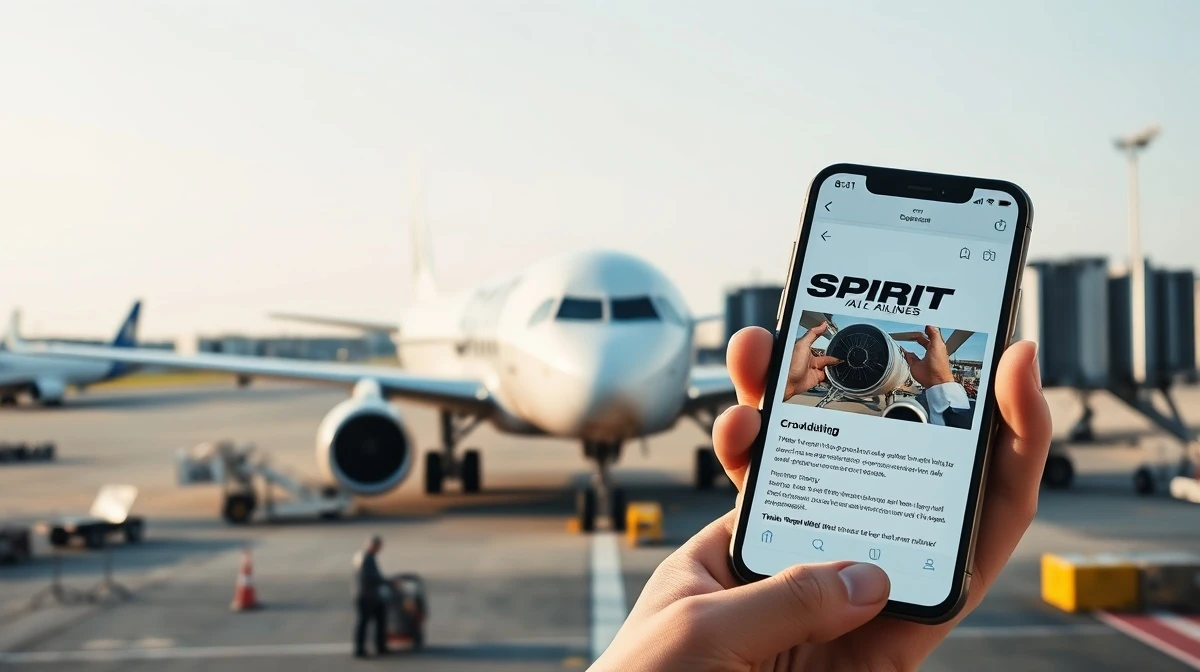
A crowdfunding campaign launched by a TikTok creator to acquire Spirit Airlines has amassed over $335 million in pledges, an extraordinary figure that underscores the growing intersection of social media influence and corporate finance. The campaign, which went viral in recent weeks, has drawn attention from both retail investors and industry observers, though the feasibility of such an acquisition remains highly uncertain.
Campaign Origins and Viral Growth
The initiative was started by a TikTok creator known for financial commentary and large-scale community mobilization. The creator framed the campaign as a way for ordinary people to collectively purchase the struggling budget airline, which has faced financial turbulence and a failed merger with JetBlue. The campaign’s rapid growth to more than $335 million in pledges reflects the power of social media to aggregate capital, but it also raises questions about the practical and legal barriers to such a transaction.
Also read: Peter Thiel-backed fund invests in German drone startup Stark despite past criticism
Feasibility and Regulatory Hurdles
Spirit Airlines, with a market capitalization of roughly $2 billion as of early 2026, would require significantly more capital than the current pledges represent. Even if the full amount were raised, any acquisition would need approval from Spirit’s board of directors, shareholders, and multiple federal regulators, including the Department of Transportation and the Department of Justice. Legal experts note that crowdfunding an acquisition of a publicly traded airline is rare and faces substantial securities law challenges. The campaign has not filed with the Securities and Exchange Commission, and pledges are non-binding, meaning participants have no legal obligation to follow through.
Impact on Spirit Airlines and the Industry
Spirit Airlines has not publicly commented on the campaign, but the surge in pledges has created a unique marketing moment for the carrier, which has struggled with operational costs and a declining stock price. The campaign also highlights a broader trend of retail investors using social media to influence corporate actions, reminiscent of the GameStop short squeeze in 2021. However, analysts caution that the pledges are unlikely to result in an actual acquisition and may instead serve as a symbolic gesture of consumer frustration with the airline industry.
Also read: Hedge Fund Pentwater to Pay Avis $650 Million in Settlement Over Stock Trading Claims
Conclusion
While the $335 million in pledges is a remarkable demonstration of community-driven finance, the path to actually buying Spirit Airlines remains fraught with legal, financial, and regulatory obstacles. The campaign is more likely to influence public perception than corporate ownership, but it underscores the growing role of social media in shaping financial narratives. Readers should view the pledges as an expression of interest rather than a binding offer, and the outcome will depend on whether the campaign can overcome significant structural barriers.
FAQs
Q1: Is the crowdfunding campaign legally binding?
No, the pledges are non-binding. Participants have not committed funds, and there is no legal mechanism requiring them to pay if the campaign moves forward.
Q2: Can a TikTok creator actually buy Spirit Airlines?
In theory, yes, but in practice it would require billions of dollars, approval from Spirit’s board and shareholders, and clearance from multiple federal regulators. The current pledges are far below the airline’s market value.
Q3: What happens to the pledges if the campaign fails?
Since the pledges are non-binding, participants are not required to pay anything. The campaign would simply end without any financial transaction.