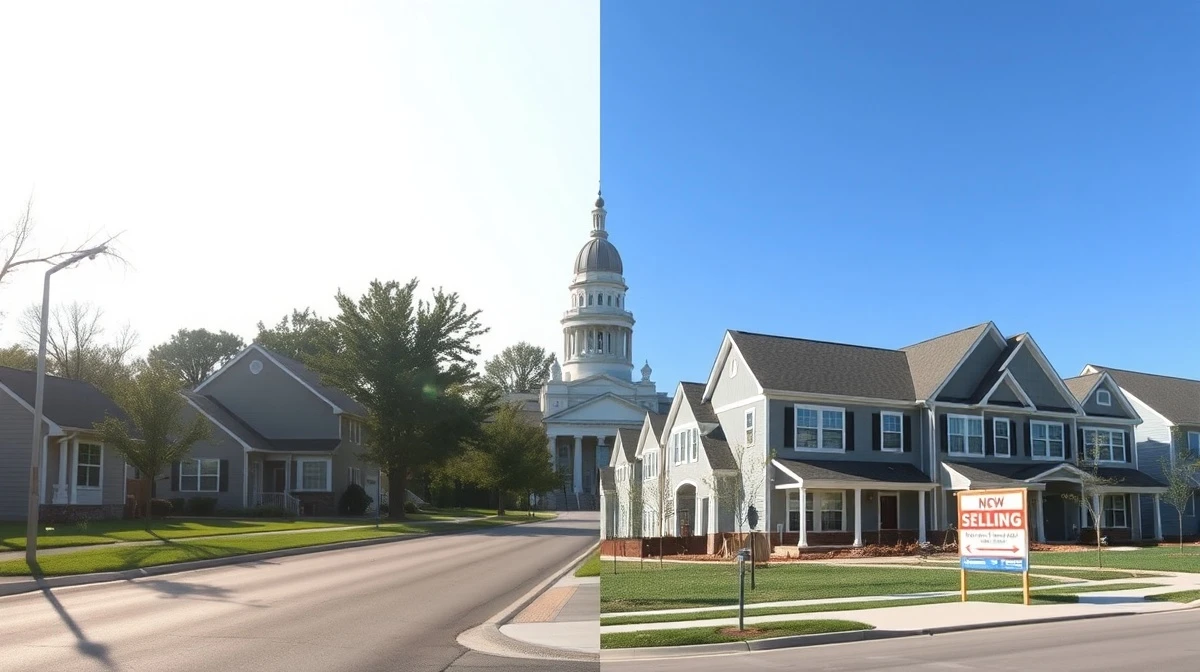
In a surprising twist for the U.S. housing market, two cities sharing the same name—Springfield, Illinois, and Springfield, Ohio—have emerged as the hottest real estate markets in the country. But while they share a moniker, the forces driving their respective booms are distinctly different.
What Makes a Housing Market ‘Hot’?
Real estate analysts at Realtor.com recently ranked the two Springfields among the top five most competitive housing markets in the United States for early 2026. The ranking is based on a combination of metrics: median days on market, price growth, inventory levels, and buyer demand relative to supply. Both cities scored high across the board, but for reasons rooted in their local economies and demographics.
Also read: Hedge Fund Pentwater to Pay Avis $650 Million in Settlement Over Stock Trading Claims
Springfield, Illinois: Stability and Affordability
Springfield, the state capital of Illinois, has long been known for its stable government-sector employment and relatively low cost of living. The median home price in the city hovers around $185,000—well below the national median of $410,000. For first-time homebuyers and families priced out of larger Midwestern metros like Chicago or St. Louis, Springfield offers an entry point that still feels attainable.
Local real estate agents report that homes in desirable school districts and near the downtown area often receive multiple offers within the first week of listing. The city’s steady job market, anchored by state government, healthcare, and education, provides a buffer against the volatility seen in other regions. Additionally, remote work flexibility has allowed some buyers to relocate from higher-cost states while keeping their existing salaries.
Also read: Shareholder lawsuit accuses Uber board of ignoring safety failures, putting profits first
Springfield, Ohio: Industrial Revival and Remote Work Influx
Springfield, Ohio, tells a different story. Once a struggling Rust Belt city hit hard by manufacturing decline, Springfield has experienced a remarkable turnaround in recent years. A combination of new logistics and distribution centers—driven by companies like Amazon and FedEx—has brought thousands of jobs to the region. At the same time, an influx of remote workers from Columbus, Cincinnati, and even coastal cities has pushed housing demand sharply upward.
The median home price in Springfield, Ohio, is approximately $210,000, still affordable by national standards but rising at a double-digit pace year-over-year. Inventory is exceptionally tight, with many homes selling within days of listing. The city’s downtown revitalization, including new restaurants, breweries, and a renovated historic theater, has made it more attractive to younger buyers seeking a lower cost of living without sacrificing urban amenities.
Why These Markets Matter to Buyers and Investors
The rise of these two Springfields signals a broader shift in the U.S. housing market. As mortgage rates remain elevated and home prices in major coastal cities stay high, buyers are increasingly looking inland. Mid-sized cities with strong employment bases, affordable housing, and quality of life improvements are drawing attention from both owner-occupants and investors.
For readers considering a move, both Springfields offer distinct advantages. Illinois’ capital provides government-sector stability and deep-rooted community infrastructure, while Ohio’s version offers a revitalization story with upside potential. However, both markets share a common challenge: low inventory. Buyers should be prepared to act quickly and have financing pre-approved.
Conclusion
The dual rise of Springfield, Illinois, and Springfield, Ohio, as America’s hottest housing markets underscores a larger trend: affordability and opportunity are driving migration patterns away from expensive coastal hubs. While their paths to popularity differ—one through steady stability, the other through industrial rebirth—both cities demonstrate that the American dream of homeownership is still alive in the heartland.
FAQs
Q1: What makes a housing market “hot” according to Realtor.com?
Realtor.com ranks markets based on median days on market, price growth, inventory levels, and buyer demand relative to supply. A hot market typically has homes selling quickly, rising prices, and high buyer competition.
Q2: Are homes in Springfield, Illinois, more affordable than in Springfield, Ohio?
Yes, as of early 2026, the median home price in Springfield, Illinois, is around $185,000, while Springfield, Ohio, is approximately $210,000. Both are below the national median of $410,000.
Q3: Should I consider moving to one of these Springfields as a remote worker?
Both cities are attractive for remote workers due to their lower cost of living and improving amenities. Springfield, Ohio, has seen a notable influx of remote workers from larger cities, while Springfield, Illinois, offers a quieter, more stable environment with strong public services.