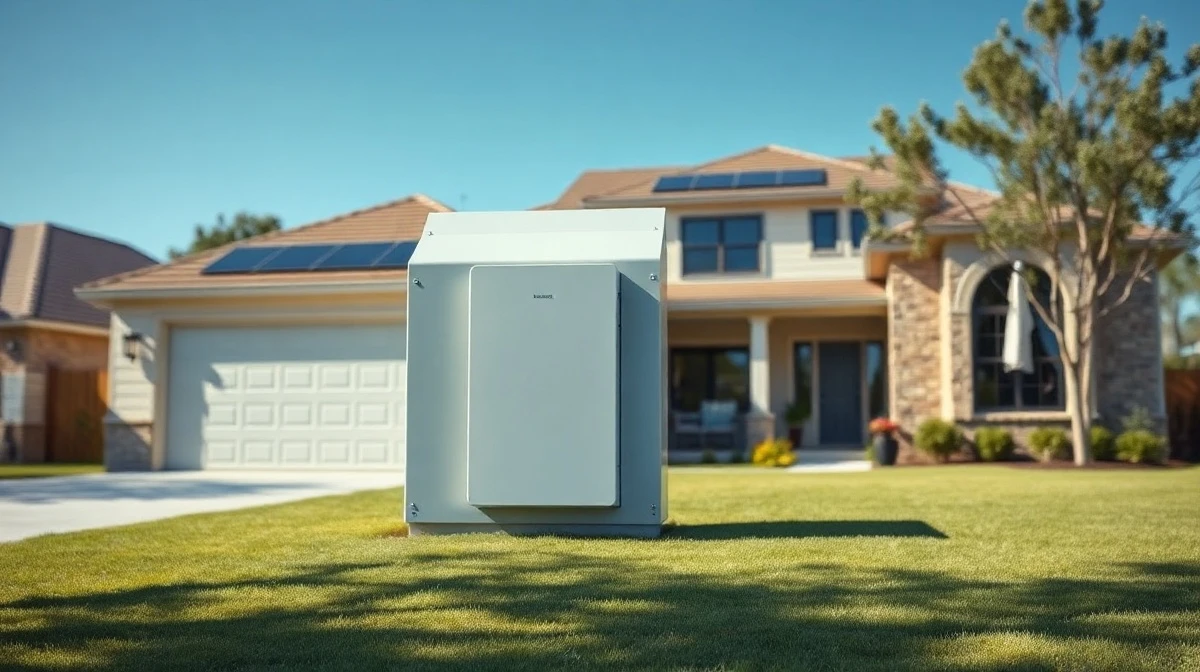
Base Power has closed another $1 billion funding round, less than a year after its previous nine-figure raise, as the Austin-based startup scales its bet that thousands of backyard batteries can do what giant grid-scale storage facilities can’t — respond faster and cheaper to electricity demand spikes. The Series D, announced today, values the company at a $13 billion post-money valuation.
The company says it is now installing roughly 100 batteries per day, or about 8 megawatt-hours of storage, and aims to double that pace by the end of 2026. Base Power has deployed more than 500 megawatt-hours of residential storage across its two operating markets, Texas and Illinois.
Also read: US Chip Industry Faces Shortage of Up to 157,000 Workers by 2030, Report Warns
A distributed answer to a strained grid
Base Power’s approach diverges sharply from the industry norm. Most energy storage developers seek large tracts of land near high-voltage transmission lines, building utility-scale projects that take years to permit and interconnect. Base Power instead installs batteries at homes, connecting them directly to the local distribution network — no waiting for grid interconnection queues that in some regions stretch past 2029.
The strategy is gaining traction as U.S. electricity demand surges, driven by economy-wide electrification and the rapid buildout of AI data centers. The strain is particularly acute in the PJM Interconnection, the nation’s largest grid operator, which serves parts of Illinois where Base Power operates. PJM has warned of capacity shortfalls in the coming years, and the grid operator is considering emergency measures like temporary power cuts to data centers during extreme peaks.
Also read: ClickFix Scams Spread Through Hijacked HBO Max Reddit Ads, Researchers Say
By aggregating thousands of distributed batteries, Base Power can dispatch stored power back to the grid in seconds, a service that commands premium prices during scarcity events. In deregulated markets like Texas, where the state’s grid operator pays handsomely for fast-responding capacity, these services can be highly lucrative. In regulated markets, the company works directly with utilities to place batteries where they alleviate local transformer and substation overloads.
The Base Core: bigger battery, same subscription pitch
Alongside the funding announcement, Base Power unveiled its second-generation home battery, the Base Core. Built at the company’s Austin factory, the unit stores 39.2 kilowatt-hours — roughly triple the capacity of Tesla’s popular Powerwall 3 and more than double the capacity of many competing home batteries. Homeowners can install one or two units, giving them backup power for a day or more during outages.
The company’s business model remains the key differentiator. Rather than asking customers to pay thousands of dollars upfront, Base Power installs the battery for a modest fee and charges a monthly subscription. In the Houston area, for example, customers pay $695 for installation, $19 per month, and 13.1 cents per kilowatt-hour for electricity — roughly the going retail rate in the region. Base Power retains ownership of the battery and monetizes it by selling stored energy back to the grid during peak periods.
This model lowers the barrier to entry for homeowners, but it also carries execution risk: the company must maintain a large fleet of distributed assets and manage complex grid-interaction software. The rapid installation pace suggests the operational playbook is working, at least so far.
What the new funding means
The Series D round was led by Ribbit, Addition, Valor Equity Partners, and JPMorganChase’s Strategic Investment Group, with participation from Altimeter, D1 Capital Partners, Sands Capital, Coatue, Layer Global, Energy Impact Partners, Thrive Capital, a16z, Lightspeed, Trust Ventures, CapitalG, and others. Notably, co-founder and CEO Zach Dell’s father, Dell Technologies founder Michael Dell, did not participate in this round.
The capital injection gives Base Power a war chest to expand manufacturing capacity, enter new markets, and continue its aggressive installation cadence. The company’s ability to double installations by year-end will be a key test of whether its distributed model can scale beyond early-adopter markets.
As the U.S. grid faces its most significant strain in decades, the race is on between centralized and distributed solutions. Base Power is betting that a network of small, interconnected batteries can outmaneuver the big-iron approach — and with $13 billion in backing, it now has the resources to prove it.
Disclaimer: This article is for informational purposes only and does not constitute financial advice. The energy storage and cryptocurrency markets are volatile and uncertain; readers should conduct their own research before making any investment decisions.

Source: TechCrunch