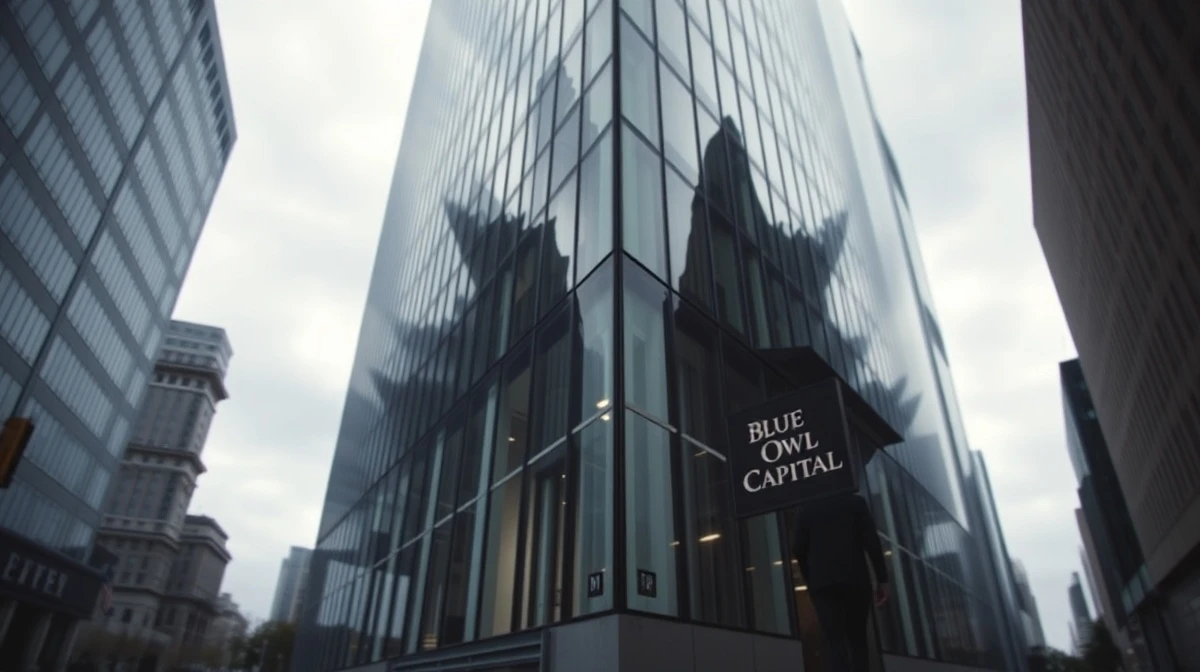
Blue Owl Capital, a major player in the private credit space, has seen its retail fundraising efforts evaporate, with one of its key funds raising only a fraction of the capital it did a year ago. The sharp decline comes as mounting concerns over a potential surge in loan defaults shake investor confidence in the private lending market.
Fundraising Numbers Tell a Stark Story
The fund in question, which targets retail investors, brought in significantly less capital in the most recent quarter compared to the same period in the previous year. While Blue Owl has not disclosed exact figures for this specific vehicle, industry tracking data indicates a drop of more than 70% year-over-year. This slowdown reflects a broader retrenchment among retail investors who are increasingly wary of exposure to private credit, an asset class that boomed during the low-interest-rate era but now faces headwinds from higher borrowing costs and economic uncertainty.
Also read: How to Surf Turbulent Markets: A Guide for Investors
Why Private Credit Is Under Scrutiny
Private credit, often extended by non-bank lenders like Blue Owl to mid-sized companies, has grown rapidly over the past decade. However, the current environment of elevated interest rates and slowing economic growth has raised fears that many borrowers may struggle to service their debt. Analysts point to rising delinquency rates in certain sectors, including retail and commercial real estate, as early warning signs. Blue Owl’s retail fundraising struggles are seen as a bellwether for the broader private credit market, which has historically been opaque and less regulated than traditional banking.
Implications for Investors and the Market
For retail investors, the pullback signals a need for caution. Private credit funds often lock up capital for extended periods and offer higher yields, but those yields come with increased risk. The current fundraising drought suggests that even sophisticated investors are reassessing the risk-reward balance. For the broader financial system, a sustained slowdown in private credit could reduce lending to mid-market companies, potentially exacerbating economic weakness.
Also read: Gold edges lower to near $4,150 as US–Iran peace uncertainty and hawkish Fed signals weigh
Conclusion
Blue Owl’s retail fundraising decline is a clear indicator that private credit markets are entering a more cautious phase. While the asset class remains substantial, the combination of higher interest rates, potential loan defaults, and investor wariness is reshaping the sector. Investors and market participants will be watching closely for further signs of stress in the coming quarters.
FAQs
Q1: What is Blue Owl Capital?
Blue Owl Capital is a publicly traded alternative asset manager that focuses on private credit, real estate, and other alternative investments. It is one of the largest direct lenders in the U.S.
Q2: Why is retail fundraising declining for private credit funds?
Retail fundraising is declining due to growing concerns over loan defaults, higher interest rates, and economic uncertainty, which have made investors more cautious about locking up capital in illiquid private credit vehicles.
Q3: How does this affect the broader financial market?
A slowdown in private credit fundraising could reduce lending to mid-sized companies, potentially slowing economic growth. It also signals a broader reassessment of risk in the private lending space, which may lead to tighter credit conditions.