
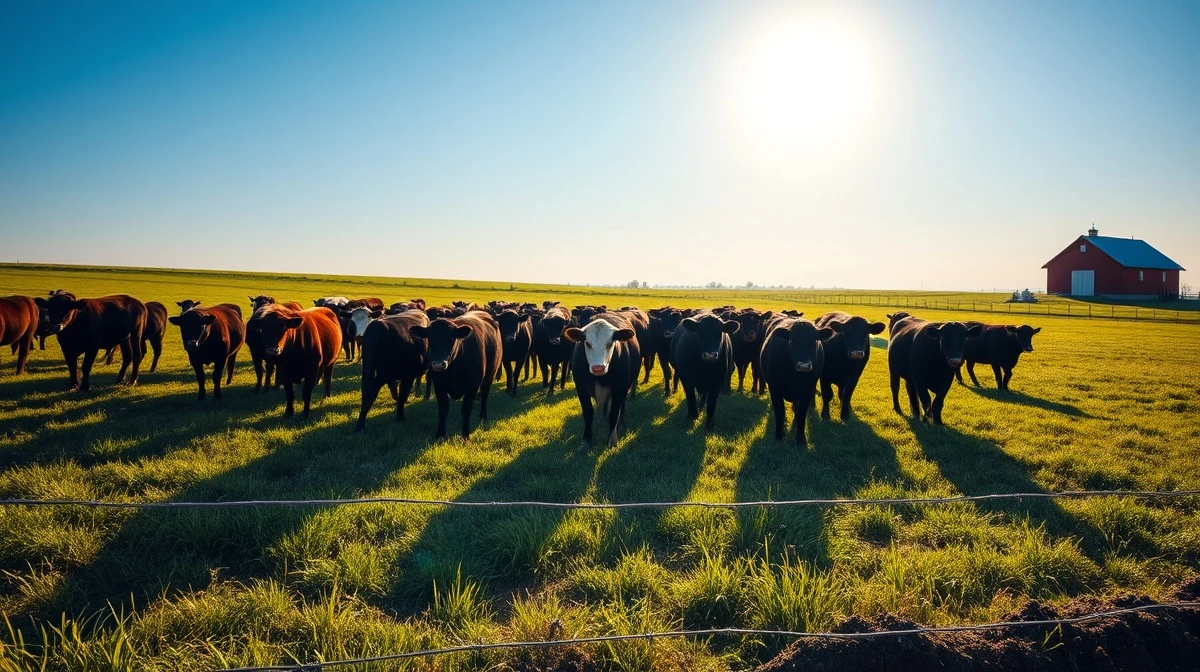
Live cattle futures continued their upward trajectory into Wednesday’s midday session, with contracts posting gains of 27 to 95 cents across the board. The bounce extends a recent recovery as traders digest a relatively quiet cash market and ongoing developments in the USDA’s monitoring of New World Screwworm cases in Mexico.
Cash Trade and Market Activity
Cash trade from last week concluded near $256–$257, providing a firm baseline for current negotiations. This week has seen limited activity so far, with only a few light sales reported at $400 in Nebraska. The Wednesday Fed Cattle Exchange online auction recorded $256 sales on 307 head out of the 752 offered, indicating steady demand at those levels.
Also read: SpaceX, OpenAI, and Anthropic: The AI IPO Wave That Could Reshape Public Markets
Feeder cattle futures posted stronger gains, rising 92 cents to $1.47 higher by midday. The CME Feeder Cattle Index edged down 21 cents to $375.33 as of May 4, reflecting a slight pullback from recent highs.
USDA Screwworm Monitoring Continues
The USDA’s Animal and Plant Health Inspection Service (APHIS) released an update Tuesday on the New World Screwworm situation. As of Monday, there were 1,674 active cases reported in Mexico. Of particular note for U.S. cattle markets, 126 active cases were in the border state of Tamaulipas, with three cases within 96–97 miles of the U.S. border. Additionally, 21 active cases were in Nuevo Leon, six within 80–97 miles of the border, and four in Coahuila.
Also read: SpaceX IPO Allocation Leaves Binance, Kraken Users Empty-Handed Despite Massive Demand
While the screwworm situation remains a concern for cross-border cattle movement and herd health, the current case counts do not yet indicate an immediate threat to U.S. production. However, traders continue to monitor APHIS updates closely for any signs of spread northward.
Boxed Beef and Slaughter Data
Wholesale boxed beef prices were lower in Wednesday morning’s report. Choice boxes declined $1.62 to $390.72, while Select boxes fell 65 cents to $391.59. The Choice-to-Select spread narrowed to 87 cents, reflecting tighter margins between the two grades.
USDA estimated federally inspected cattle slaughter for Tuesday at 104,000 head, bringing the weekly total to 202,000 head. That figure is down 13,000 head from the same week last year and 27,987 head below the comparable week in 2025, indicating tighter supply conditions.
Market Outlook
The combination of steady cash trade, firm feeder cattle values, and reduced slaughter numbers continues to support the bullish narrative for live cattle futures. However, traders remain cautious about potential headwinds from boxed beef weakness and the evolving screwworm situation in Mexico. The market’s ability to sustain gains will likely depend on cash trade volumes in the coming days and any further developments in the USDA’s animal health monitoring.
Conclusion
Wednesday’s midday gains in live and feeder cattle futures reflect a market that remains supported by firm cash fundamentals and tighter supplies. While the screwworm situation in Mexico warrants continued attention, current data does not suggest an imminent disruption. Traders will watch for cash trade confirmation and boxed beef trends to gauge whether the bounce can extend further.
FAQs
Q1: Why are live cattle futures rising?
Gains are driven by steady cash trade near $256–$257, tighter slaughter numbers compared to last year, and strength in feeder cattle futures.
Q2: What is the New World Screwworm situation affecting cattle markets?
USDA APHIS reported 1,674 active cases in Mexico as of May 4, with some cases near the U.S. border. Traders are monitoring the situation for potential impacts on cattle movement.
Q3: How did boxed beef prices perform?
Choice boxes fell $1.62 to $390.72, and Select boxes dropped 65 cents to $391.59, with the spread narrowing to 87 cents.

