Lean hog futures closed lower on Wednesday, March 20, 2025, with contracts falling between $0.85 and $2.02 as a major snowstorm in Iowa slowed federally inspected slaughter and pressured pork cutout values. The USDA reported the national average base hog negotiated price at $91.02 per hundredweight (cwt), up $2.74 from the prior day, but futures markets reflected broader bearish sentiment.
Weather Disruptions and Slaughter Slowdown
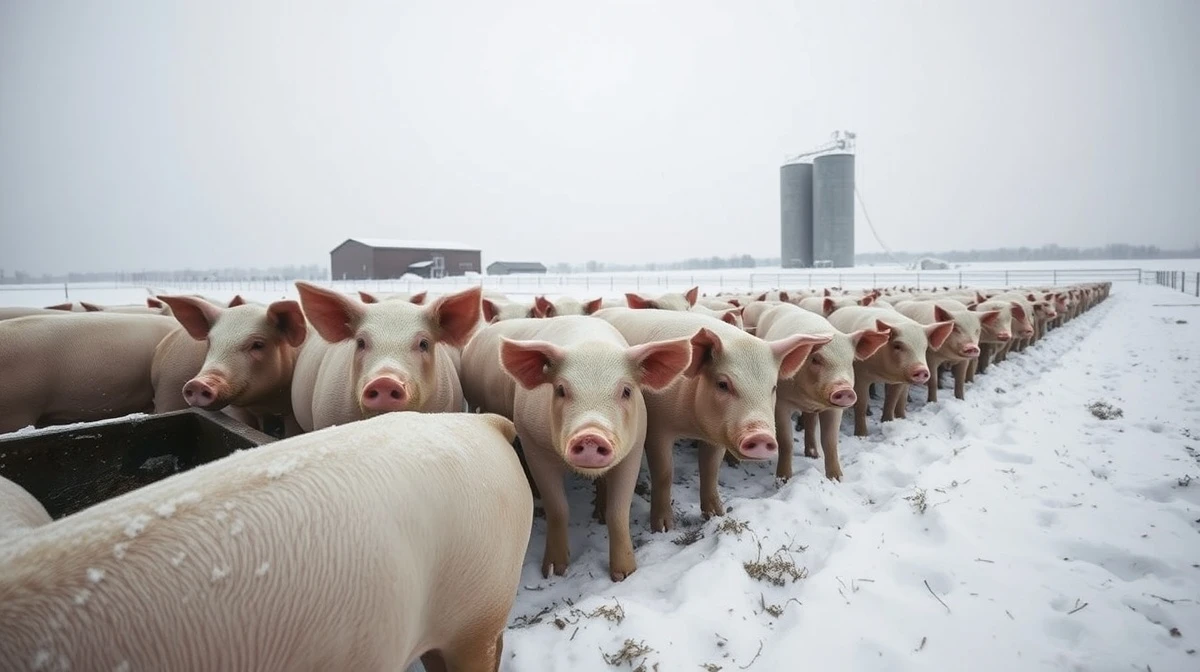
The primary catalyst for Wednesday’s losses was a severe blizzard that swept through parts of Iowa, a key hog-producing state. The USDA estimated Wednesday’s federally inspected hog slaughter at 377,000 head, a significant drop that brought the week-to-date total to 1.352 million head. This represents a decline of 113,000 head compared to the previous week and is 108,158 head below the same period last year. The weather-related slowdown in processing capacity creates a temporary backlog of market-ready hogs, weighing on nearby futures prices.
Also read: SpaceX, OpenAI, and Anthropic: The AI IPO Wave That Could Reshape Public Markets
Pork Cutout Values and Index Data
The USDA’s Wednesday afternoon FOB plant pork cutout value was reported at $95.19 per cwt, down $0.45 from the previous session. Declines were noted in the loin, butt, and rib primals, indicating softer wholesale demand. Meanwhile, the CME Lean Hog Index, a cash price benchmark, edged up 4 cents to $89.32 as of March 17, providing a modest counterpoint to the futures weakness. The divergence between the cash index and futures prices suggests that traders are pricing in near-term supply disruptions and potential demand headwinds.
Contract Settlements and Market Implications
Specific contract settlements for Wednesday were as follows: April 2025 hogs closed at $85.575, down $2.025; May 2025 hogs closed at $88.700, down $1.500; and June 2025 hogs closed at $96.500, down $0.850. The steeper losses in the front-month April contract reflect immediate concerns about slaughter capacity and packer margins. For livestock producers, the combination of lower futures and higher cash prices creates a complex hedging environment, while pork processors face margin compression from higher hog costs and softer wholesale values.
Also read: SpaceX IPO Allocation Leaves Binance, Kraken Users Empty-Handed Despite Massive Demand
Conclusion
Wednesday’s decline in lean hog futures was driven by a confluence of weather-related slaughter disruptions and weakening pork cutout values. While the cash market showed some resilience, futures markets are pricing in near-term supply imbalances and cautious demand expectations. Traders and producers will be watching for a resumption of normal slaughter rates once the blizzard passes, as well as any shifts in export demand and domestic pork consumption patterns.
FAQs
Q1: What caused lean hog futures to fall on Wednesday?
A1: The primary driver was a severe snowstorm in Iowa that slowed federally inspected hog slaughter, reducing processing capacity and creating a temporary supply backlog. Additionally, the USDA reported a decline in pork cutout values, particularly in loin, butt, and rib primals, signaling softer wholesale demand.
Q2: How much did hog slaughter decline due to the weather?
A2: The USDA estimated Wednesday’s slaughter at 377,000 head, bringing the week-to-date total to 1.352 million head. That is down 113,000 head from the previous week and 108,158 head below the same week last year.
Q3: What is the significance of the CME Lean Hog Index versus futures prices?
A3: The CME Lean Hog Index is a cash price benchmark that reflects actual market transactions. On Wednesday, the index rose slightly to $89.32, while futures fell. This divergence indicates that traders are pricing in near-term risks such as weather disruptions and demand uncertainty, rather than current cash market conditions.