
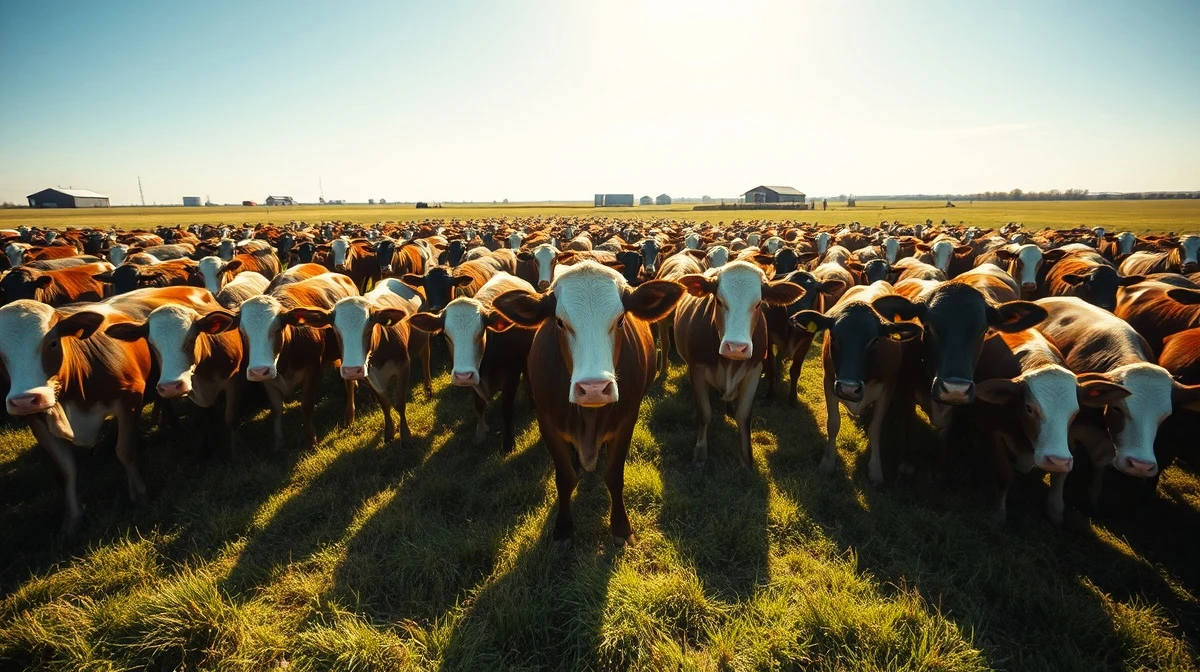
Live cattle futures managed to close with gains on Wednesday, though prices retreated from earlier session highs. Contracts settled between 75 cents and $1.32 higher, reflecting a market still finding its footing amid quiet cash trade and softening wholesale beef values.
Cash Trade Remains Quiet
Cash trade activity has been subdued this week, with only a handful of bids reported. In the north, bids were seen around $245, while light sales in Kansas ranged from $240 to $242. The Fed Cattle Exchange online auction on Wednesday listed 940 head but received no bids, underscoring the cautious tone among packers and feeders.
Also read: SpaceX, OpenAI, and Anthropic: The AI IPO Wave That Could Reshape Public Markets
Feeder Cattle Off Highs
Feeder cattle futures also ended the session higher, though well off their intraday peaks. Contracts settled with gains of 35 cents to $2.22. The CME Feeder Cattle Index rose another $1.51 to $360.68 on August 26, providing some underlying support.
Boxed Beef and Slaughter Data
The USDA’s afternoon report showed wholesale boxed beef prices declining. Choice boxes fell $1.33 to $411.84, while Select boxes dropped $3.05 to $387.71. The Choice-Select spread widened to $24.13, reflecting ongoing demand divergence between higher and lower quality cuts.
Also read: SpaceX IPO Allocation Leaves Binance, Kraken Users Empty-Handed Despite Massive Demand
USDA estimated Wednesday’s cattle slaughter at 119,000 head, bringing the weekly total to 344,000 head. That is up 10,000 head from the prior week but remains nearly 15,000 head below the same period in 2024.
Why This Matters
The combination of quiet cash trade, declining boxed beef prices, and reduced slaughter volumes compared to last year points to a market in transition. Feeders and packers are negotiating cautiously, with both sides watching consumer demand and supply fundamentals closely. For cattle producers and traders, these signals are key to positioning for the weeks ahead.
Conclusion
Wednesday’s close saw live cattle futures hold onto gains despite a pullback from highs, while feeder cattle also finished higher but off their best levels. With cash trade slow and wholesale prices softening, the market appears to be consolidating. Traders will be watching for more definitive cash trade and demand signals in the coming days.
FAQs
Q1: Why did cattle futures close higher despite weak cash trade?
The market appears to be consolidating after recent moves, with futures pricing in expectations of tighter supply and steady demand. The quiet cash trade may reflect a standoff between buyers and sellers rather than fundamental weakness.
Q2: What does the drop in boxed beef prices mean?
Lower wholesale prices suggest that near-term demand may be softening, particularly for Choice cuts. However, the widening Choice-Select spread indicates that premium beef is still in relatively higher demand.
Q3: How does current slaughter compare to last year?
Weekly slaughter is running about 4% below the same week in 2024. This reduction in supply could provide underlying support for prices if demand holds steady.

