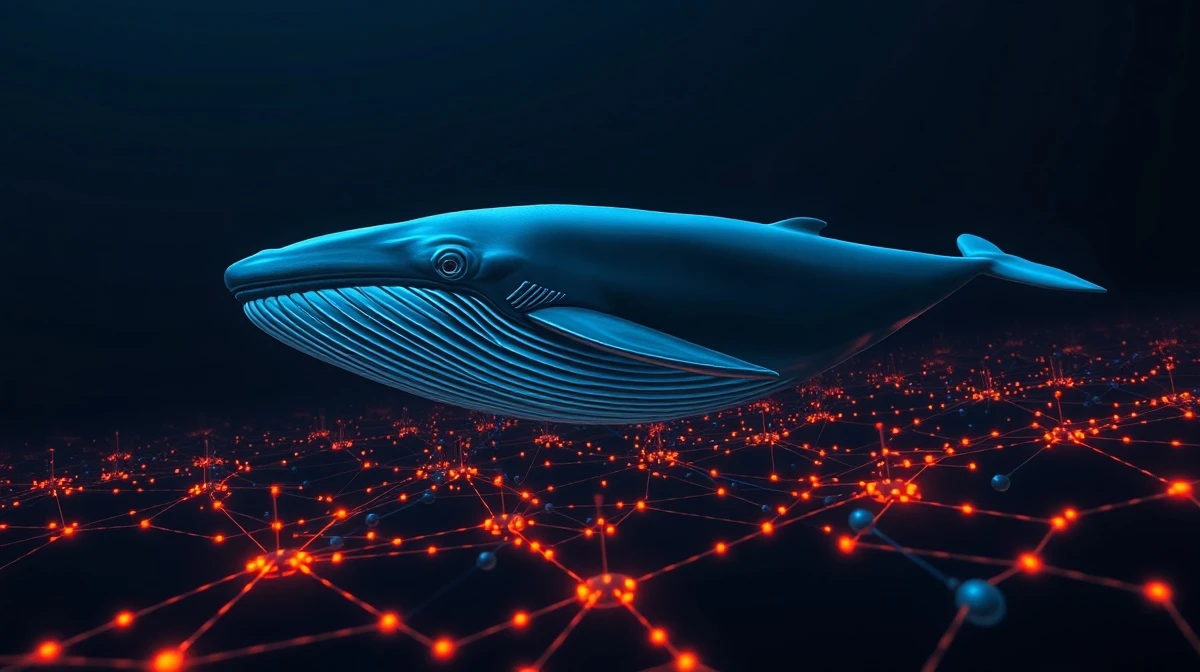
Data from blockchain analytics firm Santiment reveals that large holders, commonly referred to as ‘whales,’ now control approximately 46% of the total circulating supply of Chainlink’s LINK token. This level of concentration has sparked discussion among market observers about the potential for a supply squeeze, which could influence price dynamics and network liquidity in the coming months.
Understanding the Whale Accumulation Trend
The term ‘whale’ in cryptocurrency typically refers to addresses or entities holding a substantial amount of a given token, often enough to influence market movements. According to on-chain data, the percentage of LINK held by such entities has been steadily increasing over the past year. As of early 2026, these whales collectively hold nearly 322 million LINK tokens, valued at several billion dollars at current market prices.
Also read: Ripple Partners With Water.org to Expand Clean Water Access Using RLUSD Stablecoin
This accumulation trend is not entirely new, but the pace has accelerated in recent quarters. Analysts point to several possible drivers: institutional interest in Chainlink’s oracle network, long-term staking incentives, and strategic positioning ahead of anticipated network upgrades. The concentration of supply among a relatively small number of holders reduces the number of tokens available for trading on exchanges, a condition that historically has preceded price volatility in other crypto assets.
What a Supply Squeeze Could Mean for LINK
A supply squeeze occurs when a significant portion of an asset’s circulating supply is held by long-term investors or whales, leaving fewer tokens available for trading. If demand remains steady or increases, this scarcity can push prices higher. However, it also introduces risks: if whales decide to sell in large quantities, the market could face sudden downward pressure.
Also read: Galaxy Research Lowers CLARITY Act Approval Odds to 60% on Political Hurdles
For Chainlink, the implications extend beyond price. The network’s utility depends on a healthy, liquid market for LINK, which is used to pay node operators for providing accurate data feeds. A highly concentrated supply could affect the cost and reliability of these services, though the network has mechanisms to adjust to changing market conditions.
Historical Context and Market Reactions
Similar accumulation patterns have been observed in other major cryptocurrencies, such as Bitcoin and Ethereum, during periods of institutional adoption. In those cases, increased whale holdings often correlated with long-term price appreciation, but also with periods of heightened volatility. For LINK, the current concentration level is among the highest for top-20 cryptocurrencies by market capitalization.
Notably that not all large holders are traders. Many are likely stakers, protocol treasuries, or long-term investors who do not frequently move their tokens. On-chain data shows that a significant portion of whale-held LINK has remained dormant for extended periods, suggesting a strong conviction in the project’s long-term value proposition.
Conclusion
The fact that whales now control 46% of the total LINK supply is a notable development for the Chainlink ecosystem. While it does not guarantee an immediate supply squeeze or price movement, it does signal a shift in the token’s distribution that warrants attention from investors, developers, and market analysts. As with any concentrated holding pattern, the key variable will be the behavior of these large holders in the face of changing market conditions. The coming quarters will reveal whether this accumulation leads to sustained price appreciation or introduces new risks to the network’s liquidity.
FAQs
Q1: What is a ‘whale’ in cryptocurrency?
A whale is an individual or entity that holds a large amount of a particular cryptocurrency, often enough to influence market prices through their trading activity.
Q2: Does a high whale concentration always lead to a price increase?
Not necessarily. While reduced supply can support higher prices if demand is steady, it also creates the risk of a sell-off if whales decide to liquidate their holdings. Market outcomes depend on a range of factors, including overall demand, market sentiment, and external economic conditions.
Q3: How does whale activity affect the Chainlink network specifically?
LINK tokens are used to pay node operators for data services. A highly concentrated supply could affect token liquidity and price stability, which in turn might influence the cost of using the network. However, Chainlink’s protocol is designed to adapt to changing market conditions, and the network continues to function regardless of token distribution.