Coffee futures settled higher on Wednesday, supported by a continued drawdown in exchange-monitored inventories that reflects tightening supply conditions in the U.S. market. December arabica coffee (KCZ25) rose 2.80 cents, or 0.72%, while January robusta coffee (RMF26) gained 145 points, or 3.25%.
Inventory Drawdown Accelerates Amid Tariff Disruption
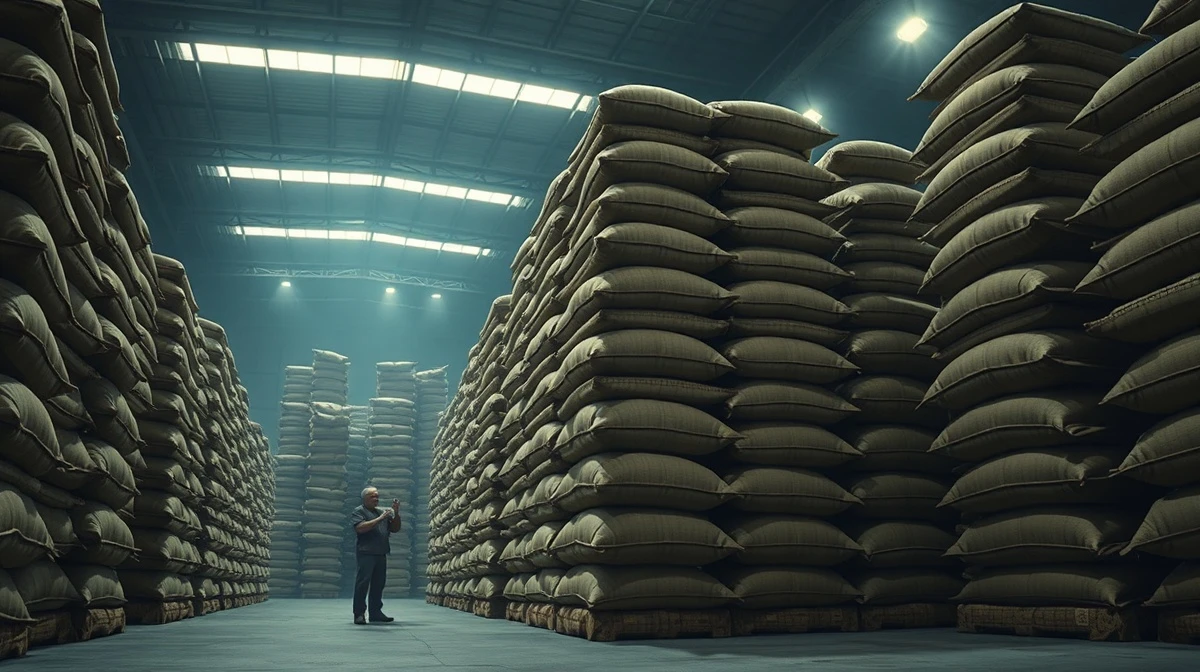
The primary driver behind the recent price support is the sharp decline in coffee inventories held at ICE exchange warehouses. ICE-monitored arabica inventories fell to a 1.5-year low of 446,475 bags on Wednesday, while robusta inventories dropped to a 3.25-month low of 6,111 lots. This depletion is largely attributed to the 50% tariff imposed on U.S. imports from Brazil, which has led American buyers to void new contracts for Brazilian coffee purchases. Brazil supplies roughly one-third of America’s unroasted coffee, making the tariff a significant bottleneck for domestic supply.
Also read: SpaceX, OpenAI, and Anthropic: The AI IPO Wave That Could Reshape Public Markets
Drought in Brazil Raises Crop Concerns
Beyond trade policy, weather conditions in Brazil’s key coffee-growing regions remain a central concern for the market. The state of Minas Gerais, Brazil’s largest arabica coffee-producing area, received only 0.3 mm of rain during the week ending October 24—just 1% of the historical average for that period. The ongoing drought, which has persisted during the critical flowering stage for coffee trees, threatens the 2026/27 crop. According to the Bloomberg Brazil Weather Analysis, coffee-producing regions have recorded only about 70% of their average rainfall over the past month.
The National Oceanic and Atmospheric Administration (NOAA) has raised the probability of a La Niña weather pattern developing in the southern hemisphere from October to December to 71%. A La Niña event could bring additional dry weather to Brazil, further endangering the next harvest.
Also read: SpaceX IPO Allocation Leaves Binance, Kraken Users Empty-Handed Despite Massive Demand
Potential Tariff Relief on the Horizon
Offsetting some of the bullish pressure, speculation is growing that the U.S. may soon lift its 50% tariff on Brazilian coffee. On Monday, Brazil’s President Luiz Inacio Lula da Silva described his meeting with President Trump on the sidelines of the ASEAN summit in Malaysia as “surprisingly good,” adding that a “definitive solution” on trade could emerge within days. Any reduction in tariffs would likely ease supply constraints and weigh on prices in the near term.
Robusta Faces Pressure from Vietnamese Supply
While arabica prices remain supported by supply concerns, robusta coffee is facing headwinds from rising Vietnamese exports. Vietnam, the world’s largest robusta producer, saw its January-September 2025 coffee exports rise 10.9% year-over-year to 1.23 million metric tons. The country’s 2025/26 coffee production is projected to climb 6% year-over-year to 1.76 million metric tons—a four-year high. The Vietnam Coffee and Cocoa Association (Vicofa) has indicated that output could be 10% higher than the previous crop if weather conditions remain favorable.
Global Supply Outlook Remains Mixed
The International Coffee Organization (ICO) reported that global coffee exports for the current marketing year (October through August) rose 0.2% year-over-year to 127.92 million bags, suggesting adequate overall supply. However, regional disparities remain stark. The USDA’s Foreign Agricultural Service (FAS) projects world coffee production in 2025/26 will increase 2.5% year-over-year to a record 178.68 million bags, driven largely by a 7.9% increase in robusta production. Arabica production is expected to decline 1.7% to 97.022 million bags, while robusta output is forecast to reach 81.658 million bags.
Brazil’s crop forecasting agency, Conab, cut its 2025 arabica coffee crop estimate by 4.9% to 35.2 million bags from a May forecast of 37.0 million bags, further underscoring the impact of dry weather on the arabica market.
Conclusion
Coffee prices are managing a complex environment of shrinking inventories, trade policy disruptions, and weather-driven supply risks. While near-term tariff relief could ease some pressure on U.S. buyers, the underlying drought conditions in Brazil and the potential for La Niña suggest that supply constraints may persist into 2026. The divergence between arabica and robusta markets—driven by distinct regional fundamentals—adds another layer of complexity for traders and consumers alike.
FAQs
Q1: Why are coffee prices rising despite high global exports?
The rise is largely driven by a sharp drawdown in ICE-monitored inventories, particularly for arabica coffee, due to U.S. tariffs on Brazilian imports. Additionally, drought conditions in Brazil’s key growing regions are threatening the 2026/27 crop, creating supply concerns that outweigh the impact of higher global export volumes.
Q2: How do U.S. tariffs on Brazil affect coffee prices?
The 50% tariff on U.S. imports from Brazil has led American buyers to cancel or avoid new contracts for Brazilian coffee, tightening domestic supply. Since Brazil supplies about a third of U.S. unroasted coffee, this disruption has contributed to the decline in ICE warehouse inventories and supported higher prices.
Q3: What is the outlook for coffee prices in the coming months?
The outlook depends on several factors: whether the U.S. lifts tariffs on Brazilian coffee, the severity of drought and potential La Niña conditions in Brazil, and the pace of Vietnamese robusta exports. If tariffs are removed and rains return, prices could ease. However, persistent dry weather and low inventories may keep prices elevated into early 2026.