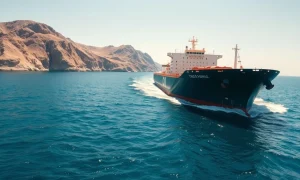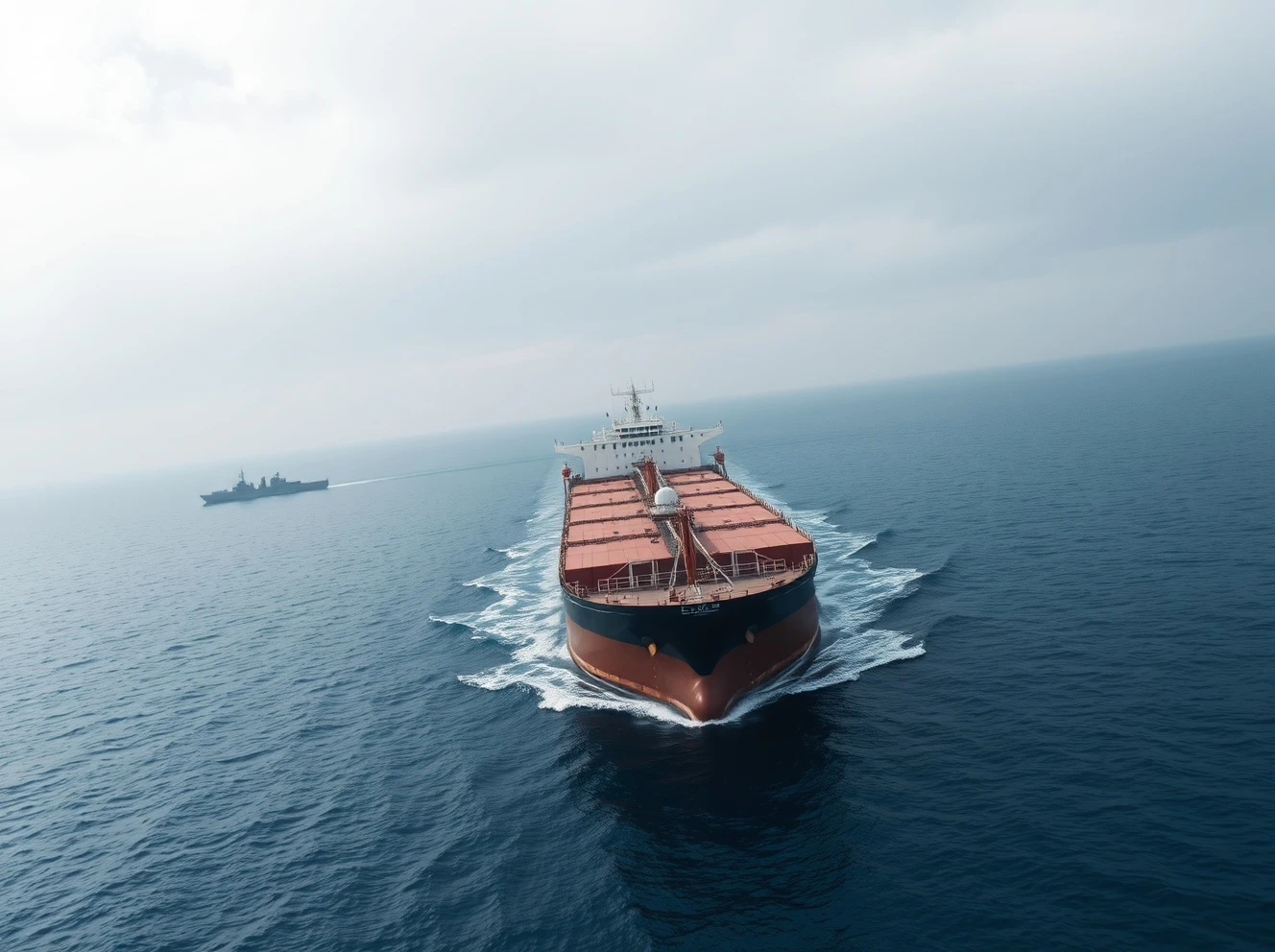
Crude oil prices climbed on Thursday as renewed military confrontations between the United States and Iran in the Strait of Hormuz reignited fears of prolonged supply disruptions. June West Texas Intermediate crude rose 0.88% to settle higher, while gasoline futures also gained ground, reflecting deepening concerns over the security of one of the world’s most critical energy chokepoints.
Renewed Hostilities Disrupt Fragile Ceasefire
The latest escalation follows a period of relative calm after US-brokered talks aimed at reopening the Strait of Hormuz. According to Iran’s semi-official Tasnim news agency, Iranian forces seized an oil tanker in the strait on Thursday, accusing it of attempting to disrupt Iranian oil exports. In response, the US military struck missile and drone launch sites inside Iran that were used to attack three US Navy destroyers transiting the waterway. The US also reported disabling two unladen Iranian-flagged tankers attempting to move through the strait.
Also read: SpaceX, OpenAI, and Anthropic: The AI IPO Wave That Could Reshape Public Markets
The developments come as the US awaits Iran’s formal response to a proposal that would gradually reopen the strait and lift the US blockade on Iranian ports. Iran is expected to reply via Pakistan in the coming days, but Thursday’s actions suggest a hardening of positions on both sides.
Global Supply Crunch Deepens
The continued closure of the Strait of Hormuz is exacerbating what analysts describe as one of the most severe supply disruptions in decades. Approximately one-fifth of the world’s oil and liquefied natural gas passes through the narrow waterway. Goldman Sachs estimates that crude output in the Persian Gulf has been curtailed by roughly 14.5 million barrels per day, and that global stockpiles have been drawn down by nearly 500 million barrels since the conflict escalated. The bank warns that inventories could fall by a billion barrels by June if the strait remains closed.
Also read: SpaceX IPO Allocation Leaves Binance, Kraken Users Empty-Handed Despite Massive Demand
Persian Gulf producers have been forced to cut production by about 6% as local storage facilities reach capacity. The International Energy Agency reported on April 13 that approximately 13 million barrels per day of global oil supply had been shuttered by the conflict and the strait’s closure, with more than 80 energy facilities damaged. The IEA cautioned that recovery could take up to two years.
OPEC+ Dynamics Shift Amid Crisis
The supply crisis is unfolding against a complex backdrop within OPEC+. The United Arab Emirates announced on April 28 that it would leave OPEC effective May 1, a move that allows the UAE to boost production without cartel constraints. While potentially bearish for prices in the long term, the immediate impact is muted by the forced production cuts in the region.
OPEC+ had agreed to increase output by 188,000 barrels per day in June, following a 206,000 bpd increase in May. However, the ongoing conflict makes those increases unlikely to materialize from Middle Eastern producers. OPEC’s April crude production fell by 420,000 bpd to a 35-year low of 20.55 million barrels per day, according to cartel data.
Broader Geopolitical Pressures
The Russia-Ukraine war continues to underpin energy prices. Recent US-brokered talks in Geneva ended without progress, with Ukrainian President Zelenskiy accusing Russia of prolonging the conflict. Russian officials maintain that territorial issues remain unresolved. Ukrainian drone and missile strikes have hit at least 30 Russian refineries over the past ten months, limiting Russia’s export capacity. Bloomberg data shows Russian refinery runs averaged 4.69 million barrels per day in April, the lowest in 16 years.
US and EU sanctions on Russian oil companies, infrastructure, and tankers further constrain global supply, adding to the upward pressure on prices.
Market Fundamentals and Outlook
US crude oil inventories as of May 1 stood 0.7% above the seasonal five-year average, while gasoline inventories were 3.1% below and distillate inventories were 10.1% below the five-year average. US crude production edged down 0.1% week-over-week to 13.573 million barrels per day, slightly below the record high of 13.862 million bpd set in November.
The number of active US oil rigs rose by one to 408 in the week ended May 1, remaining near the 4.25-year low of 406 rigs posted in December. The rig count has fallen sharply from the 5.5-year high of 627 rigs in December 2022, signaling limited near-term capacity for US production growth.
Conclusion
The Strait of Hormuz remains the central flashpoint for global energy markets. With diplomatic channels open but hostilities intensifying, the risk of prolonged supply disruption is high. Traders and policymakers are closely watching Iran’s response to the US proposal, as well as the ability of other producers to fill the gap. The combination of geopolitical conflict, OPEC+ constraints, and depleted inventories suggests that crude oil prices will remain elevated and volatile in the near term.
FAQs
Q1: Why is the Strait of Hormuz so important for oil prices?
About one-fifth of the world’s oil and liquefied natural gas passes through the Strait of Hormuz. Any disruption to shipping there directly impacts global supply and prices.
Q2: How much oil supply has been lost due to the current conflict?
The IEA estimates that about 13 million barrels per day of global oil supply has been shut in due to the Iran war and the closure of the strait. Goldman Sachs puts the Persian Gulf output reduction at 14.5 million bpd.
Q3: What is the outlook for oil prices in the coming weeks?
Prices are likely to remain elevated and volatile. The key variables are Iran’s response to the US proposal, the duration of the strait’s closure, and the ability of OPEC+ and US producers to increase output.