
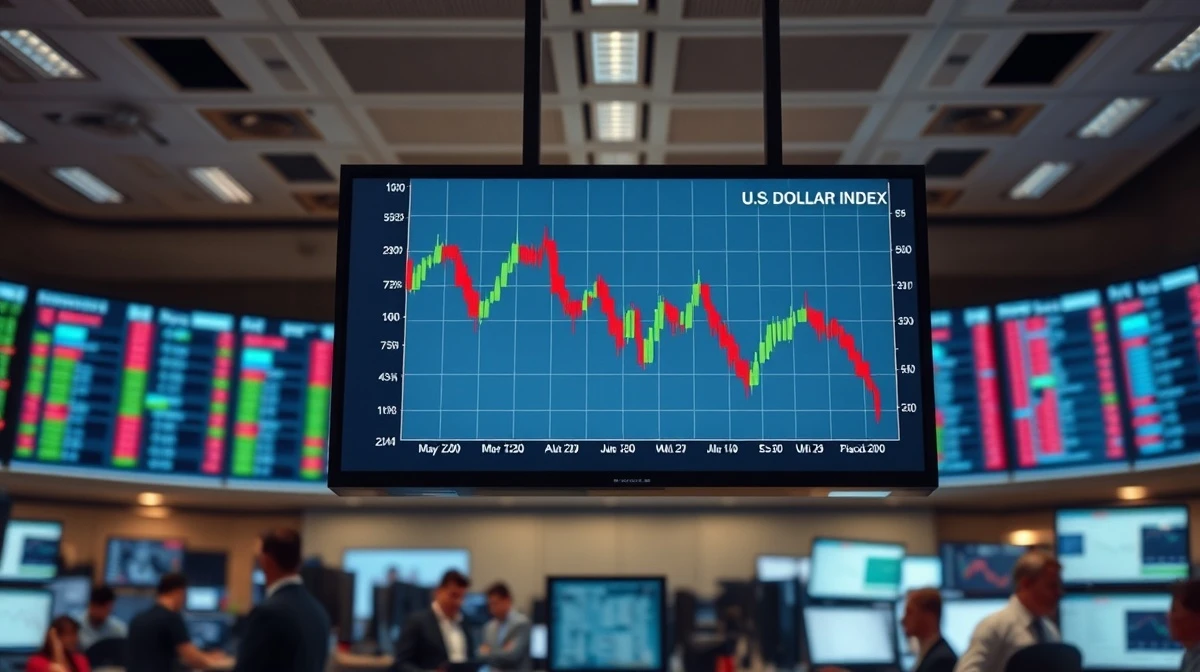
The U.S. dollar weakened on Friday, pressured by a surge in equities and a sharp drop in consumer confidence, as the S&P 500 rallied to a fresh all-time high while the University of Michigan’s consumer sentiment index fell to a record low.
Consumer Sentiment and Equities Drive Dollar Lower
The dollar index (DXY00) fell 0.19% on the day, extending recent weakness. The S&P 500’s climb to new highs reduced safe-haven demand for the greenback, while the University of Michigan’s May consumer sentiment index dropped 1.6 points to 48.2 — the lowest level since the survey began in 1978. Economists had expected a reading of 49.5. The decline signals deepening pessimism among U.S. households about the economic outlook.
Also read: SpaceX, OpenAI, and Anthropic: The AI IPO Wave That Could Reshape Public Markets
Mixed Payrolls Data Offers Little Support
Friday’s nonfarm payrolls report provided a mixed picture. The U.S. economy added 115,000 jobs in April, well above the 65,000 forecast, and March’s gain was revised upward to 185,000. However, average hourly earnings rose just 0.2% month-over-month and 3.6% year-over-year, both below expectations. The unemployment rate held steady at 4.3%.
The weaker-than-expected wage growth tempered inflation concerns, reducing pressure on the Federal Reserve to tighten policy. Markets now price only a 6% probability of a 25-basis-point rate cut at the Fed’s June 16-17 meeting.
Also read: SpaceX IPO Allocation Leaves Binance, Kraken Users Empty-Handed Despite Massive Demand
ECB Hawkishness Lifts Euro, Pressures Dollar
The euro strengthened 0.47% against the dollar on Friday, driven by increasingly hawkish signals from European Central Bank officials. ECB Vice President Luis de Guindos said the key factor for the June rate decision will be whether the Strait of Hormuz reopens. Executive Board member Isabel Schnabel warned that if the energy-price shock broadens, the ECB must tighten policy to prevent second-round effects on inflation.
Bundesbank President Joachim Nagel added that the ECB is “highly vigilant” to rising inflation risks from the Iran conflict. Markets now see a 79% chance of a 25-basis-point rate hike at the ECB’s June 11 meeting.
Iran Tensions and Oil Tanker Seizure Add Geopolitical Risk
Geopolitical uncertainty intensified after Iran’s semi-official Tasnim news agency reported that Iranian forces seized an oil tanker in the Strait of Hormuz on Friday, accusing it of disrupting oil exports. In response, U.S. forces struck missile and drone launch sites and other military assets in Iran that were involved in attacks on three U.S. Navy destroyers transiting the strait.
The U.S. has presented a proposal to Iran that would gradually reopen the Strait of Hormuz and lift the blockade on Iranian ports, with negotiations on Iran’s nuclear program to follow. Iran is expected to respond via Pakistan in the coming days.
Impact on Precious Metals
Gold and silver prices rose on Friday, supported by the weaker dollar and lower global bond yields. June COMEX gold settled up 0.42% at $19.80, while July silver gained 0.85%. Safe-haven demand was also bolstered by the Iran tanker seizure and U.S. military strikes. However, the S&P 500’s record high limited upside, and hawkish ECB comments weighed on precious metals by raising the prospect of higher interest rates in Europe.
Yen Gains on Intervention Support
The Japanese yen edged higher against the dollar, supported by the greenback’s weakness and a decline in Treasury yields. The yen also carried support from Wednesday’s suspected intervention by Japanese authorities. Gains were capped by weaker-than-expected Japanese data: the April services PMI was revised down to 51.0, and March labor cash earnings rose 2.7% year-over-year, below the 3.2% forecast. Markets price a 73% chance of a 25-basis-point rate hike by the Bank of Japan at its June 16 meeting.
Conclusion
The dollar’s decline reflects a confluence of factors: record equity highs reducing liquidity demand, deteriorating consumer confidence, mixed labor market data, and a hawkish ECB that has boosted the euro. Meanwhile, escalating Iran-U.S. tensions add geopolitical risk that could further roil currency and commodity markets. Traders will watch for Iran’s response to the U.S. proposal and next week’s inflation data for clearer direction on central bank policy.
FAQs
Q1: Why did the dollar fall despite strong payrolls?
While April payrolls beat expectations, weaker-than-forecast wage growth reduced inflation pressure, lowering the likelihood of Fed tightening. The S&P 500’s record high also diminished safe-haven demand for the dollar.
Q2: What is the significance of the University of Michigan consumer sentiment index hitting a record low?
The index fell to 48.2, its lowest since 1978, indicating deep pessimism among U.S. households about economic conditions. This can weigh on consumer spending and economic growth expectations.
Q3: How might the Iran situation affect currency markets?
Further escalation could boost safe-haven currencies like the yen and Swiss franc while pressuring the dollar if it disrupts oil supplies and raises energy prices. The ECB has signaled it may raise rates if the Strait of Hormuz remains closed, which would support the euro.

