
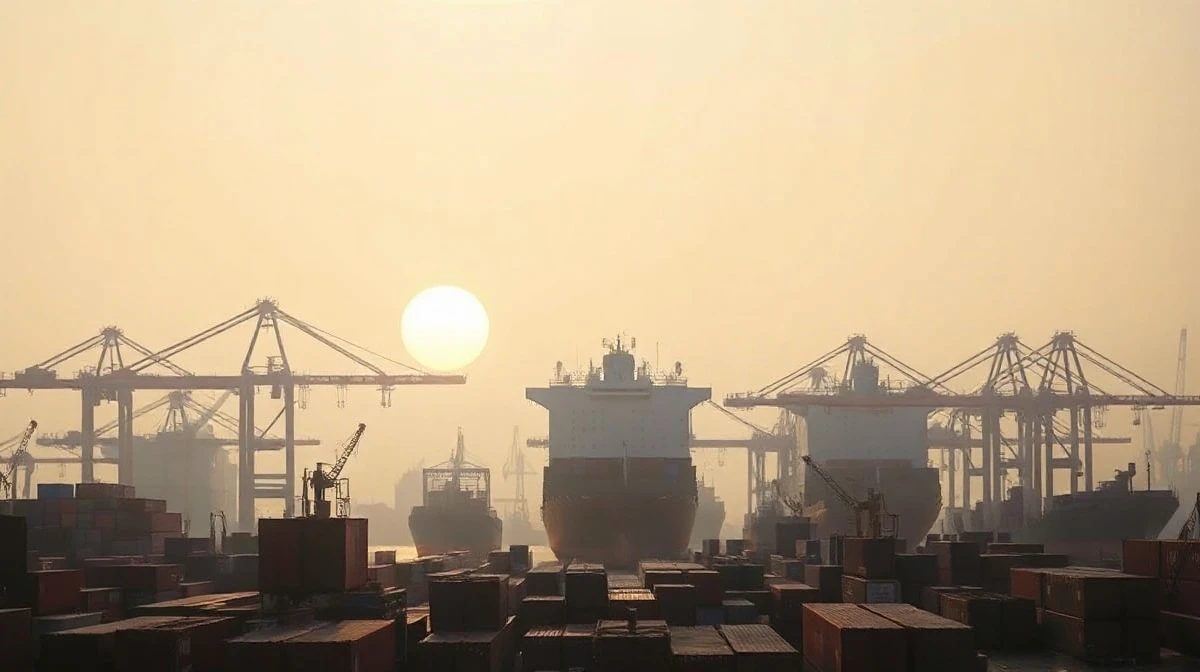
China’s economic recovery remains uneven, according to a new analysis from Standard Chartered, as mixed May data showed strong export performance contrasting with persistently weak domestic demand. The bank’s assessment, released on Monday, points to a bifurcated recovery where external-facing sectors outperform while consumer and property markets lag.
Standard Chartered economists noted that industrial production and exports exceeded expectations in May, rising 5.6% and 7.6% year-on-year respectively, according to official data. However, retail sales grew only 3.7%, below consensus estimates, while fixed-asset investment remained subdued, particularly in the property sector, which contracted further.
Also read: Gold prices tumble as Trump strike threat sends oil, yields soaring
External strength, internal weakness
The divergence between China’s export-oriented manufacturing and its domestic consumption-driven sectors has widened in recent months. The bank highlighted that export orders have been buoyed by global demand for electronics and green technology products, while domestic spending has been constrained by a sluggish labor market and ongoing property market downturn.
“The May data reinforces the narrative of a K-shaped recovery, where external demand is propping up industrial output, but domestic consumption and investment remain under pressure,” the Standard Chartered note said. “Policy support will need to shift more decisively toward boosting household income and stabilizing the property sector to rebalance the recovery.”
Also read: Rabobank flags fragility in Canada's economy as trade and energy pressures mount
Policy implications
The mixed data raises the stakes for Chinese policymakers, who have already rolled out a series of measures including interest rate cuts and targeted fiscal support. Standard Chartered expects further easing in the coming months, particularly in the form of lower reserve requirement ratios for banks and increased fiscal transfers to local governments.
“The current pace of recovery is insufficient to generate a self-sustaining cycle of consumption and investment,” the analysts added. “Without more forceful policy intervention, the risk of a prolonged period of below-potential growth remains elevated.”
China’s GDP grew 5.3% year-on-year in the first quarter of 2024, but many economists expect the second-quarter figure to be weaker as the effects of earlier stimulus fade and domestic headwinds persist. The International Monetary Fund recently projected China’s full-year growth at 5.0%, in line with Beijing’s official target, but cautioned that structural challenges, including demographic decline and high debt levels, could weigh on long-term prospects.
Market reaction
Asian markets showed a muted response to the data, with the Shanghai Composite index edging up 0.2% on Monday. The offshore yuan weakened slightly against the US dollar, trading around 7.26 per dollar, as traders digested the uneven signals. Bond yields in China remained stable, suggesting that investors expect the central bank to maintain its accommodative stance.
Standard Chartered’s assessment adds to a growing chorus of analysts who argue that China’s post-pandemic recovery has lost momentum, requiring a more aggressive policy response to prevent a sharper slowdown. The bank maintains its full-year GDP growth forecast of 4.8%, below the official target, citing the persistent drag from the property sector and weak consumer confidence.

