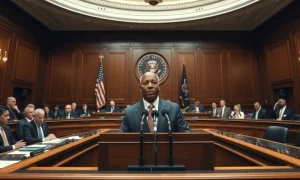
Washington, D.C. — The Clarity Act, a bill aimed at establishing a comprehensive federal framework for digital asset regulation, is scheduled for a major markup session this Thursday. However, the legislation’s path forward remains uncertain as its fate increasingly hinges on securing votes from Democratic lawmakers.
What the Markup Entails
The markup, to be held before the House Financial Services Committee, is the formal process where committee members will debate, amend, and vote on the bill before it can advance to the full House floor. This stage is often the most consequential for legislation, as amendments can reshape the bill’s core provisions or derail its momentum entirely.
Also read: Ripple Partners With Water.org to Expand Clean Water Access Using RLUSD Stablecoin
The Clarity Act seeks to define which digital assets are securities and which are commodities, assign regulatory jurisdiction between the SEC and CFTC, and establish consumer protection standards. Proponents argue that the current regulatory patchwork stifles innovation and drives crypto firms overseas. Critics, however, raise concerns about investor protections and the potential for regulatory capture.
The Decisive Role of Democrat Votes
While the bill has garnered significant Republican support, its sponsors have been working to attract a bipartisan coalition. The committee’s narrow partisan split means that a handful of Democratic defections — or support — could determine whether the bill passes markup and moves forward.
Also read: Galaxy Research Lowers CLARITY Act Approval Odds to 60% on Political Hurdles
Several moderate Democrats have expressed conditional support, particularly around provisions related to stablecoin oversight and anti-money laundering requirements. However, progressive members remain skeptical, arguing the bill does not go far enough to protect retail investors from fraud and market manipulation.
Key Sticking Points
Among the most contentious issues are the bill’s treatment of decentralized finance (DeFi) protocols and its preemption of state-level money transmitter laws. Democrats have pushed for stronger reporting requirements for DeFi platforms, while Republicans have argued for a lighter touch to avoid stifling innovation.
Additionally, the bill’s approach to environmental disclosures for proof-of-work mining has drawn criticism from climate-focused lawmakers. These unresolved issues could lead to a series of amendment votes on Thursday, testing the bill’s bipartisan appeal.
Why This Matters
The outcome of Thursday’s markup will send a strong signal about the viability of comprehensive crypto legislation in the current Congress. A successful markup could build momentum for floor consideration, while a failure — or a party-line vote — could stall regulatory clarity for years.
For the crypto industry, which has invested heavily in lobbying efforts, the Clarity Act represents a potential turning point. For regulators, it offers a chance to replace the current enforcement-driven approach with a statutory framework. For consumers, the bill’s consumer protection provisions could provide new safeguards in a market that has seen significant losses from fraud and exchange failures.
Conclusion
As the Thursday markup approaches, all eyes are on the House Financial Services Committee. The bill’s sponsors will need to work through a complex political arena, balancing industry demands with bipartisan concerns. Whether the Clarity Act emerges intact, amended, or stalled will depend on the negotiations and votes of the coming days.
FAQs
Q1: What is a markup in Congress?
A markup is a committee session where members debate, amend, and vote on a bill before it can be sent to the full chamber for consideration. It is a critical step in the legislative process.
Q2: Why is Democrat support significant for the Clarity Act?
Given the narrow partisan split in the House Financial Services Committee, the bill needs at least some Democratic votes to advance. Without bipartisan support, the bill’s chances of passing the full House and becoming law are significantly diminished.
Q3: What happens if the bill passes markup?
If the Clarity Act passes the committee markup, it will be reported to the full House of Representatives, where it will be scheduled for debate and a vote on the floor. It would then need to pass the Senate and be signed by the President to become law.