March 9, 2026 — Middle East — Global crude oil markets experienced their sharpest single-day surge in eight months today as geopolitical tensions escalated dramatically. April WTI crude oil futures (CLJ26) jumped 5.49 dollars, representing a 6.04% increase, while April RBOB gasoline (RBJ26) rose 3.25%. This sudden crude prices surge follows confirmed reports that Israeli forces bombed approximately 30 Iranian oil depots over the weekend, triggering immediate supply concerns across energy markets. The attack represents a significant escalation in regional hostilities that began earlier this year. Meanwhile, Saudi Arabia joined other Middle Eastern producers in curtailing output as local storage facilities reached maximum capacity, compounding supply constraints already affecting global markets.
Israeli Strikes Trigger Immediate Market Reaction
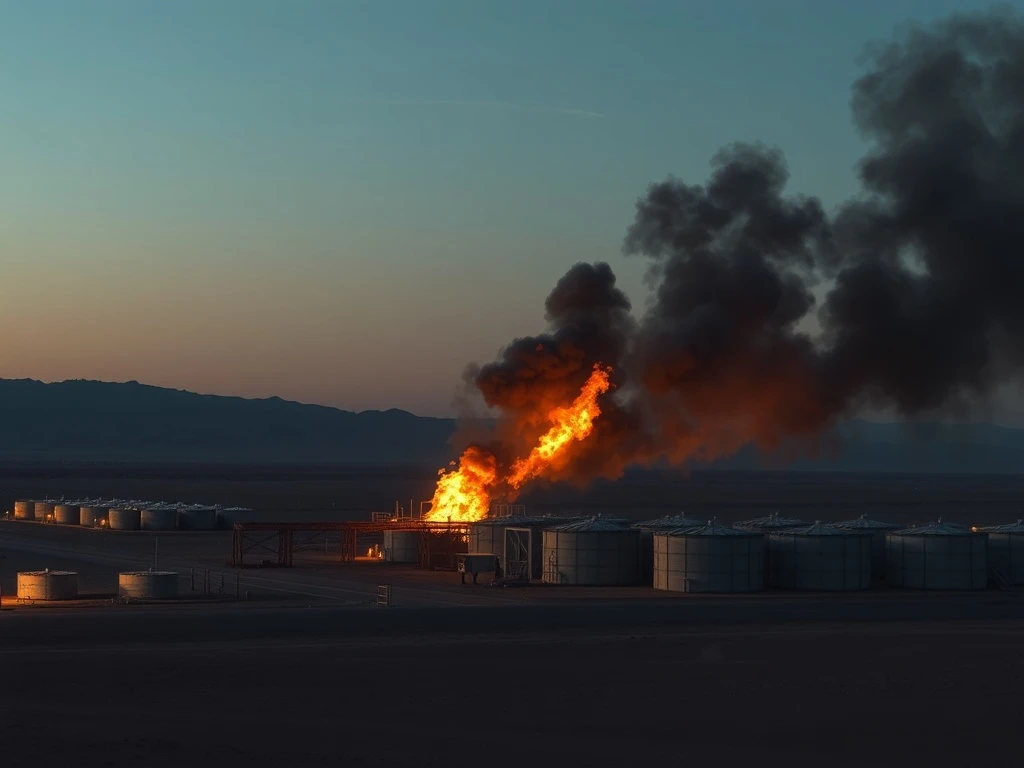
Israeli military operations targeted Iranian fuel storage facilities across multiple locations on Saturday, according to regional security analysts and market intelligence reports. The strikes occurred amid heightened tensions following Iran’s recent leadership transition. Market reaction was immediate and severe, with crude futures opening sharply higher in Asian trading hours. Initially, prices climbed even higher on overnight panic buying before moderating slightly on rumors of potential G-7 intervention. However, the G-7 finance ministers subsequently decided against a coordinated release of strategic petroleum reserves, stating they were “closely monitoring the situation” but not yet prepared for emergency measures. This decision removed a potential bearish factor that had briefly tempered the initial price spike.
Also read: AI Stocks Now Account for 40% of the U.S. Stock Market, Data Shows
The timing of these developments coincides with significant political changes within Iran. Over the weekend, Iran’s Assembly of Experts appointed hardliner Mojtaba Khamenei as the country’s new supreme leader, succeeding his father Ayatollah Ali Khamenei. The younger Khamenei maintains close ties to Iran’s powerful Islamic Revolutionary Guard Corps (IRGC), which has assumed greater control over security and foreign policy matters. Former U.S. President Donald Trump responded to the appointment by stating he was “not happy” with Iran’s choice of leadership, though current administration officials have yet to issue formal statements regarding the succession.
Strait of Hormuz Closure Creates Critical Supply Chokepoint
The most immediate market impact stems from the effective closure of the Strait of Hormuz, a critical maritime passage handling approximately 20% of global oil shipments. Iran’s Islamic Revolutionary Guard Corps has issued warnings to commercial vessels, stating that ships “could be at risk from missiles or rogue drones” if they attempt transit through the waterway. Consequently, most energy shipments from the Persian Gulf have halted entirely. Gulf producers unable to export their oil are now stockpiling crude in rapidly filling storage tanks, creating logistical bottlenecks that could persist for weeks. Goldman Sachs analysts estimate the real-time risk premium for crude oil at approximately $18 per barrel, corresponding to their projection of a six-week full halt to tanker traffic through the strait.
Also read: Chinese Investors Face FOMO on SpaceX IPO as Beijing Tightens Overseas Share Rules
- Immediate Supply Disruption: Approximately 18 million barrels per day of oil shipments are affected by the Strait of Hormuz closure
- Storage Capacity Crisis: Middle Eastern storage facilities are operating at 92-95% capacity according to Vortexa data
- Risk Premium Calculation: Goldman Sachs estimates $18/bbl premium reflects current disruption severity
Expert Analysis on Market Implications
Energy market specialists at Barchart note that current conditions mirror previous supply crises but with amplified geopolitical complexity. “The combination of military action, leadership transition, and critical infrastructure disruption creates a perfect storm for energy markets,” explained Rich Asplund, senior commodity analyst. “Unlike previous regional conflicts, we’re seeing simultaneous constraints on both production and transportation infrastructure.” Meanwhile, data from Vortexa reveals approximately 290 million barrels of Russian and Iranian crude currently sit in floating storage on tankers worldwide, representing a 50% increase from year-ago levels due to ongoing sanctions and blockades. However, in a potentially bullish development, crude oil stored on stationary tankers declined 21% week-over-week to 88.80 million barrels for the week ending March 6, suggesting some inventory drawdown is occurring despite broader constraints.
Broader Market Context and Competing Factors
The current crisis unfolds against a complex backdrop of competing bullish and bearish factors influencing global oil markets. On March 1, OPEC+ announced plans to increase crude output by 206,000 barrels per day in April, exceeding analyst estimates of 137,000 barrels per day. However, these production hikes now appear unlikely as Middle Eastern producers implement emergency cuts due to storage limitations caused by the Strait of Hormuz closure. OPEC+ continues efforts to restore the full 2.2 million barrel per day production cut implemented in early 2024, with approximately 1.0 million barrels per day remaining to be restored. January data shows OPEC crude production fell by 230,000 barrels per day to a five-month low of 28.83 million barrels per day, indicating pre-crisis constraints were already affecting output.
| Factor | Bullish/Bearish | Market Impact |
|---|---|---|
| Strait of Hormuz closure | Strongly Bullish | 18 million bpd disrupted |
| Floating storage levels | Moderately Bearish | 290 million barrels available |
| OPEC+ planned increases | Bearish (now uncertain) | 206,000 bpd scheduled |
| U.S. production levels | Moderately Bearish | 13.696 million bpd current |
Forward-Looking Analysis and Market Trajectory
Market participants now face multiple unresolved geopolitical conflicts simultaneously affecting energy supplies. The Russia-Ukraine war continues with recent U.S.-brokered Geneva talks ending prematurely as Ukrainian President Volodymyr Zelenskiy accused Russia of deliberately prolonging hostilities. Russian officials maintain that territorial issues remain unresolved, stating there’s “no hope of achieving a long-term settlement” until their demands are met. This ongoing conflict has already produced significant energy market impacts, with Ukrainian drone and missile attacks targeting at least 28 Russian refineries over the past seven months, limiting Russia’s crude export capabilities. Additionally, Ukraine has intensified attacks on Russian tankers in the Baltic Sea since late November, with at least six vessels struck by drones and missiles. New U.S. and EU sanctions on Russian oil companies, infrastructure, and tankers have further constrained exports from the region.
U.S. Market Position and Inventory Status
Domestic U.S. factors present a mixed picture for global balances. The Energy Information Administration’s February 27 report revealed U.S. crude oil inventories sitting 2.7% below the seasonal five-year average, while gasoline inventories were 4.4% above average and distillate inventories were 1.9% below average. U.S. crude production remained steady at 13.696 million barrels per day for the week ending February 27, just below the record high of 13.862 million barrels per day established in November. On February 10, the EIA raised its 2026 U.S. crude production estimate slightly to 13.60 million barrels per day from 13.59 million, while increasing its 2026 U.S. energy consumption estimate to 96.00 quadrillion BTU from 95.37. The International Energy Agency recently reduced its 2026 global crude surplus estimate to 3.7 million barrels per day from 3.815 million, indicating tightening fundamentals even before the current crisis.
Conclusion
The crude prices surge following Israeli strikes on Iranian fuel depots represents more than a temporary market disruption. This event has exposed critical vulnerabilities in global energy infrastructure while coinciding with political transitions that may reshape Middle Eastern geopolitics for years. The immediate 6% price increase reflects genuine supply constraints rather than speculative trading, with the Strait of Hormuz closure affecting one-fifth of global oil shipments. Market participants should monitor several key developments: potential G-7 coordinated response measures, Iranian retaliation possibilities, storage capacity utilization rates in Gulf states, and progress toward reopening critical shipping lanes. While floating storage provides some temporary buffer, sustained closure of the Strait of Hormuz could trigger more severe price movements in coming weeks as inventory draws accelerate. The convergence of military conflict, leadership change, and infrastructure disruption creates historic challenges for energy markets entering the second quarter of 2026.
Frequently Asked Questions
Q1: Why did crude oil prices surge so dramatically on March 9, 2026?
Prices jumped 6.04% primarily due to Israeli military strikes on approximately 30 Iranian oil depots combined with the effective closure of the Strait of Hormuz, which handles 20% of global oil shipments. These events created immediate supply concerns in already tight markets.
Q2: How long might the Strait of Hormuz remain closed to oil tankers?
There is no official timeline, but Goldman Sachs analysts base their $18/barrel risk premium on an assumed six-week closure. The duration depends on security conditions and diplomatic negotiations between regional powers.
Q3: What is the current U.S. position on releasing strategic petroleum reserves?
G-7 finance ministers discussed but rejected a near-term coordinated release, stating they are “closely monitoring” the situation but believe conditions don’t yet warrant emergency measures. Individual countries could act unilaterally if supplies tighten further.
Q4: How does this crisis compare to previous Middle East oil disruptions?
The current situation is more complex due to simultaneous constraints on production, storage, and transportation infrastructure, combined with political leadership transitions in Iran. Previous crises typically involved single factors like production cuts or shipping disruptions.
Q5: What should energy investors watch for in coming days?
Key indicators include: Iranian response to the strikes, storage capacity reports from Gulf states, tanker tracking data through alternative routes, official statements from OPEC+ regarding planned production increases, and inventory data from consuming nations.
Q6: How might this affect gasoline prices for consumers?
April RBOB gasoline futures already rose 3.25% following the crude increase. Retail gasoline prices typically follow wholesale markets with a 1-2 week lag, so consumers could see noticeable increases at pumps by late March if current price levels persist.