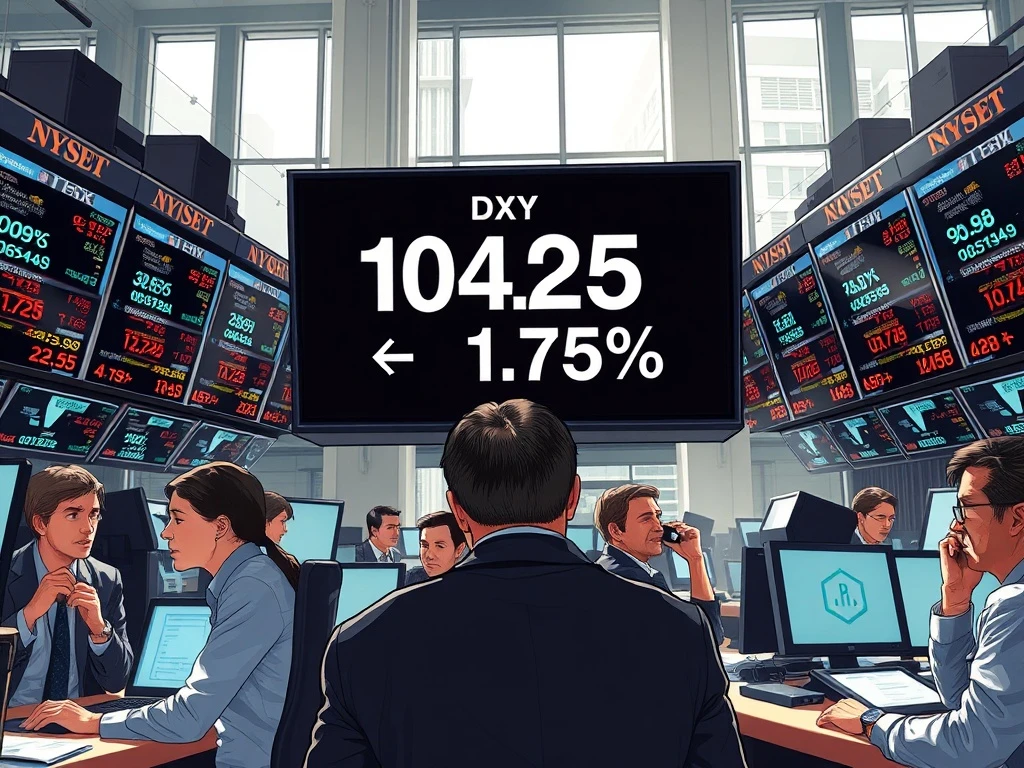
CHICAGO, March 9, 2026 — The US dollar experienced a sharp intraday reversal on Monday, surrendering morning gains after President Donald Trump suggested the military conflict with Iran was nearing completion. The dollar index (DXY), which tracks the greenback against a basket of six major currencies, fell back in afternoon trading, closing near its session lows. The sudden shift highlights how geopolitical rhetoric continues to drive volatility in global currency markets, overshadowing traditional economic fundamentals. Traders at the Chicago Mercantile Exchange reported rapid position unwinding as the President’s comments, made during a phone interview with CBS News, crossed the wires at approximately 2:15 PM Eastern Time.
Dollar Falls Back After Trump’s “War Complete” Remarks
Market dynamics shifted decisively in the early afternoon. President Trump told CBS News, “I think the war is very complete, pretty much,” adding that the military operation was “very far” ahead of its original 4-5 week timeframe. This statement directly undercut the safe-haven demand that had buoyed the dollar throughout the morning session. According to real-time data from Barchart Markets, the DXY had traded as high as 105.80 before retreating to settle around 105.20. “The market was pricing in a prolonged conflict,” explained currency strategist Anya Petrova of Global Forex Advisors. “Trump’s comments introduced a definitive end-point, triggering a classic ‘sell the rumor, buy the news’ reaction. The initial war premium evaporated from the dollar within minutes.”
Also read: SpaceX, OpenAI, and Anthropic: The AI IPO Wave That Could Reshape Public Markets
The morning’s dollar strength had been fueled by a spike in Brent crude oil prices above $100 per barrel, following weekend escalations in the Strait of Hormuz. Higher oil prices traditionally support the dollar due to the United States’ status as the world’s top producer and because they can signal future Federal Reserve hawkishness to combat inflation. However, this support collapsed in tandem with oil prices after the G7 finance ministers, in a coordinated statement, pledged to release strategic petroleum reserves if necessary to ensure market stability. The one-two punch of coordinated G7 action and de-escalatory rhetoric from the White House created a perfect storm for dollar bears.
Weak US Data and Diverging Central Bank Policies Undercut the Dollar
Analysts note that the dollar’s afternoon decline was exacerbated by underlying structural weaknesses. Last Friday’s disappointing economic reports—a loss of 92,000 US payrolls in February and a 0.2% monthly decline in January retail sales—had already painted a picture of a slowing domestic economy. “The data confirmed the market’s suspicion that the US economic engine is cooling,” said Michael Chen, Chief Economist at the Financial Policy Institute, a non-partisan think tank. “This gives the Federal Reserve clear runway to pivot toward rate cuts, which diminishes the dollar’s yield appeal.”
Also read: SpaceX IPO Allocation Leaves Binance, Kraken Users Empty-Handed Despite Massive Demand
- Interest Rate Differential Outlook: Swaps markets, as tracked by CME Group’s FedWatch Tool, now price in a 96% probability of at least a 25 basis point rate cut by the Fed in 2026. Conversely, markets anticipate the European Central Bank (ECB) and Bank of Japan (BOJ) will hike rates by a similar margin.
- Currency Pair Reactions: The EUR/USD pair rose 0.17%, benefiting from both dollar weakness and relief over falling oil prices, which ease energy import costs for the Eurozone. The USD/JPY pair ended flat, as early yen weakness from high oil prices was offset by later dollar selling.
- Gold’s Safe-Haven Shuffle: April COMEX gold futures fell 1.07% to $2,015 per ounce. The drop reflected reduced immediate geopolitical fear, though analysts at the World Gold Council note strong underlying demand from central banks, like the People’s Bank of China, which has added to its reserves for 15 consecutive months.
Expert Analysis on Federal Reserve Policy Path
The path of US monetary policy remains the dominant fundamental driver for the dollar’s medium-term trajectory. Dr. Sarah Jennings, a former Fed economist now with the Brookings Institution, provided context: “The Fed’s dual mandate is now tilting heavily toward supporting employment. February’s payrolls contraction, while possibly a blip, cannot be ignored. The market is correctly interpreting that the next Fed move is far more likely to be a cut than a hike, regardless of short-term oil price fluctuations.” This expert perspective aligns with the shift in interest rate futures, which now discount only a 4% chance of a rate cut at the March 17-18 FOMC meeting, but see cuts as inevitable later in the year.
Broader Market Context and Historical Precedents
Monday’s price action fits a pattern observed in recent years where the dollar’s role as a safe haven is increasingly transient. The table below compares key dollar index reactions to geopolitical events in the 2020s, illustrating the diminishing duration of related rallies.
| Geopolitical Event | Date | DXY Peak Gain | Gain Reversed Within |
|---|---|---|---|
| Russia-Ukraine Conflict Escalation | Feb 2022 | +4.8% | 3 weeks |
| Initial Iran Tensions | Oct 2025 | +2.1% | 5 trading days |
| Trump’s “War Complete” Comments | Mar 2026 | +0.6% (intraday) | Same day |
This compression of the “fear premium” timeline suggests currency traders have become quicker to price in geopolitical resolutions and more focused on long-term interest rate and growth differentials. The dollar’s afternoon fallback on March 9 may be a textbook example of this new, faster-paced market framework.
What Happens Next: Monitoring Central Banks and Geopolitical Signals
All eyes now turn to the scheduled policy meetings of the world’s major central banks. The Federal Reserve meets on March 17-18, followed by the Bank of Japan and the European Central Bank on March 19. While no policy changes are expected at these meetings, the accompanying statements and economic projections will be scrutinized for clues on the timing of the anticipated policy divergence. Additionally, the US Treasury Department’s semi-annual report on foreign exchange policies, due in April, could comment on recent dollar volatility.
Market Participant and Institutional Reactions
Reaction from the trading community was one of recalibration. “We’ve moved from pricing a binary war/no-war outcome to assessing the economic aftermath and the Fed’s response,” noted a portfolio manager at a major Wall Street hedge fund, speaking on condition of anonymity. Meanwhile, G7 officials, in background briefings, expressed cautious optimism that the apparent de-escalation could stabilize global energy markets, but emphasized their readiness to act with further reserve releases if price volatility returns.
Conclusion
The US dollar’s sharp reversal on March 9, 2026, underscores the currency’s continued sensitivity to geopolitical headlines, even as its longer-term path is dictated by interest rate fundamentals. The dollar’s fall back from its intraday highs was a direct result of President Trump’s comments suggesting an imminent end to the Iran conflict, compounded by weak US economic data and a looming shift in global central bank policy. Traders should monitor upcoming FOMC, ECB, and BOJ communications for guidance, while remaining alert to any reversal in the geopolitical tone from the White House. The day’s events confirm that in modern currency markets, speed and adaptability are paramount, as war premiums can evaporate as quickly as they form.
Frequently Asked Questions
Q1: Why did the US dollar fall after President Trump’s comments?
The dollar fell because Trump’s suggestion that the Iran conflict was “very complete” reduced the currency’s safe-haven appeal. Traders had bought dollars expecting a prolonged crisis; his comments triggered rapid selling of those positions.
Q2: What is the US Dollar Index (DXY) and why is it important?
The DXY is a measure of the value of the US dollar relative to a basket of six foreign currencies: the Euro, Japanese Yen, British Pound, Canadian Dollar, Swedish Krona, and Swiss Franc. It is a key benchmark for global financial health and international trade.
Q3: How do oil prices affect the US dollar?
Higher oil prices can support the dollar because the US is a major oil producer, boosting export revenues. However, they can also hurt the dollar if they cause inflation that forces the Fed to raise interest rates aggressively, potentially slowing the economy.
Q4: What are interest rate differentials and why do they matter for currencies?
Interest rate differentials refer to the difference in interest rates between two countries. Investors seek higher yields, so capital tends to flow into currencies from countries with higher interest rates, increasing demand and value for that currency.
Q5: What is the market expecting from the Federal Reserve in 2026?
As of March 9, 2026, swaps markets are discounting a high probability that the Federal Reserve will cut its benchmark interest rate by at least 25 basis points during the year, due to signs of a cooling US labor market and economy.
Q6: How did other assets like gold and stocks react to this news?
Gold prices fell over 1% as immediate safe-haven demand waned. Major US stock indices, particularly those with heavy international exposure, rallied as the prospect of a shorter conflict reduced global economic uncertainty.