
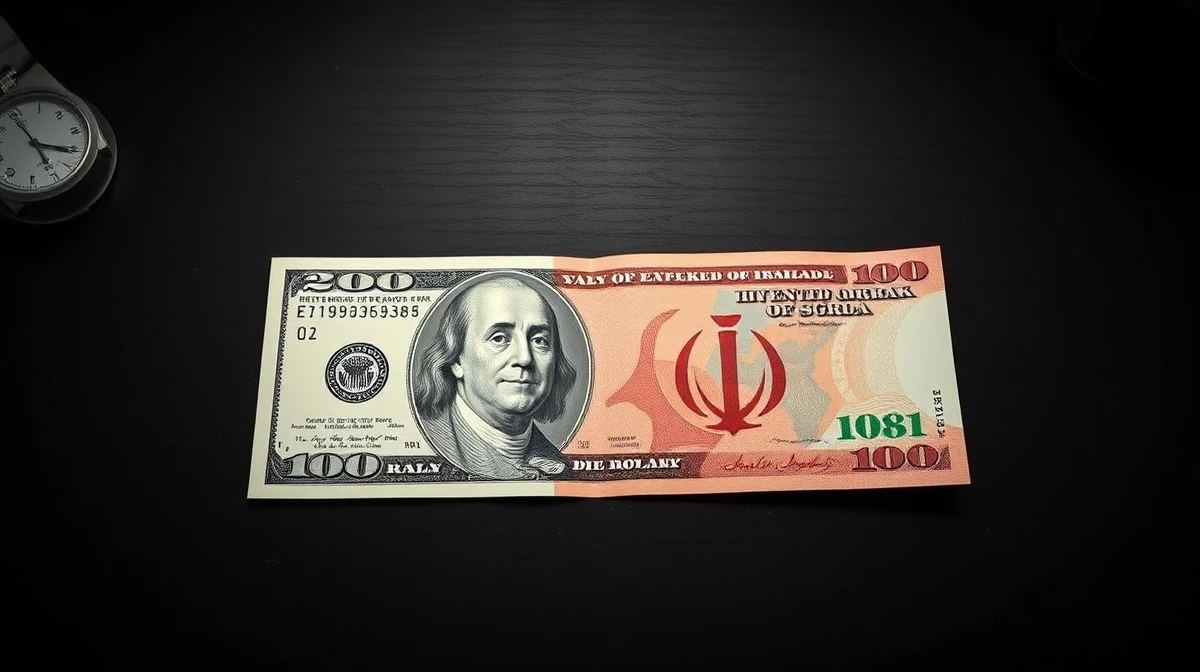
The US dollar index (DXY00) fell to its lowest level in two and a half months on Wednesday, closing down 0.45% as growing optimism over a potential peace agreement between the United States and Iran reduced safe-haven demand for the greenback. The decline accelerated after Axios reported that the US believes it is close to a deal with Iran to end the nearly 10-week conflict, with Tehran expected to respond within 48 hours to a memorandum of understanding that includes lifting restrictions on the Strait of Hormuz.
Dollar Under Pressure from Multiple Fronts
Beyond geopolitical developments, the dollar faced headwinds from a sharp drop in crude oil prices, which fell 7% on Wednesday. Lower oil prices ease inflation expectations, potentially giving the Federal Reserve more room to adopt a dovish monetary policy stance—a negative for the dollar. Additionally, the April ADP employment report showed a gain of 109,000 jobs, below the consensus estimate of 120,000, further supporting the case for rate cuts.
Also read: SpaceX, OpenAI, and Anthropic: The AI IPO Wave That Could Reshape Public Markets
Stock market strength also weighed on the dollar, as the S&P 500 rallied to a new record high, reducing demand for the dollar as a liquidity haven. Despite these moves, swaps markets are pricing in only a 6% probability of a 25-basis-point rate cut at the Federal Reserve’s next meeting on June 16-17.
Euro and Yen Gain Ground
The euro (EUR/USD) climbed to a two-and-a-half-week high, rising 0.53% on Wednesday. The currency was buoyed by the weaker dollar and by stronger-than-expected Eurozone economic data. The March producer price index rose 2.1% year-over-year, above the 1.8% forecast, marking the fastest pace in a year. The April S&P composite PMI was also revised upward to 48.8 from 48.6. Markets are now pricing in a 79% chance of a 25-basis-point rate hike by the European Central Bank at its June 11 meeting.
Also read: SpaceX IPO Allocation Leaves Binance, Kraken Users Empty-Handed Despite Massive Demand
The Japanese yen (USD/JPY) strengthened 0.95%, reaching a two-and-a-half-month high. The move was amplified by reports that Japanese authorities were checking exchange rates in the interbank market, a step often taken before direct intervention to support the currency. The drop in oil prices also benefits Japan, which imports over 90% of its energy needs. Japanese markets were closed for a national holiday, resulting in thinner-than-usual trading volume.
Gold and Silver Surge on Dollar Weakness
Precious metals posted strong gains on Wednesday. June COMEX gold futures rose $125.80 (2.75%) to a one-week high, while July silver futures gained $3.722 (5.06%) to a one-and-a-half-week high. The weaker dollar was the primary catalyst, but lower crude oil prices also supported metals by reducing inflation expectations, which could lead to easier monetary policy globally. Sharply lower global bond yields further boosted the appeal of non-yielding assets like gold and silver.
Longer-term support for precious metals remains intact due to ongoing uncertainty over US tariffs, political turmoil in Washington, large US fiscal deficits, and broader government policy uncertainty. These factors continue to drive demand for gold and silver as stores of value. However, recent fund liquidation has been a headwind: gold ETF holdings fell to a 4.5-month low on March 31 after reaching a 3.5-year high on February 27. Silver ETF holdings dropped to an 8.75-month low on Tuesday after a 3.5-year high on December 23.
Central bank demand remains a strong pillar for gold. The People’s Bank of China added 160,000 ounces of gold to its reserves in March, marking the seventeenth consecutive month of increases. Total bullion held by the PBOC now stands at 74.38 million troy ounces.
Conclusion
The dollar’s decline reflects a market recalibrating expectations around geopolitics, inflation, and monetary policy. A potential US-Iran peace deal, falling oil prices, and softer employment data are all contributing to a more dovish outlook for the Fed. Meanwhile, the euro and yen are gaining on their own respective tailwinds, and precious metals are benefiting from the broader shift in risk sentiment. Traders will be watching closely for Iran’s response to the US proposal and for upcoming Fed and ECB policy decisions.
FAQs
Q1: Why did the dollar fall on hopes of a US-Iran peace deal?
A1: The dollar is often seen as a safe-haven currency during geopolitical uncertainty. Hopes for a peace deal reduce that uncertainty, lowering demand for the dollar and allowing other currencies to strengthen against it.
Q2: How does a drop in oil prices affect the dollar and other currencies?
A2: Lower oil prices reduce inflation expectations, which can lead central banks to adopt looser monetary policy. This tends to weaken the dollar. For oil-importing economies like the Eurozone and Japan, lower oil prices are positive for economic growth and their currencies.
Q3: What is the significance of the ADP employment report missing expectations?
A3: The ADP report is seen as a preview of the official nonfarm payrolls data. A weaker-than-expected reading suggests the labor market is cooling, which supports the case for the Federal Reserve to cut interest rates sooner rather than later.

