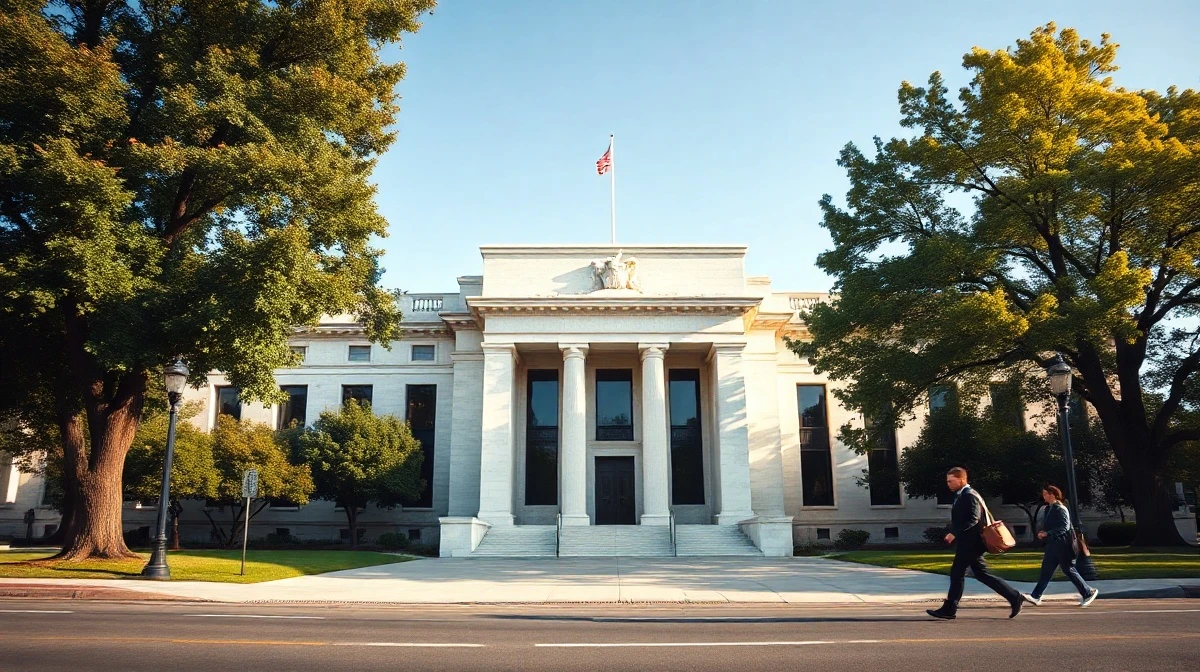
The Federal Reserve is widely expected to keep its benchmark interest rate unchanged at its September meeting and through the end of 2026, according to a new Reuters poll of economists conducted between August 12 and 17. The survey found that a large majority of forecasters see the central bank holding the federal funds rate at its current target range of 3.50% to 3.75% for the rest of the year, as inflation continues to moderate and the labor market shows signs of cooling without a sharp downturn.
The poll’s findings align with recent public statements from several Federal Open Market Committee (FOMC) members, who have emphasized a patient approach to policy adjustments. Their stance reflects a shift from the aggressive tightening cycle seen earlier in the decade to a period of watchful stability, as policymakers assess the lagged effects of past rate hikes on the broader economy.
Also read: Cotton Futures Rally Into the Weekend as Managed Money Hits Two-Year High
Why the Fed is Comfortable Holding Steady
The consensus for unchanged rates is anchored in two key data points: the consumer price index (CPI) and the employment situation. The latest CPI reading, released in mid-July, showed annual inflation running at 2.3%, down from a peak of over 9% in mid-2022 and just a notch above the Fed’s 2% target. While core inflation, which strips out volatile food and energy prices, has been stickier at around 2.8%, it has continued its gradual downward trajectory.
On the employment front, nonfarm payrolls have grown by an average of 165,000 jobs per month over the last quarter, a pace that is strong enough to keep unemployment low but not so hot as to fuel wage-driven inflation. The unemployment rate has held steady at 4.1% for the past three months, a level that most Fed officials consider consistent with their dual mandate of maximum employment and price stability.
Also read: Ramsey Personality Took Trump's $1,000 for His Son — Then Warned Parents About One Big Mistake
This combination of easing price pressures and a balanced labor market gives the FOMC little incentive to move rates in either direction. As one senior economist at a major U.S. bank noted in the poll’s commentary, “The Fed has achieved a soft landing scenario. There is no urgency to cut, and no reason to hike. The optimal move is no move.”
Market Reactions and What to Watch Next
Financial markets have largely priced in the prospect of steady rates. The yield on the 10-year Treasury note has traded in a narrow band between 3.9% and 4.1% over the past month, while the CME Group’s FedWatch tool shows a 78% probability of no change at the September 17 meeting, with similar odds for the October and December gatherings.
For investors, the immediate implications are relatively benign. Equities have continued to grind higher, with the S&P 500 index up 6.4% year-to-date, supported by the absence of a restrictive policy shock. However, the prolonged hold on rates does carry a subtle risk: if inflation stalls above target, the Fed could be forced to maintain this stance well into 2027, keeping borrowing costs elevated for consumers and businesses longer than initially anticipated.</n
The key variable to monitor is the next CPI report, scheduled for release on September 13. A surprise uptick in core prices would likely reignite speculation about a potential hike, while a sharper-than-expected decline could revive calls for a cut in early 2027. Until then, the central bank’s messaging is expected to remain firmly centered on data dependence and patience.
For households, the steady-rate environment means mortgage rates, which have hovered around 5.9% for a 30-year fixed loan, are unlikely to see significant movement in the near term. Credit card rates and auto loan rates will similarly remain elevated, underscoring that while the Fed has paused, the era of cheap money has not returned. The next major signal will come from the Fed’s own economic projections, due out at the September meeting, which will reveal whether officials still anticipate any rate adjustments before the year closes.
Disclaimer: This article is for informational purposes only and does not constitute financial advice. Market conditions are volatile and forecasts are subject to change. Readers should conduct their own research or consult a qualified financial advisor before making investment decisions.