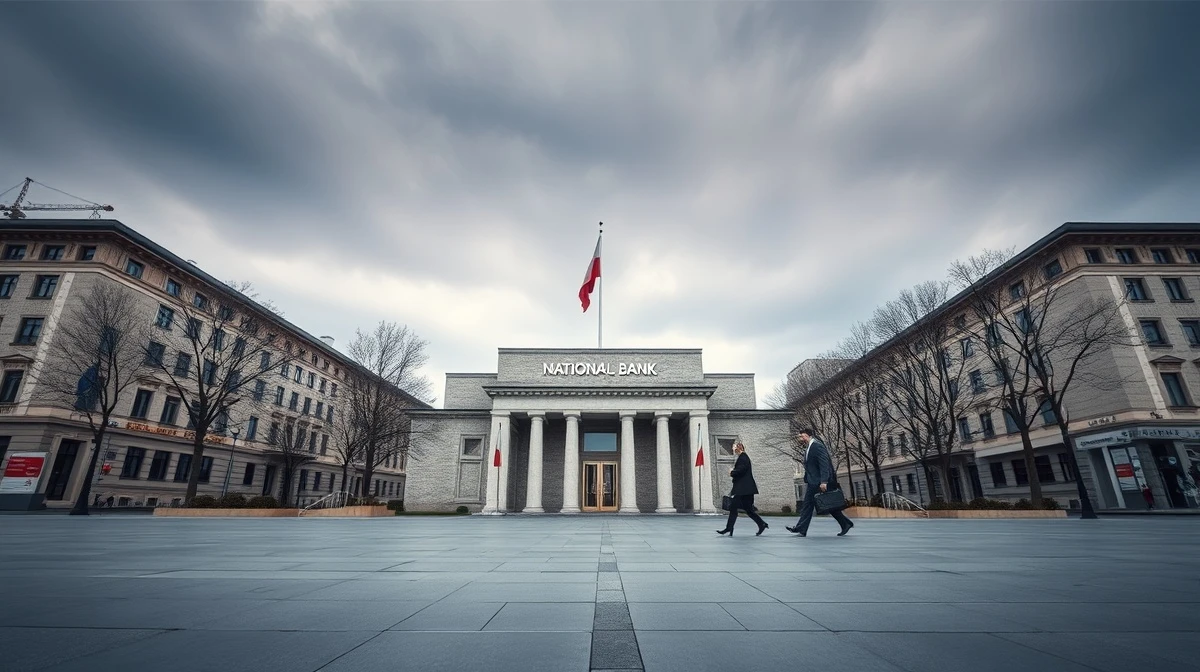
The EUR/PLN currency pair has drifted lower in recent trading sessions following the National Bank of Poland’s (NBP) decision to hold its benchmark interest rate unchanged, according to analysts at Societe Generale. The move reflects ongoing caution from Warsaw’s central bank as it balances inflation concerns with a fragile economic recovery.
NBP Maintains Cautious Stance
The NBP kept its main interest rate at 5.75% during its latest meeting, a decision widely anticipated by markets. Societe Generale strategists noted that the hold was a key factor behind the zloty’s modest strengthening against the euro. The Polish currency has been under pressure in recent months due to mixed economic data and global uncertainty, but the central bank’s steady hand has provided some support.
Also read: Swiss Franc Dips Against Dollar, Rises Versus Euro in Mixed Forex Session
Poland’s inflation rate, while down from its 2023 peak, remains above the NBP’s target range. Governor Adam Glapiński has signaled that the bank is in no rush to cut rates, prioritizing price stability over growth stimulation. This hawkish-leaning tone has helped anchor the zloty, though the currency remains sensitive to external factors such as energy prices and European Central Bank policy.
Societe Generale’s Outlook for EUR/PLN
In a note to clients, Societe Generale highlighted that the EUR/PLN pair’s drift lower reflects a reassessment of relative monetary policy paths. With the ECB also pausing its tightening cycle, the interest rate differential between the eurozone and Poland has narrowed slightly, benefiting the zloty.
Also read: Pound Sterling faces a heavy week as Westminster empties out
The French bank’s analysts expect EUR/PLN to trade within a range near current levels in the near term, with a bias toward further zloty appreciation if Polish economic data continues to improve. However, they caution that geopolitical risks, particularly related to the war in neighboring Ukraine, could quickly reverse the trend.
What This Means for Forex Traders
For currency traders, the NBP’s steady policy reduces short-term volatility in the zloty, making it a relatively stable carry trade candidate compared to other emerging market currencies. However, the lack of a clear directional catalyst means that EUR/PLN may remain range-bound until the NBP signals a shift in its policy stance, likely later this year.
The pair is currently trading around the 4.30 level, down from 4.35 earlier this month. A break below the 4.28 support could open the door to further declines toward 4.25, according to technical analysts, but a move above 4.33 would suggest renewed zloty weakness.
Conclusion
The EUR/PLN pair’s recent drift lower reflects the NBP’s commitment to holding rates steady, a policy that continues to support the zloty against the euro. Societe Generale’s analysis underscores the importance of central bank communication in shaping currency expectations, particularly in emerging markets like Poland. Traders should watch for any shifts in the NBP’s tone at upcoming meetings, as well as broader risk sentiment, for the next significant move in the pair.
FAQs
Q1: Why did EUR/PLN fall after the NBP decision?
The zloty strengthened because the NBP kept rates unchanged, signaling a continued commitment to fighting inflation. This makes the zloty more attractive to investors seeking yield, supporting its value against the euro.
Q2: What is the NBP’s current interest rate?
The National Bank of Poland’s main reference rate is 5.75%, where it has remained since October 2023. The bank has paused its tightening cycle as inflation has moderated but remains above target.
Q3: Is the Polish zloty a good investment right now?
According to Societe Generale, the zloty offers a relatively high yield compared to major currencies, but it carries geopolitical risk due to Poland’s proximity to the war in Ukraine. It may appeal to carry trade investors with a higher risk tolerance.