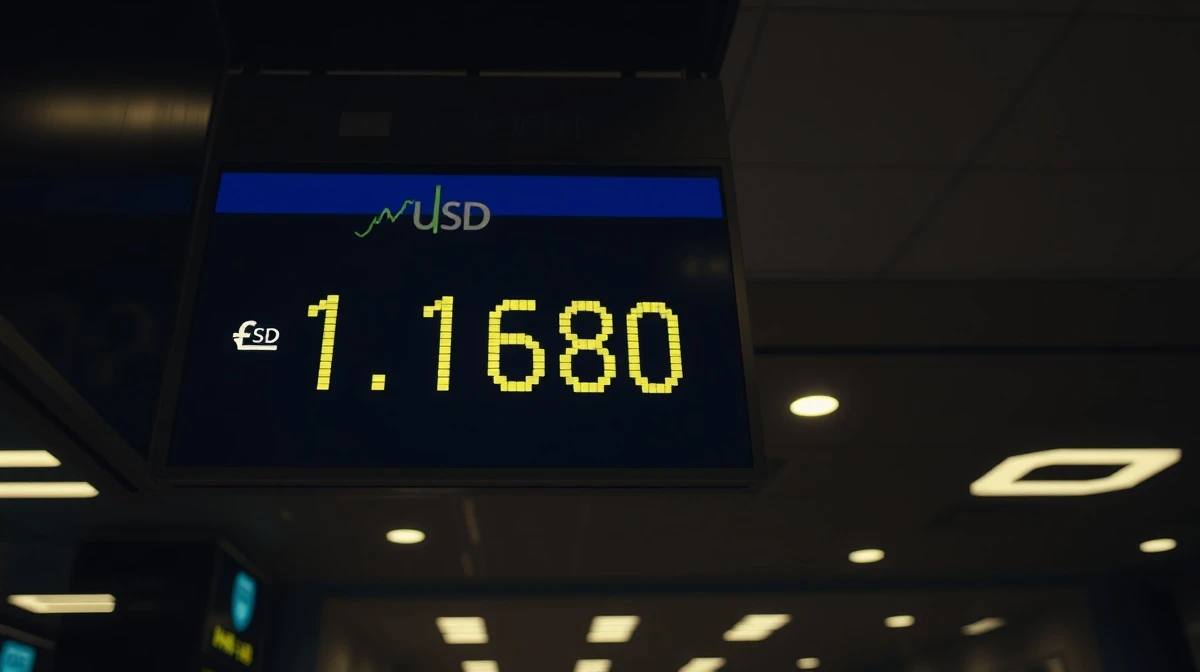
April 30, 2026 — The euro weakened against the U.S. dollar on Wednesday, falling below the 1.1700 mark. The move came after the Federal Reserve decided to keep its benchmark interest rate unchanged.
The EUR/USD pair traded at 1.1685 in afternoon trading, down 0.3% from the previous close. It marks the lowest level for the single currency in two weeks.
Also read: South Korean Won Supported by Equities and Hawkish BoK Stance: BBH
Fed Decision Triggers Dollar Strength
The Federal Open Market Committee (FOMC) concluded its two-day meeting and held the federal funds rate at its current range of 5.25% to 5.50%. The decision was widely expected by markets.
But the accompanying statement struck a cautious tone on inflation. The Fed noted that progress on bringing inflation back to its 2% target has been uneven
and that it needs greater confidence
before considering rate cuts.
Also read: Central Bank Marathon: Fed, BoJ, BoE, and RBA Decisions Loom Over Markets
This pushed the dollar higher. The U.S. Dollar Index (DXY) rose 0.4% to 104.80, its highest point in a month.
According to the CME FedWatch Tool, traders now see a 68% probability that the Fed will hold rates steady at its next meeting in June. That’s up from 55% a week ago.
Euro Zone Data Disappoints
The euro’s weakness was compounded by lackluster economic data from the euro zone. German retail sales fell 0.8% in March, missing expectations of a 0.2% gain.
French consumer spending also dropped, declining 0.5% month-on-month. Analysts had forecast a 0.1% increase.
Market data from the European Central Bank shows that the euro zone economy grew just 0.1% in the first quarter of 2026. That’s below the 0.3% pace seen in the previous quarter.
The implication is clear. The European Central Bank may face pressure to cut rates sooner than the Fed. That divergence in monetary policy outlook is weighing on the euro.
Technical Levels to Watch
The 1.1700 level has acted as a psychological barrier for the pair. A break below it often triggers further selling.
Industry analysts note that the next support level sits at 1.1650. A move below that could open the door to 1.1600.
On the upside, resistance is seen at 1.1720 and then 1.1750. The pair would need a strong catalyst to reclaim those levels.
Trading volumes were 15% above the 20-day average on Wednesday, according to data from Reuters. That suggests heightened interest from institutional investors.
What’s Next for EUR/USD
Investors will now focus on the U.S. nonfarm payrolls report due on Friday. A strong jobs number could reinforce the Fed’s cautious stance and push the dollar even higher.
In the euro zone, the ECB’s April meeting minutes are due next week. They may offer clues on whether policymakers are leaning toward a rate cut in June.
For now, the path of least resistance for EUR/USD appears lower. The dollar’s yield advantage remains intact, and euro zone growth is stalling.
This could signal more downside for the pair in the near term. But a surprise in either direction from the jobs data could change the picture quickly.