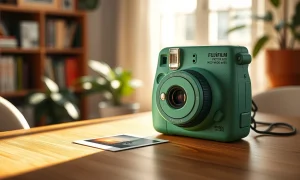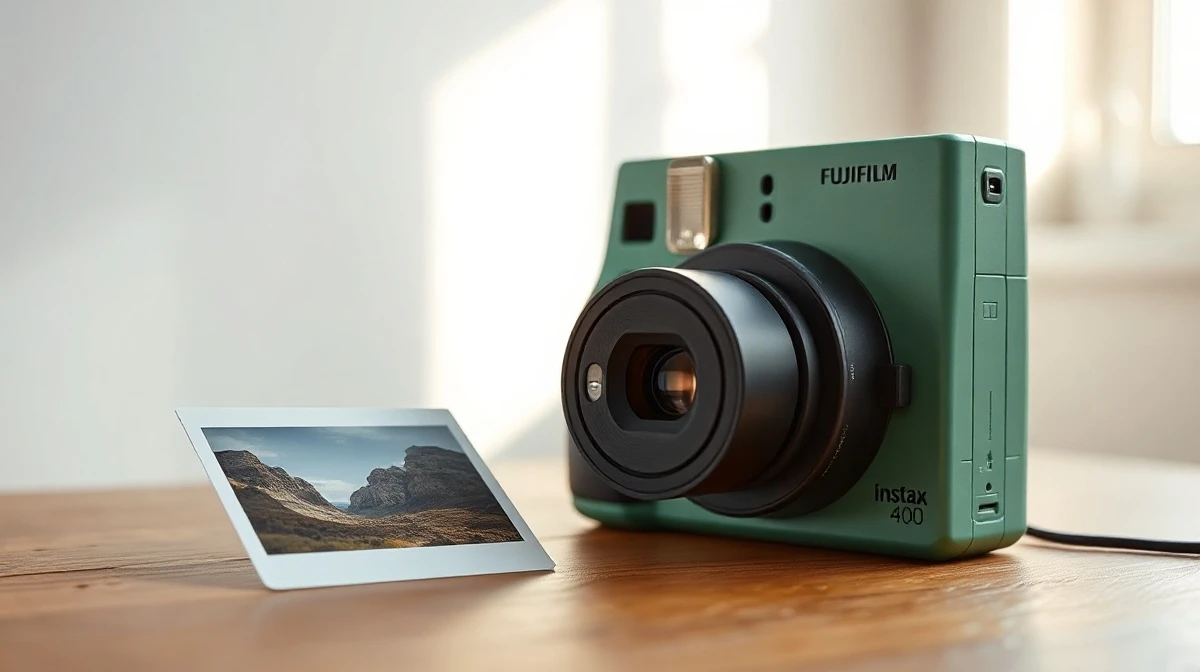
Fujifilm’s Instax Wide 400, priced at $175 and available as a Prime Day bundle for $148, offers a familiar instant photography experience with one key difference: larger prints. The camera produces 62 × 99 mm photos, roughly twice the size of Instax Mini images, making it a practical choice for group shots, scenic landscapes, and any moment where fitting more into the frame matters.
As someone who regularly shoots with an Instax Square, I was curious to see how the wider format would handle environment photography and larger gatherings. After testing the camera in various settings — from downtown streets to a gelato shop — I found it delivers on its promise of simplicity and bigger prints, though not without some trade-offs.
Also read: Tata Electronics, supplier to Apple and Tesla, confirms data breach exposing 630GB of files
Design and ease of use
The Instax Wide 400 is a straightforward point-and-shoot camera with a one-button design. It automatically manages flash, focus, and exposure, leaving you to simply frame and shoot. To power on, you rotate the lens counterclockwise: the first click activates close-up mode for subjects 0.9 to 3 meters away; a second click switches to arena mode for subjects beyond 3 meters. Rotating clockwise powers the camera off.
The camera comes with a close-up lens attachment that snaps onto the front, which I found helpful for avoiding focus and blur issues when shooting subjects up close. Loading the film cartridge is simple, with guide lines to help align it correctly, and a twist lock secures the door. A small indicator on the back shows how much film is left.
Also read: New AI-Powered Index Ranks Robotaxi Companies: Baidu Edges Waymo as China Dominates
Image quality and limitations
In good lighting, the Instax Wide 400 produces prints with nice color, good detail, and some extra saturation. I was impressed by how well it captured accurate colors and distant details in well-lit scenes. However, the simplicity of the camera means there is little you can do to brighten photos in low-light conditions. In scenes with strong contrast — like dark trees against a bright sky — details tended to blur together, and I ended up with some less-than-ideal shots.
Film is available in standard white frame, black frame, metallic borders, and monochrome. Each box contains 20 sheets and costs between $25 and $28. Fujifilm sent me the standard white film for this review.
Size and portability
At 162 mm x 98 mm x 123 mm and 1.4 pounds, the camera is noticeably bulkier than Instax Mini and Square models. While the larger prints justify the size, it is not something you would want to carry without a bag. The included shoulder strap helps, but I was still careful not to bump it into people or objects in busy spaces. The camera’s size also attracted attention — a worker at a downtown gelato shop stopped to compliment it, calling it a “cool looking camera.”
Self-timer and group shots
The camera’s self-timer is a useful feature for group shots. It works by pushing a lever on the side and choosing one of four durations, ranging from two to 10 seconds. The camera emits a ticking sound and red lights provide a visual countdown. If you do not have a tripod, the strap includes two angle adjustment accessories that can help prop and position the camera on a flat surface.
The Instax Wide 400 comes in two color options: green and jet black. I liked the green version for its playful, fun vibe. Overall, this camera is a great option for people of all ages, offering high-quality images while remaining simple enough for kids and teens just starting out in photography.
This post originally published May 9, and has since been updated to reflect promotional pricing.
Frequently Asked Questions
What film does the Instax Wide 400 use?
It uses Instax Wide film, which is available in standard white frame, black frame, metallic borders, and monochrome. Each box contains 20 sheets.
How does the Instax Wide 400 compare to the Instax Mini?
The Instax Wide 400 produces prints that are roughly twice the size of Instax Mini photos, making it better suited for group shots and landscapes. However, it is also larger and heavier than Mini models.
Can you adjust settings manually on the Instax Wide 400?
No, the camera is fully automatic. It manages flash, focus, and exposure, with no manual controls for aperture, shutter speed, or exposure compensation.